
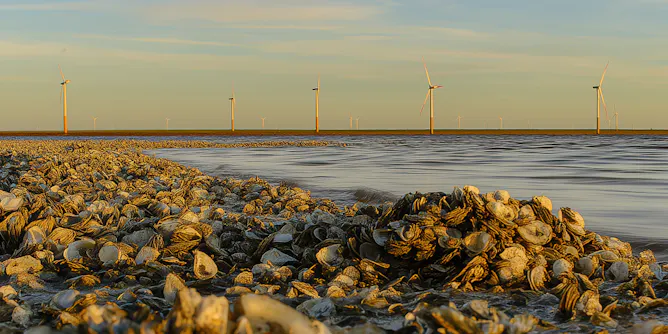
Under the right conditions, 1g of oyster shells can capture and lock away up to around 1.5g of the rare earth elements present dissolved in the surrounding water.
Articles on Shellfish
Displaying 1 - 20 of 35 articles
Taking that beautiful snail shell could increase the cost of housing for a hermit crab or small shrimp that needs it next. The beautiful conch shell that calls to you is actually an octopus caravan.
Working with communities to understanding the social acceptability of shellfish farming is the key to developing sustained aquaculture activities.
Many sea creatures lead complex, social lives in the wild and are likely to suffer in farmed conditions. But they aren’t mainstays of the aquaculture industry − yet.
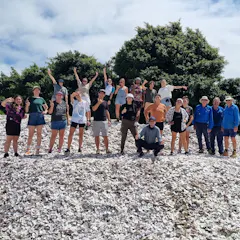
A clever approach to restoring Australia’s native oyster and mussel reefs in Queensland’s Moreton Bay is catching on, giving community groups a way to get involved in their local patch.

You’ll never look at bagged lettuce the same way again.
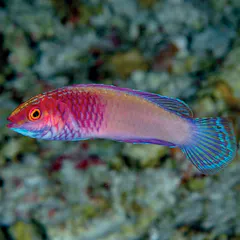
From fluffy crabs that wear sea sponge hats to worms that glow in the dark, scientists are constantly finding amazing new life forms in the ocean.

Inflating your cars’ tyres properly isn’t just good for your bank account - it can minimise your environmental footprint too.
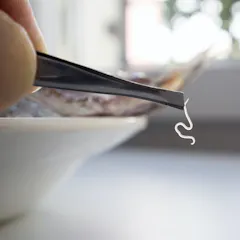
Raw seafood dishes such as sushi, poke bowls and ceviche are increasingly popular, but can harbour fish-borne parasites. What’s the best way to protect ourselves?
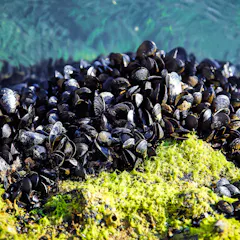
A study shows that exposure to polyester microfibres inhibits growth in mussels.
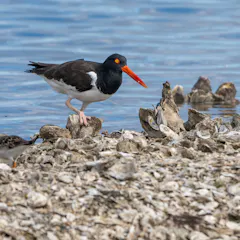
Climate change is making oceans more acidic globally. Now, scientists are finding that large storms can send pulses of acidic water into bays and estuaries, further stressing fish and shellfish.
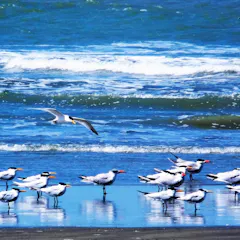
There is only a single mooring managed by French researchers that monitors the impacts of climate change on West African Canary Current.
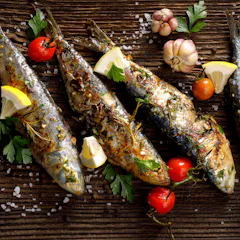
As the ocean temperature rises, many marine species are moving toward the north and south poles in search of cooler waters, thus rewriting the menus of seafood restaurants on the West Coast of Canada.
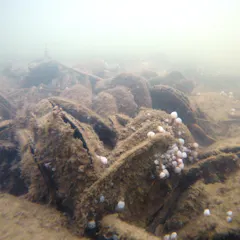
Leaf oysters can form reefs, produce mauve pearls, and reach the size of a dinner plate. They’ve been ignored for far too long.

Without this tiny, ubiquitous shellfish, the story of human life on Earth may have played out quite differently.
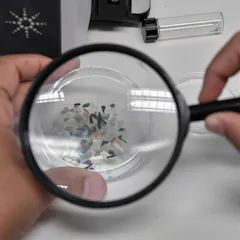
As more and more plastic trash permeates the oceans, fragments are making their way into fish and shellfish – and potentially into humans.
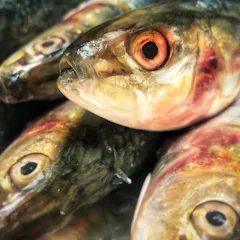
The oils in fish are excellent buffers against disease. Why don’t we eat more fish?

New research points to ‘heavy metals’ having unseen effects on a much larger scale than previously thought.
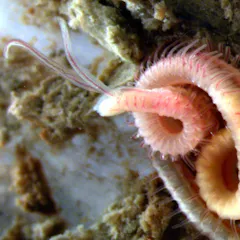
Mud blister worms make their homes in the shells of oysters and other shellfish, where they weaken their hosts.
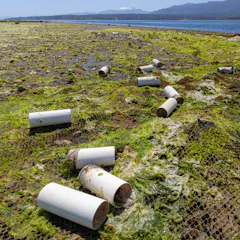
Growing demand for large salt-water clams is leaving parts of the B.C. coast littered with plastic debris.
Top contributors
-

Postdoctoral researcher, marine ecology, Adelaide University
-
Research fellow Environmental Management, Institute of Aquaculture, University of Stirling
-
Professor of Marine Biology and Aquaculture, James Cook University
-
Postdoctoral Scholar, National Center for Ecological Analysis and Synthesis, University of California, Santa Barbara
-
Professor of Ocean Biogeochemistry and Palaeoclimate, The Open University
-
Senior Research Scientist - Coastal Restoration, James Cook University
-
Deputy Manager Biotoxin Monitoring Programme, Scottish Association for Marine Science
-
Associate Professor in The School of Geography, Earth and Atmospheric Sciences and Chief Investigator for the ARC Centre of Excellence for Indigenous and Environmental Histories and Futures, The University of Melbourne
-
Professor of Agricultural Economics, Mississippi State University
-
Professor in Palaebiology, University of Bristol
-
Emeritus Professor of Human Evolution, University of Cambridge
-
PhD in Marine Ecology, CSIRO
-
Postdoctoral Research, Macquarie University
-
Professor of Teaching and Research in Environmental Biology, Edinburgh Napier University
-
Postdoctoral Research Fellow, James Cook University