

New legislative proposals want to allow ‘sex testing’ of girl athletes through genital exams and genetic and hormone testing.
Articles on Sex hormones
Displaying 21 - 35 of 35 articles

So-called “puberty blockers” work by temporarily suppressing the action of a specific hormone in the body.

Female moles evolved to have high testosterone levels, making them fiercer diggers and mothers. Female hyenas share this trait, but it means they must give birth through a male-like phallus.

Just under one in six Australian women have PCOS but some are being diagnosed when they don’t meet the criteria.

When teenagers sleep for less than eight hours a night, they are at increased risk of suicide, being overweight, high rates of injury, poor sustained attention and low school grades.

Disorders affecting penis development are among the most common birth defects seen in humans, and rates are on the rise.

Gender differences in jobs and attitudes are wider in countries with more equality, but that’s not the end of the story.

Medicinal chemists are tweaking a natural molecule that can be a deadly poison – a modified version might work as a nonhormonal male contraceptive.

Having a newborn can be rough, whether you’re a mom or a dad. New research ties men’s testosterone to their postpartum depression – with some surprising upsides for their partners.

Here’s what research actually says about differences between males and females – and the question of what’s innate and what’s acquired.

Women have evolved to have stronger immunity than men. But this comes with downsides -
women are more likely to have autoimmune diseases due to their “reactive” immune systems.

An active sex life can promote love and togetherness, drive creativity and build better health.

“Love drugs” have their risks, but are also potentially liberating, so people must be free to make their own choices about what works best for them.

The MHRA has opened an inquiry on the once popular pregnancy test pills. Did they really cause birth defects in children born in the 1970s?
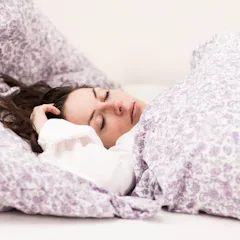
Sleep allows many of our hormones to replenish so we have the optimal energy, immunity, appetite and coping ability to face the day’s highs and lows.
Top contributors
-

Professor, Molecular Immunology, WEHI (Walter and Eliza Hall Institute of Medical Research)
-
Associate professor, Monash University
-
Principal Scientist at the Institute for Therapeutics Discovery and Development, University of Minnesota
-
Professor of Psychology; Faculty Fellow Institute for Policy Research; Professor of Management and Organizations, Northwestern University
-
Research Fellow / Health Psychologist, Swinburne University of Technology
-
Senior Research Fellow, The University of Queensland
-
Research Professor of Medicinal Chemistry and Associate Program Director of the Institute for Therapeutics Discovery and Development, University of Minnesota
-
Assistant Professor of Biological Anthropology, University of Tennessee
-
Professor in Developmental Biology, University of Aberdeen
-
Professor of Medicinal Chemistry and Director of the Institute for Therapeutics Discovery and Development, University of Minnesota
-
Senior Lecturer in Sociology, University of Manchester
-
Professor of Psychology, USC Dornsife College of Letters, Arts and Sciences
-
Chen Su Lan Centennial Professor in Medical Ethics, National University of Singapore; Distinguished Visiting Professor in Law, University of Melbourne; Uehiro Chair in Practical Ethics, The University of Melbourne
-
Assistant Professor of Cell Biology and Neuroscience, Virtua Health College of Medicine & Life Sciences, Rowan University
-
Associate Professor, School of Psychology, The University of Queensland