

Defense Secretary Pete Hegseth is requiring service members to screen for low testosterone levels. Ironically, the military lifestyle itself is more likely to lower T levels.
Articles on Sex hormones
Displaying 1 - 20 of 35 articles

Your fingers’ lengths are just one feature of many that let your hands grasp, press, pull and otherwise interact with the world.

Heart disease isn’t just a “man’s problem”. Men and women’s bodies handle fats differently in midlife. What are the cardiovascular risk factors and is hormone therapy good for heart health?

Bilingualism may interact with verbal memory and sex steroids to influence dementia risk in unexpected ways.

The answer lies in our sex hormones.

Testosterone is widely promoted as an essential part of menopausal hormone therapy to treat low mood, brain fog and low energy. But new research challenges this.

T maxxing offers a compelling narrative: raise your testosterone, upgrade your life. But if you don’t have clinically low testosterone, there are health risks.

For some trans and gender diverse adolescents, physical changes in puberty can be distressing and lead to a sense of disconnection from their true sense of self.

A more nuanced understanding of hormone therapy now suggests that its benefits for heart health depend on how soon after menopause onset it is prescribed.

Recent political attention might imply gender-affirming care is risky, controversial, perhaps even new. But Australian law views it as a legitimate medical treatment.

Some studies say menopause hormone therapy increases the risk of dementia, while others say it reduces it. Here’s how to make sense of the conflicting results.

The sex hormones you are exposed to in the womb may affect your relative finger length. And this is linked to a range of behaviour.

How do you know if what you are experiencing is standard premenstrual syndrome – PMS – or something more severe?
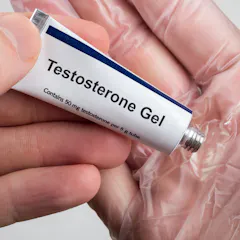
Most studies on testosterone replacement therapy are in older men.

Women typically suffer from more headaches than men, and some people experience migraines only during menstruation.

Why are some individuals at greater risk for developing opioid dependence and addiction? Two neuroscientists at Rowan University discuss their latest findings.

Fluctuating hormones affect the frequency of seizures at multiple times in women’s lives. So we need to tailor their therapies accordingly.

Oral contraceptives modify the menstrual cycle. What’s less well known is that they also reach the brain, particularly the regions important for regulating emotions.

Climate change is causing higher levels of stress in fish, and the resulting hormonal imbalances are fundamentally altering entire populations.

At the most basic level, the brain releases a cocktail of chemicals. But there’s more to it than that.
Top contributors
-

Professor, Molecular Immunology, WEHI (Walter and Eliza Hall Institute of Medical Research)
-
Associate professor, Monash University
-
Principal Scientist at the Institute for Therapeutics Discovery and Development, University of Minnesota
-
Professor of Psychology; Faculty Fellow Institute for Policy Research; Professor of Management and Organizations, Northwestern University
-
Research Fellow / Health Psychologist, Swinburne University of Technology
-
Senior Research Fellow, The University of Queensland
-
Research Professor of Medicinal Chemistry and Associate Program Director of the Institute for Therapeutics Discovery and Development, University of Minnesota
-
Assistant Professor of Biological Anthropology, University of Tennessee
-
Professor in Developmental Biology, University of Aberdeen
-
Professor of Medicinal Chemistry and Director of the Institute for Therapeutics Discovery and Development, University of Minnesota
-
Senior Lecturer in Sociology, University of Manchester
-
Professor of Psychology, USC Dornsife College of Letters, Arts and Sciences
-
Chen Su Lan Centennial Professor in Medical Ethics, National University of Singapore; Distinguished Visiting Professor in Law, University of Melbourne; Uehiro Chair in Practical Ethics, The University of Melbourne
-
Assistant Professor of Cell Biology and Neuroscience, Virtua Health College of Medicine & Life Sciences, Rowan University
-
Associate Professor, School of Psychology, The University of Queensland