

Growing numbers of women are using testosterone for menopause symptoms, but female-specific products remain scarce and evidence patchy.
Articles on Testosterone
Displaying 1 - 20 of 86 articles

Becoming a father naturally drops men’s testosterone levels. And the more involved they are, the more it drops.

Online wellness trends claim saunas and cold plunges can boost male fertility. The evidence tells a more nuanced story – and some claims don’t stack up.

Testosterone has been hijacked. It’s no longer just a hormone but a measure of US military might.

Defense Secretary Pete Hegseth is requiring service members to screen for low testosterone levels. Ironically, the military lifestyle itself is more likely to lower T levels.

Testosterone testing for soldiers sounds simple, but a low result rarely tells you why – or what to do about it.

Women’s sport has never been stronger or more visible. But even as the performance gap narrows, it remains. The reason lies less in effort and more in biology.
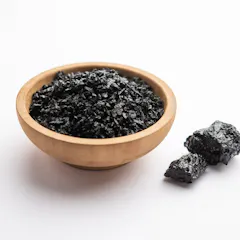
Shilajit has been used for thousands of years in Ayurvedic medicine, but are modern proponents right to claim that it raises testosterone levels?
The answer lies in our sex hormones.
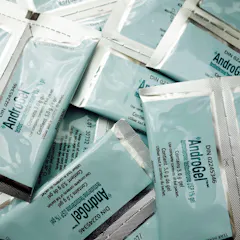
For more than 80 years, men have been told that testosterone fuels prostate cancer. But a more nuanced picture has emerged over the past two decades.

Social media has made testosterone therapy (TTh) look like a lifestyle fix, but men without deficiency may be doing more harm than good.

Testosterone is widely promoted as an essential part of menopausal hormone therapy to treat low mood, brain fog and low energy. But new research challenges this.

Here’s what hormonal changes you might be experiencing as you approach menopause – and what blood tests can and can’t tell you.

Targeting sperm production without lowering testosterone will mean fewer side-effects for men.
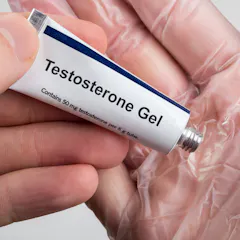
A baby girl developed unusually large genitals after accidental exposure to testosterone gel.

One hormone, huge impact. No licensed testosterone treatment exists for women in the UK. That’s a public health failure, not a niche concern.

For some trans and gender diverse adolescents, physical changes in puberty can be distressing and lead to a sense of disconnection from their true sense of self.
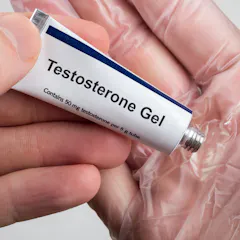
Most studies on testosterone replacement therapy are in older men.

Why are some individuals at greater risk for developing opioid dependence and addiction? Two neuroscientists at Rowan University discuss their latest findings.

Crucially, testosterone supplements turn off its normal controls in the brain.
Top contributors
-

Senior Lecturer in Biochemistry, Sheffield Hallam University
-
Professor of Kinesiology, Penn State
-
Chair of Women's Health, Monash University
-
Research Fellow in Public Health, The University of Queensland
-
Senior Lecturer, Faculty of Health Sciences and Sport, University of Stirling
-
Professor of Dermatology, The University of Melbourne
-
Professor Emeritus of Kinesiology and Physical Education, University of Toronto
-
Graduate Student, University of North Dakota
-
Professor of Molecular Oncology, University of Bradford
-
Senior Research Fellow, School of Psychiatry, UNSW; Research Fellow, Neuroscience Research Australia
-
Associate Professor in Experimental Urology, Lund University
-
Associate Professor of Sport Management, University of Technology Sydney
-
Postdoctoral Scholar of Anthropology, University of California, Santa Barbara
-
Research Leader, Sport, Institute of Sport, Exercise and Active Living, Victoria University
-
PhD Researcher, Molecular Biology, Edinburgh Napier University