
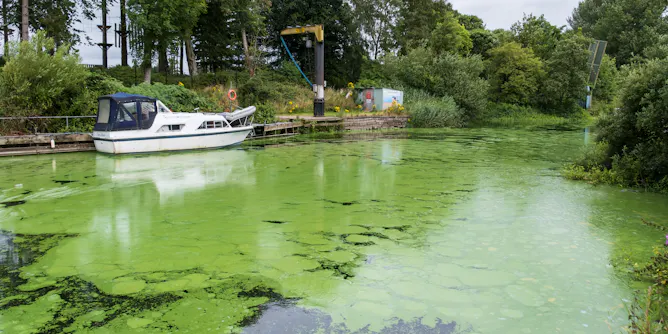
When sediment is stirred up, the effects ripple through the ecosystem.
Articles on Sediment
Displaying all articles
Acid rain and metals from power plants, vehicles and industries reached remote mountain lakes for years. Evidence from those lakes today shows the success of the Clean Air Act.

Blue, green orange, brown − water comes in many colors, depending on what’s in it.
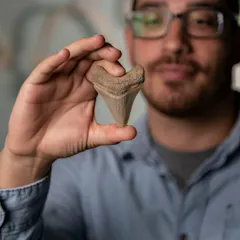
Sharks have ruled the Earth’s oceans for 400 million years. Recent research on fossil shark teeth has discovered an innovative method for dating ancient sediments.

Analysing sediments can help scientists to predict how climate change will influence natural disasters.
Over 200 million tonnes of sediment are transported by rivers to the sea each year, the most widespread water contaminant in the country. Its devastating impact on marine life has to be reversed.

UNESCO report highlights what needs to be done to save the global icon. But you might be surprised by its top recommendation.
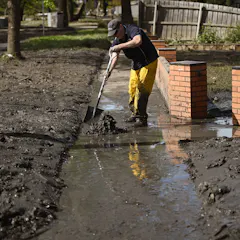
Foods stir up river sediments and can spread contaminants across the floodplain. It’s a risk in areas with a history of industrial pollution, like Maribyrnong, but EPA test results are reassuring.
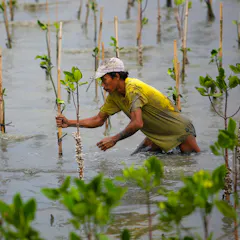
‘Blue carbon’ habitats can store a lot of carbon – but not reliably enough to offset emissions.

Millions of people around the world live on river deltas and are vulnerable when those rivers shift direction. A new study shows why and where these events, called avulsions, happen.

A new environmental record for a prehistoric site in Kenya helped researchers figure out how external conditions influenced which of our ancient ancestors lived there, with what way of life.
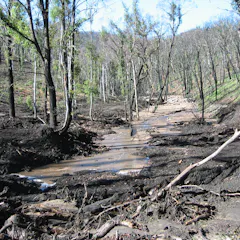
Fire debris flowing into Murray-Darling Basin will exacerbate the risk of fish and other aquatic life dying en masse in a repeat of the shocking fish kills of last summer.
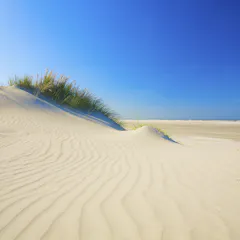
Sand may seem abundant when your toes are buried in it, but it’s becoming scarce along many coastlines around the world.

Why did Earth’s climate rapidly cool 12,800 years ago? Evidence is mounting that a comet or asteroid collision is to blame, with new support coming from the bottom of a South Carolina lake.
Top contributors
-

Research Professor and Director of the Southeastern Paleoamerican Survey (SEPAS) at the South Carolina Institute for Archaeology and Anthropology, University of South Carolina
-
Research Fellow, Coastal and Marine Research Centre, Griffith University
-
Honorary Professor, School of Natural Sciences, Macquarie University
-
Professor of Earth and Space Sciences, University of Washington
-
Principal Research Fellow - Fluvial Geomorphologist - specialising in catchment erosion research, Griffith University
-
Chercheur à l'Institut de la mer de Villefranche, Sorbonne Université; Centre national de la recherche scientifique (CNRS)
-
Principal research scientist, CSIRO
-
Adjunct Fellow, School of Natural Sciences, Macquarie University
-
Professor of Marine Science, University of Otago
-
Assistant Professor of Geography, University of California, Santa Barbara
-
Honorary Reader, University of East Anglia
-
Director of the Human Origins Program, Smithsonian Institution
-
Principal Research Scientist, CSIRO
-
Principal Research Scientist in Ecosystem Ecology, CSIRO
-
Research Associate, RMIT STEM College, RMIT University