
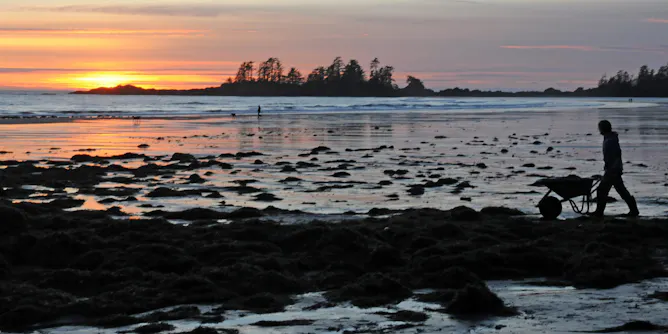
Seaweed aquaculture is attracting attention, but improved oversight is needed to prevent ecological impacts.
Articles on Seaweed farming
Displaying all articles
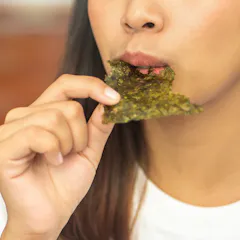
Before trying to persuade people to eat more seaweed, it’s important to understand the reasons they aren’t eating it already.
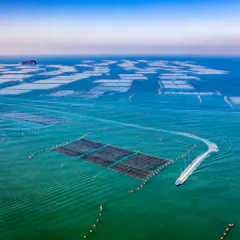
Farming seaweed, changing ocean chemistry, breeding corals and restoring mangroves could help fight climate change – if assessed and managed responsibly.

Without appropriate management, seaweed farming programmes could be dangerous for marine biodiversity and the benefits that humans get from the ocean.
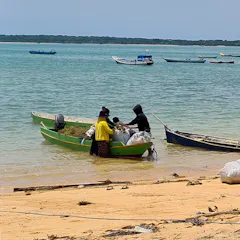
Instead of supporting Indonesia’s seaweed industry, an export ban could lower prices and reduce supply, without helping domestic processors to compete with foreign-owned companies.

To fight global warming we will soon have to try to remove carbon dioxide from the skies or find ways to reflect the Sun’s heat. Such radical paths must be examined, but risky experiments avoided.
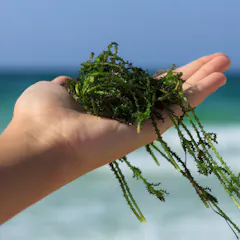
The decline of seaweed as part of the staple diet in Europe remains a mystery.
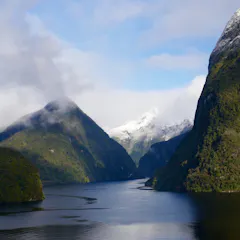
Marine sediments are the world’s largest store of carbon, and fiords in particular are a massive sink. But New Zealand doesn’t even have an oceans policy to develop blue carbon climate policy.

Seaweed is in the spotlight for so many reasons. It all sounds too good to be true. So can this wonder weed live up to expectations and fulfill its promise to save us from ourselves?
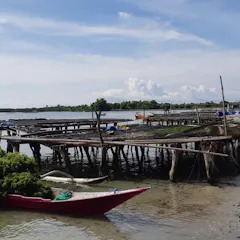
This research was funded by the Australian Government through the Australia-Indonesia Centre under the PAIR Program
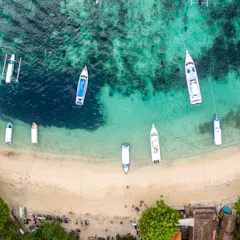
Satellite data reveals increased seaweed production during the COVID-19 pandemic
Top contributors
-

Senior lecturer, The University of Queensland
-
Associate Professor in International Agricultural Development, The University of Queensland
-
Research Coordinator, PAIR (Partnership for Australia-Indonesia Research), Australia-Indonesia Centre
-
Universitas Islam Negeri Alauddin Makassar
-
Department of Biology, Faculty of Mathematics and Natural Sciences, Hasanuddin University, Australia-Indonesia Centre
-
Professor in the School of Geography and Sustainable Development, University of St Andrews
-
Professor of Prehistoric Archaeology, University of Glasgow
-
Research Officer, The University of Queensland
-
Honorary Fellow, Australian Museum
-
Senior Research Fellow in Marine Ecology, University of Otago
-
Research Fellow, Department of Archaeology, University of York
-
Associate Professor in Marine Biology, Swansea University
-
Chief Conservation Officer, Project Seagrass & Research Affiliate, Swansea University
-
ARC Laureate Professor, The University of Melbourne and James Cook University, The University of Melbourne
-
Professor, Institute for Marine and Antarctic Studies and Director of the Centre for Marine Socioecology, UTAS, University of Tasmania