
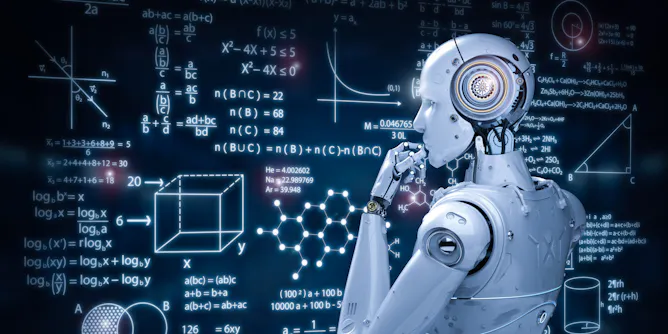
Creativity isn’t the only route to discovery – automated analysis of huge amounts of data works too.
Articles on Scientific publishing
Displaying 21 - 40 of 59 articles

The UC libraries let their Elsevier journal subscriptions lapse and now the publisher has cut their online access. It’s a painful milestone in the fight UC hopes may transform how journals get paid.

Digital publishing hasn’t resulted in the free and open access to information many envisioned. Universities are increasingly fed up with a system they see as charging them for their own scholars’ labor.

Breathless press releases, over-interpreted meta-analyses and other ‘crud factors’ mean that weak research results can get overhyped to the public. It’s time for a cultural change in the social sciences.

Women are underrepresented in academic science. New research finds the problem is even worse in terms of who authors high-profile journal articles – bad news for women’s career advancement.

Scientists are rewarded with funding and publications when they come up with innovative findings. But in the midst of a ‘reproducibility crisis,’ being new isn’t the only thing to value about research.

Universities in New Zealand spent close to US$15 million on subscriptions to just four publishers in 2016, data that was only released following a request to the Ombudsman.
In our institutions of higher education and our research labs, scholars first produce, then buy back, their own content. With the costs rising and access restricted, something’s got to give.

Partly in response to the so-called ‘reproducibility crisis’ in science, researchers are embracing a set of practices that aim to make the whole endeavor more transparent, more reliable – and better.

There are major systemic problems associated with peer review that are negatively affecting scientific credibility.

A leading website that monitored predatory open access journals has closed. This will make it harder to keep tabs on this corrosive force within science.

The traditional mode of publishing scientific research faces much criticism – primarily for being too slow and sometimes shoddily done. Maybe fewer publications of higher quality is the way forward.

Embracing more rigorous scientific methods would mean getting science right more often than we currently do. But the way we value and reward scientists makes this a challenge.
The very goal of science, to discover the new and unknown, is hampered by any outdated personal beliefs scientists hold.

The public loses when their only choices are inaccessible, impenetrable journal articles or overhyped click-bait about science. Scientists themselves need to step up and help bridge the divide.

Sometimes big research news bypasses the usual scientific publishing process. Here’s why that’s not good for scientists or the public.

Indonesia should cultivate a culture of peer-review to support academics produce basic social research, essential in creating good policies in the world’s fourth most populous country.
Meta-analyses that combine many different studies are the gold standard for medical evidence. But they are only as good research they examine.

African research is largely invisible, kept in the shadows by publishing barriers and structural obstacles. A platform built in Brazil and rolled out across the developing world could be the solution.

If we want the best possible research, it’s not just the journal articles that ought to be openly available to all, but the data behind them as well.
Top contributors
-

Professor of Computer Science, Université Grenoble Alpes (UGA)
-
Professor of Computer Science, Institut de Recherche en Informatique de Toulouse
-
Contributing editor, Retraction Watch
-
Lecturer in Library Science, City St George's, University of London
-
Editor in Chief, Medical Journal of Australia, Queensland University of Technology
-
Postdoctoral Research Fellow in Psychiatry and Behavioral Sciences, Medical University of South Carolina
-
University Librarian and Vice Provost for Digital Scholarship, University of California, Davis
-
Professor of Psychology, Stetson University
-
Postdoctoral fellow, Kellogg School of Management, University of North Carolina at Chapel Hill
-
David H Smith Conservation Research Fellow, University of North Carolina at Chapel Hill
-
Professor, University of Regensburg
-
Professor, School of Biosciences & School of Historical and Philosophical Studies, The University of Melbourne
-
Professor of Marine Science & Founder/Director of Blue Carbon Lab, Deakin University
-
Senior Lecturer, Department of Computer Science, University of Auckland, Waipapa Taumata Rau
-
Researcher in Medical Sciences, Wilfrid Laurier University