
The field of psychology is trying to absorb a recent big study that was able to replicate only 36 out of 100 major research papers. That finding is an issue, but maybe not for the reason you think.
Articles on Scientific publishing
Displaying 41 - 59 of 59 articles

Researchers from around the globe tried to replicate 100 published psychology studies. They were successful on only 36.

Replacing authors on scientific papers with projects could be one way to tackle the increasing numbers of contributors.
The research excellence of academics is often measured by the quantity and quality of their scholarly publications. But how do we know that all authors listed on a publication have actually been involved…

In order to improve something, we need to be able to measure its quality. This is true in public policy, in commercial industries, and also in science. Like other fields, science has a growing need for…

The term “bubble” is now part of everyday conversation, particularly since the financial crisis of 2008. But bubbles are not just a problem in the world of banking. They can affect the choices you make…
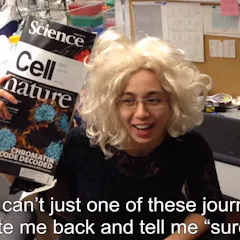
Having climbed all the way to the Nobel Prize on a ladder made of papers published in Nature, Science and Cell, biologist Randy Schekman has declared that he is now going to boycott these luxury journals…
Recipients of this year’s Nobel Prizes converged on Stockholm to receive their medals, dine with the King and Queen, and be treated like the scientific royalty. For most this time is, understandably, about…
According to Peter Suber open access is academic literature which is “digital, online, free of charge, and free of most copyright and licensing restrictions”. Open access delivered by journals is called…

As a researcher funded by the US National Science Foundation (NSF), since October 1, I’ve known that I will be not be receiving my monthly fellowship. This has meant that my work, investigating genes…
In a sting operation, John Bohannon, a correspondent of Science, claims to have exposed dodgy open access journals. His argument seems to be that, because of their business model, some journals are biased…

“Publish or perish” is a well-known maxim within academia. It is introduced to researchers early in their careers, often by a PhD supervisor, keen for his or her students to start building a career. While…
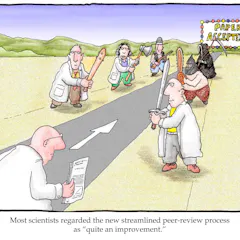
It doesn’t matter whether or not you think it’s fair: if you’re an academic, your publishing record will have a crucial impact on your career. It can profoundly affect your prospects for employment, for…
Over the past few years, there has been a growing awareness that many experimentally established “facts” don’t seem to hold up to repeated investigation. This was highlighted in a 2010 article in the New…
A report released recently has highlighted how out of step the UK has become with the rest of the world on open access policies. The UK has sought to be a leader in making publicly-funded research openly…
His eyes brighten and his voice rises as he tells me about his latest results. He is excited. He should be. His lab is unravelling the details of how new memories are formed in the brain. Then I ask him…

Foundation essay: This article on the open access and science by Björn Brembs is part of a series marking the launch of The Conversation in the UK. Our foundation essays are longer than our usual comment…

Scientists are rarely happy in UK’s libel courts. The threat to science from the UK defamation law is not so much that scientific publications have regularly been held to be libellous, but the distraction…
Social media is no longer a new thing. But to scientists it still might be. There are few who are starting to take advantage of social media for professional reasons. What can other scientists learn from…
Top contributors
-

Professor of Computer Science, Université Grenoble Alpes (UGA)
-
Professor of Computer Science, Institut de Recherche en Informatique de Toulouse
-
Contributing editor, Retraction Watch
-
Lecturer in Library Science, City St George's, University of London
-
Editor in Chief, Medical Journal of Australia, Queensland University of Technology
-
Postdoctoral Research Fellow in Psychiatry and Behavioral Sciences, Medical University of South Carolina
-
University Librarian and Vice Provost for Digital Scholarship, University of California, Davis
-
Professor of Psychology, Stetson University
-
Postdoctoral fellow, Kellogg School of Management, University of North Carolina at Chapel Hill
-
David H Smith Conservation Research Fellow, University of North Carolina at Chapel Hill
-
Professor, University of Regensburg
-
Professor, School of Biosciences & School of Historical and Philosophical Studies, The University of Melbourne
-
Professor of Marine Science & Founder/Director of Blue Carbon Lab, Deakin University
-
Senior Lecturer, Department of Computer Science, University of Auckland, Waipapa Taumata Rau
-
Researcher in Medical Sciences, Wilfrid Laurier University