

Unclear standards combined with power dynamics can create problems for women researchers.
Articles on Academic publishing
Displaying 1 - 20 of 68 articles

Students and campuses should investigate and learn more about zero-cost textbook programs, or adopting open educational resources.

Challenges old and new confront young people in their efforts to get a useful education.

Academic publishing system often allows scientific errors to persist because it prioritises profit and prestige over timely correction.

Ubuntu philosophy is a better way to represent scholarly contributions in African academia.

Academic publishing now shows the same decline that has hit social media and online marketplaces.

A new study shows AI writing is turning traditional measures of research quality upside down.

Scientists write papers to share their results – and gain prestige and advance their careers. In this competitive field, selection can favor AI-written papers, citation cartels, paper mills and more.

Peer review is an important step after a researcher has carried out a scientific study but before it gets published by a journal and shared with the world.
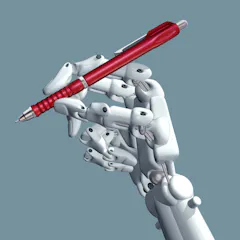
When is it acceptable to use AI in academic publishing?
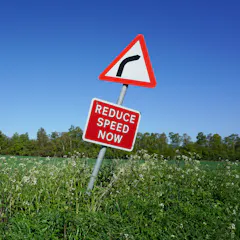
‘Fast science’ can damage research integrity – just as fast food can damage your health. ‘Slow science’ offers an alternative path forward.

Some academic publishers have been accused by scientists of being “too greedy” and prioritising profit over research integrity.

The peer review process is central to science – but it can be easily manipulated. Improving it is vital to uphold research integrity.

After news, art and music, generative AI has found a new resource to mine: academia

ChatGPT and other AI writing tools can make researchers more productive – but quality control is essential.

Science rankings rely on papers in academic journals. Broadening the view to include many more open-access journals will upend the usual order – thanks to China’s vast number of publications.

A study of 736 biological science journals showed only a small fraction are making efforts to foster a multilingual scientific community.

We all need to understand that ranking is not objective and true. University rankings are massively overvalued, and reinforce global, regional and national inequalities.

Secondary publishing rights could facilitate immediate open access to publicly funded research and foster global innovation and discovery.

While some worry “wokeist” ideology could corrupt scientific merit, it could be our problematic understanding of the latter poses an even greater threat to science, two philosophers argue.
Top contributors
-

Editor in Chief, Medical Journal of Australia, Queensland University of Technology
-
Dean of Research, Humanities, Curtin University
-
Professor of Higher Education, Rhodes University, South Africa, Rhodes University
-
PhD Candidate in Educational Management, Makerere University
-
Researcher, University of Pretoria
-
University Librarian and Vice Provost for Digital Scholarship, University of California, Davis
-
Professor of Belonging Science, School of Educational Psychology and Inclusion, Faculty of Education, Monash University
-
Director, Centre for Culture and Technology & Curtin Open Knowledge Initiative, Curtin University
-
Associate Professor (Philosophy ), Makerere University
-
Lecturer in History of Medicine/Life Science, The University of Melbourne
-
Senior Research Fellow, Uehiro Centre for Practical Ethics, University of Oxford
-
Ph.D Candidate in Psychology, University of Washington
-
Researcher, Nelson Mandela University
-
Associate Professor in Astronomy, Monash University
-
Professor of Organisational Behaviour, Bayes Business School, City St George's, University of London