

Let’s get emotional about science. Not just to celebrate it, but because that’s how to do it properly.
Articles on Scientific method
Displaying 41 - 60 of 94 articles
Scientists are rewarded with funding and publications when they come up with innovative findings. But in the midst of a ‘reproducibility crisis,’ being new isn’t the only thing to value about research.
Scientists have a big problem: Many psychological studies don’t hold up to scrutiny. Is it time to redefine statistical significance?
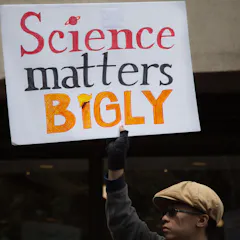
Scientists typically stay out of public policy debates, but an academic makes the case that they need to push back against politicians who distort research.

Partly in response to the so-called ‘reproducibility crisis’ in science, researchers are embracing a set of practices that aim to make the whole endeavor more transparent, more reliable – and better.

Researchers need to be able to draw conclusions based on previously published studies in their field. A new aggregation method synthesizes prior findings and may help reveal more of the big picture.
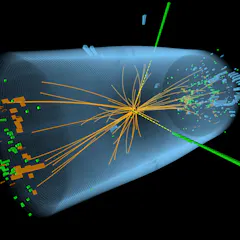
This is the second part in a series on how we edit science, looking at hypothesis testing, the problem of p-hacking and how the peer review process works.
This is the first part in a series on how we edit science, looking at what science is and how it works.

Tools like Amazon’s Mechanical Turk allow psychology researchers to recruit test subjects from around the world. But the system can also be exploited.
In science, the word ‘theory’ has a very specific meaning that’s easy for nonscientists to misunderstand or misconstrue. Here’s what a theory must withstand to be accepted by the scientific community.
The case for neoclassicism in science.
Embracing more rigorous scientific methods would mean getting science right more often than we currently do. But the way we value and reward scientists makes this a challenge.
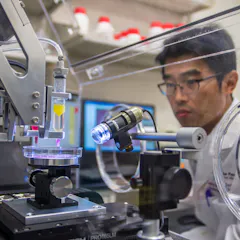
There’s a big difference between science and pseudoscience. But if people don’t understand how science works in the first place, it’s very easy for them to fall for the pseudoscience.
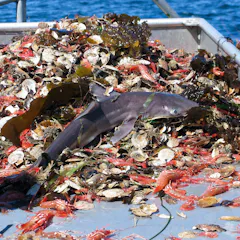
Large-scale natural experiments such as oil spills, tsunamis and climate change are things you wouldn’t want to do on purpose. But that doesn’t mean they’re not scientifically useful experiments too.

How flawed citation practices can perpetuate scientific ideas even before they’ve been fully established as true.
It’s easy to attribute the wrong cause to a mysterious phenomenon. But science has some tools to help you avoid these attribution errors.

Science explains how people are changing our natural systems, but we need to recognize the importance – and power – of emotions and the spiritual world in charting a course to the future.

Diverse threads of the vast interrogation of nature we call science are coming together in a rich and mutually informative intellectual tapestry.
Scientists build on knowledge gained and published by others. How can we know which findings to trust?
Relying on computer modelling can be dangerous: in 1999 NASA lost a space probe because of a silly error in the control software.
Top contributors
-

Senior Lecturer in Philosophy and Education; Curriculum Director, UQ Critical Thinking Project, The University of Queensland
-
ARC DECRA Fellow, UNSW
-
Associate Professor, ARC Centre of Excellence for Weather of the 21st Century, Monash University
-
Professor in Philosophy, Director of the University of Queensland Critical Thinking Project, The University of Queensland
-
Professor, School of Biosciences & School of Historical and Philosophical Studies, The University of Melbourne
-
Senior Lecturer in Philosophy, University of Auckland, Waipapa Taumata Rau
-
Holcim (US) Professor of Sustainable Enterprise, Ross School of Business, School for Environment & Sustainability, University of Michigan
-
University Distinguished Professor and Department Head of Statistics, Texas A&M University
-
Professor, School of Psychology, University of Sydney
-
Chair, The Conversation Media Group
-
Associate Professor of Physics, Union College
-
Associate Professor in Astronomy, Monash University
-
Laureate Professor of Mathematics, University of Newcastle
-
Laureate Professor Emeritus, The Peter Doherty Institute for Infection and Immunity
-
Lecturer in Mathematics, Flinders University