

Boiling scientific truth down to a single number has had bad consequences for our understanding of the world.
Articles on Research methods
Displaying 1 - 20 of 32 articles

Anthropic developed an AI interviewer it claims can help social scientists conduct research at scale. But AI models lack the human qualities that make qualitative research unique.

Stipends paid to residents had unintended consequences.

As Australia confronts biodiversity loss, this research underscores the importance of listening to those who know Country best.

Researchers can address potential fraud among research participants with careful planning, ethical consideration plus a commitment to protect data integrity and participant dignity.

Like all people, the way scientists see the world is shaped by biases and expectations, which can affect how they record and report. Rigorous research methods can minimize this effect.

Researchers uncovered the foundations of biology by using E. coli as a model organism. But over-reliance on this microbe can lead to knowledge blind spots with implications for antibiotic resistance.

Many microscopy techniques have won Nobel Prizes over the years. Advancements like cryo-ET that allow scientists to see the individual atoms of cells can reveal their biological functions.
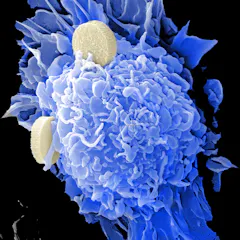
The proteins that cover nanoparticles are essential to understanding how they work in the body. Across 17 proteomics facilities in the US, less than 2% of the identified proteins were identical.
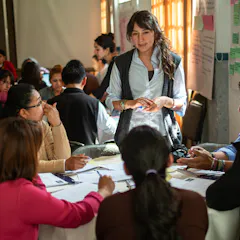
Harmful research practices have done serious damage to Indigenous communities and created distrust. The Collaborative Indigenous Research Digital Garden is one way to repair that damage.

There is a lot of hype in psychedelics research at the moment. Here’s how to tell which research is good and which isn’t.

Researchers in sub-Saharan Africa ought to fuse conventional Western theories of knowledge and local theories of knowledge.

Tracking how people use their time is increasing in popularity, but it is a surprisingly under-used research method considering how much information it can provide in various fields.

Young people have a right to be engaged, and a right to be heard in research. When young people’s voices are included in the research process, the result is richer and more relevant research evidence.
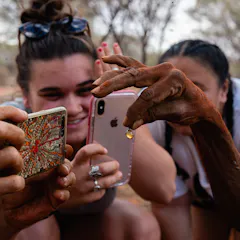
Historically, research has been imposed upon Indigenous people, instead of conducted with them. This is an exploration of more collaborative ways to research when working with Indigenous communities.

Researchers found the letters X, Y, and Z make tweets more shareable. The nonsensical result shows how easily statistics can be misused.

Researchers rarely collect information that lets them to compare their results with what was believed beforehand. If they did, it could help spot new or important findings more readily.

New research claiming that people do not need to reduce their consumption of red and processed meat says more about the conduct and evaluation of research than it does about beef.

As our societies lose paper trails and increasingly rely on digital information, historians, and their grasps of context, will become more important than ever.

Recommended salt intake levels should be lowered further, despite previous contradictory research.
Top contributors
-

Program Head of Psychology, University of Guelph-Humber
-
Professor, University of Wollongong
-
Professor and Chair of Epistemologies of the Global South, University of Bareuth, Germany, University of South Africa
-
Georgia Institute of Technology
-
Assistant Professor of Psychology, Grand Valley State University
-
Professor of Physics and Astronomy, Bucknell University
-
NHMRC ECR Fellow, Adelaide University
-
Distinguished Professor, Department of Curriculum, Teaching and Learning, Ontario Institute for Studies in Education, University of Toronto
-
Professor of Archaeology, University of Washington
-
Associate Professor in Public Health, Flinders University
-
Assistant Professor of Indigenous Studies, University of Lethbridge
-
Associate Professor, Systems Science and Policy, Harvard University
-
Visiting associate professor, Massachusetts Institute of Technology (MIT)
-
Postdoctoral Research Fellow in Psychiatry and Behavioral Sciences, Medical University of South Carolina
-
Senior Clinical Lecturer & Consultant Psychiatrist, King's College London