
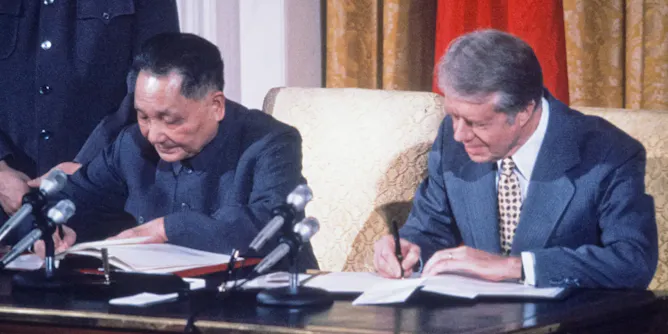
China’s success in science and technology propelled it to the forefront of many fields. Now, the US wants to pull back from years of intense cooperation.
Articles on Science policy
Displaying 21 - 40 of 85 articles
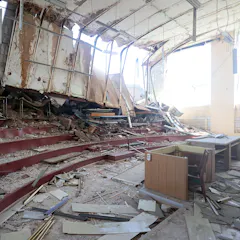
The war in Ukraine has led to the destruction of scientific infrastructure, caused many Ukrainian researchers to leave the country and disrupted the work of those who have stayed.
Climate innovation prizes only make up a small amount of climate research funding but are very high-profile events.

In 2014, Chinese researchers published more papers than any other country for the first time. In 2019, China overtook the U.S. as the No. 1 publisher of the most influential papers.
The director of the Office of Science and Technology Policy plays a critical role in achieving the president’s science goals. Facilitating cooperation among the dozens of research agencies is key.

Renee Wegrzyn will lead the new Advanced Research Projects Agency for Health, which is tasked with speeding up how fast basic science is translated into real-world applications.

Scientific research done through international collaboration has boomed in the past 30 years. But recently, powerful countries are using science as a tool of politics, threatening that work.

The homogeneity of citizen science volunteers undercuts the ability of these projects to bring science to underserved communities.

As a major contributor of knowledge, Nigeria could make giant strides in nanotechnology – which in turn could help various industries blossom.

Starting in 2023, all research proposals funded by the NIH will need to include a data sharing and management plan. An expert on open science explains the requirements and how they might improve science.

There are calls for measures to reduce the burden of red tape and promote and facilitate biodiversity research in South Africa.

Before new policy can be based on evidence, decision-makers need to understand the relevant research. Intermediaries between scientists and policymakers translate information and build relationships.

Chief Scientist Cathy Foley says high-tech manufacturing is the way forward for Australia.
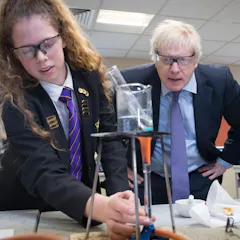
The expensive task of cementing the UK’s status as a science superpower will need to have transformative benefits

The science to policy process that was developed to guide climate mitigation decisions can be applied to the response to the COVID-19 pandemic, without having to be reinvented.
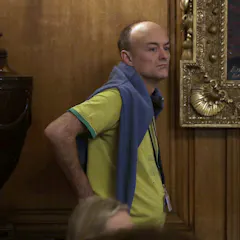
The notion of SAGE being independent appears nowhere in its 64 pages of guidelines. But the case for more transparency is obvious.
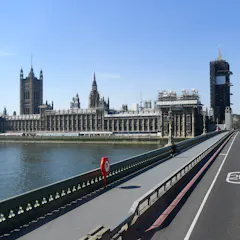
More often than not, governments decide what ‘the best available evidence’ is.
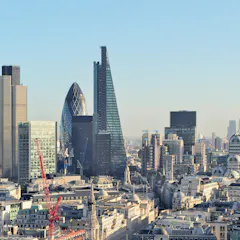
Engineers may be able to develop new ways of opening doors or better and mass-produced face masks for the elderly.
The EU’s next research programme needs to change how universities and business work together.
We’ve had ten federal ministers with titular responsibility for science since 2007 – five under the coalition and five under Labor. That variation and a lack of consistent vision has an impact.
Top contributors
-

Secretary for Science Policy at the Australian Academy of Science, and Senior Deputy Vice-Chancellor, UNSW
-
Professor of Public Affairs, The Ohio State University
-
Fellow in Science, Technology, and Innovation Policy, Baker Institute for Public Policy, Rice University
-
Professorial fellow, Flinders University; Australian National University
-
Professor of Experimental Physics Emerita, University of Cambridge
-
Distinguished Professor, Australian National University
-
Chair, The Conversation Media Group
-
Laureate Professor Emeritus, The Peter Doherty Institute for Infection and Immunity
-
Emeritus professor, Australian National University
-
Professor and Deputy Vice-Chancellor (Research), University of Sydney
-
Professor of Environmental Engineering, North Carolina State University
-
Research manager, Centre for Systems Genomics, The University of Melbourne, The University of Melbourne
-
President of the Australian Academy of Science, Laureate Professor Emeritus, The University of Melbourne
-
Honorary associate professor of economy and society, Macquarie University
-
Astrophysicist and Assistant Professor in Science Education, Trinity College Dublin