
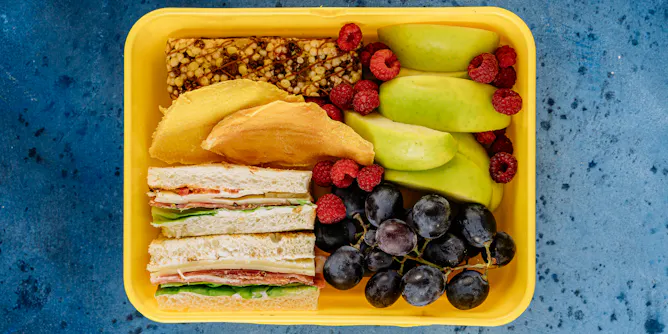
Some sandwich-alternatives will take some prior preparation, others can be as simple as a sandwich.
Articles on School lunches
Displaying 1 - 20 of 38 articles

A new study looks at what parents want in school lunch programs. And how much they would be willing to pay to support them.
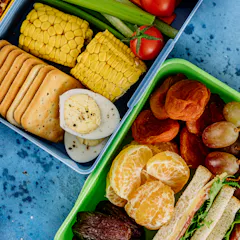
Packing lunchboxes everyday can seem like a thankless and impossible task. It needs to be healthy, low waste … and something your child will actually eat.

Australia can learn from other countries to introduce a universal free school lunch program that benefits children, families, local farmers and the planet.
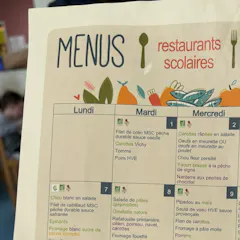
France, England and Scotland all bring important insights for Canada’s national school food program, around menus, centralized kitchens, local resources and building community.
Parents and teachers in a southern Ontario survey conducted in the city of Hamilton and Peel Region spoke about their desires for an equitable and inclusive school food program.

The more than $1 billion cut hits already strapped schools and food banks.
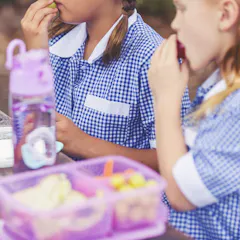
Australia is one of the few high-income countries that does not provide children with a daily nutritious meal at school.
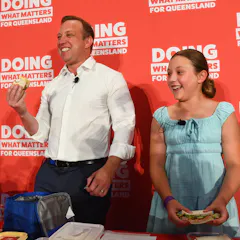
Queensland Premier Steven Miles has announced free school lunches if Labor is re-elected on October 26. The Greens also have a similar idea.

In Canada, where fewer than 10 per cent of kids regularly eat school-provided meals, parents, especially mothers, are left to juggle school lunches, often under major pressure.

Gov. Tim Walz used geographic information systems as a schoolteacher. How will that experience come into play if he and Kamala Harris win the White House in November?

The government is reducing the scope and scale of the free school lunch programme. But evidence suggests expanding it would be good for children, communities and local businesses.

Researchers and co-chairs of the Canadian Association for Food Studies’ School Food Working Group explain what Ottawa should prioritize to ensure its national school food program succeeds.
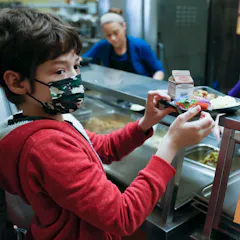
Since nutrition standards were strengthened in 2010, eating at school provides many students with healthier food than is available cheaply elsewhere. Plus, reducing stigma increases the number of kids getting fed.

Western Australia has introduced a limit on ham in school canteens. Here’s what has changed and the evidence it’s based on.
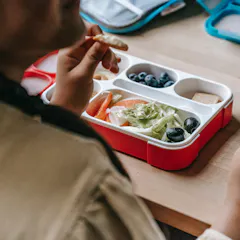
Lunchboxes should have food for concentration, growth and health as well as something to drink.

From soup and semolina to Jamie’s school dinners: the changing face of school meals in the UK.

Research suggests a meal prepared onsite is likely to be the most achievable way of rolling out school lunches in Australia.

Food insecurity is often talked about as an issue of individual responsibility. But our research suggests most people struggling to put food on the table are not the agents of their own misfortune.

Inflation is soaring, but prices for typical back-to-school gear like backpacks, computers and new clothes are rising less than average – or even falling.
Top contributors
-

Postdoctoral Fellow, Department of Community Health and Epidemiology, University of Saskatchewan
-
Professor of Human Development and Family Sciences, University of Connecticut
-
Professor of Health Promotion, Dalhousie University
-
Professor, Department of Community Health and Epidemiology, University of Saskatchewan
-
Associate Professor of Food, Nutrition and Health, University of British Columbia
-
Senior Research Fellow, Caring Futures Institute, Flinders University
-
Lecturer In Nutrition & Dietetics, University of the Sunshine Coast
-
Postdoctoral research associate, Flinders University
-
Professor of Nutrition and Dietetics, Flinders University
-
Assistant Professor, Education Studies, College of Education, University of Oregon
-
Associate Professor, School of People, Environment and Planning, Te Kunenga ki Pūrehuroa – Massey University
-
Assistant Professor of Food and Nutrition, University of Georgia
-
Postdoctoral Researcher, University of Newcastle
-
Chester D. Tripp Professor of History, Yale University
-
Assistant professor, University of California, Irvine