

Cookies, traybakes and pizza were very popular, and daily specials and fruit were not.
Articles on School food
Displaying all articles

France, England and Scotland all bring important insights for Canada’s national school food program, around menus, centralized kitchens, local resources and building community.

Parents and teachers in a southern Ontario survey conducted in the city of Hamilton and Peel Region spoke about their desires for an equitable and inclusive school food program.

From reducing families’ grocery bills to boosting the economy, school meals offer far-reaching benefits, fostering both immediate well-being and long-term economic prosperity.

Involving youth in promoting health in schools can catalyze students’ ability to bring about positive change. On International Youth Day and year round, more adults could lift up youth voices.
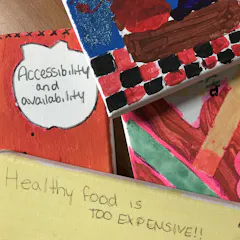
An effective national school food program can help build the foundations for a healthy population. That’s why Ottawa must limit the influence of the food industry on a national school food program.

School food programs should be key elements of governments’ COVID-19 responses. In planning these, the relationships that are part of providing food matter.

Obesity crisis: pizza, pastries, chips, donuts, cookies, hot dogs, and burgers – just your average school lunch.

New research will examine how the emerging farm-to-school movement can support local food systems, as well as providing healthy lunches for children.

There would be many benefits from a national school food program, including a chance to teach children healthy eating habits that could last a lifetime. Why can’t it happen?

With obesity affecting so many students, it’s better to give them cheap, appealing food and drink choices at school.
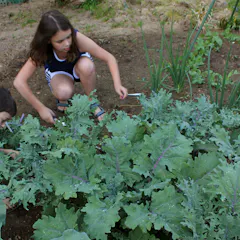
School garden projects are becoming hugely popular. Over 25 percent of public elementary schools include garden-based learning. Do these gardens improve the education and health of young people?

Ghana’s school feeding programme has reached millions of children in the past 11 years. It does important work, but needs more support to grow and become sustainable.

In-school nutrition programmes can reduce the chances of children suffering from childhood obesity.

When Jamie’s School Dinners first aired in early 2005, it launched Britain’s secondary schools as a key battle ground for politicians, professionals and campaigners keen to improve young people’s diet…
Top contributors
-

Postdoctoral Fellow, Department of Community Health and Epidemiology, University of Saskatchewan
-
Professor of Health Promotion, Dalhousie University
-
DSTI/NRF Research Chair in Welfare and Social Development, University of Johannesburg
-
Lecturer in Environmental Sustainability, University of Energy and Natural Resources
-
PhD Candidate in the School of Health and Life Sciences, Teesside University
-
Professor of Communication Studies, Provost's Fellow for Sustainability, Rowan University
-
Associate Professor of Food, Nutrition and Health, University of British Columbia
-
PhD student, School of Health, Dalhousie University
-
Professor of Food and Public Health, University of Hertfordshire
-
Associate Professor of Sociology, University of British Columbia
-
Healthy Populations Institute, Dalhousie University
-
Postdoctoral Research Fellow, Department of Food and Nutrition and Sport Science, University of Gothenburg
-
Assistant Professor, Nutrition and Dietetics, Memorial University of Newfoundland
-
Master of Public Health Student, University of Toronto
-
Professor, Department of Anthropology, McMaster University