
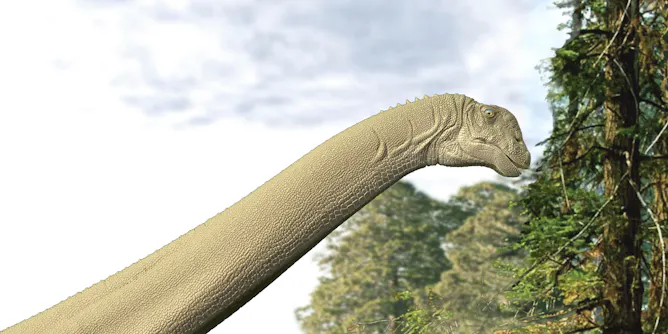
Sauropods were the largest land-living animals of all time. Finding the traces of a sauropod’s last meal is nothing short of extraordinary.
Articles on Sauropods
Displaying all articles
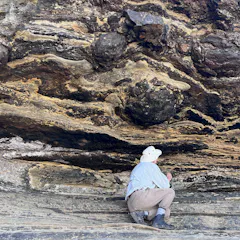
Dinosaur tracks were found in a rugged, remote coastal South African setting.

Fossils tell us the titanosaurs were the biggest dinosaurs – but new discoveries could reveal new giants!
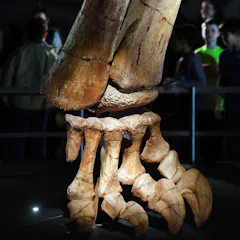
Some of these giant vegetarians were as tall as a 3-story building. Microscopic analysis of their teeth, bones and eggshells reveals how they grew, what they ate and even their body temperature.
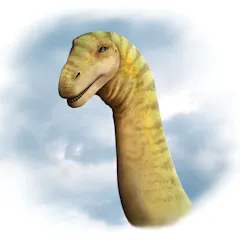
Meet Ann: a toothy 95 million-year-old Diamantinasaurus from outback Queensland.
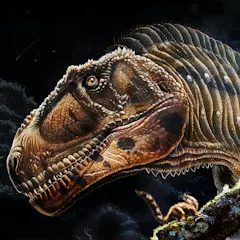
A newly discovered dinosaur has small arms and a large head, similar to Tyrannosaurus rex. Estimated to have died at 50 years old, it’s also one of the oldest individual dinosaurs on record.
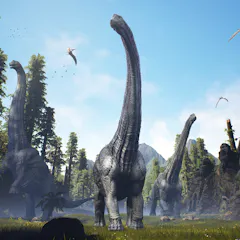
The largest animals to ever walk the earth, giant sauropods dominated world ecosystems for 100 million years. New research indicates soft ‘heel pads’ helped them reach their stature.
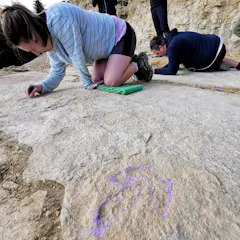
Collectively, the evidence studied by ichnologists helps to paint a picture of long-gone landscapes and the creatures and plants that populated those spaces.
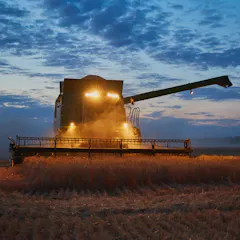
Whether a combine harvester or a Diplodocus is the cause, compacted soils are a big problem.
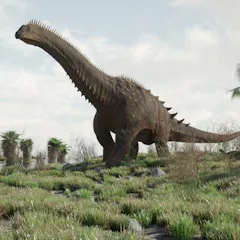
Thanks to our new technique using fossilised tracks, we have been able to learn more about the locomotion of the largest creatures ever to have roamed this planet.

A spectacular series of fossilised footprints from sauropod dinosaurs and other ancient animals opens a window onto life in northeast Australia 95 million years ago.
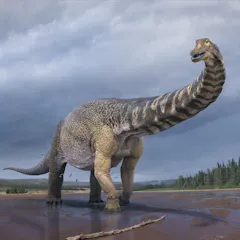
Australotitan was a massive long-necked sauropod estimated to weigh the equivalent of 1,400 red kangaroos.
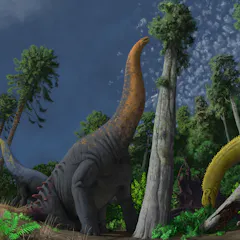
Tooth fossils from NSW have confirmed sauropods weren’t exclusive to Queensland. They’re also providing a first look at how these colossal dinosaurs fed from Australia’s land.
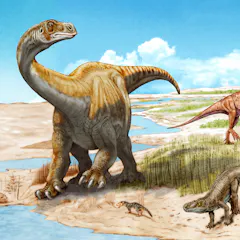
How we identified a new ancestor of the likes of Diplodocus from old bones.
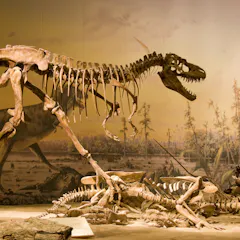
Sometimes the only way to tell the difference between a baby dinosaur and a grown-up one is to find fossils of them both together.

The location of a dinosaur find on a remote Queensland sheep station was lost for almost 80 years. But the site was rediscovered, and details are now emerging about the make up of the new dinosaur.
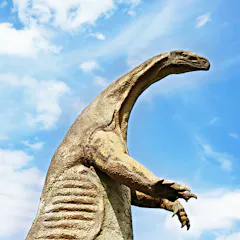
A dinosaur has been found in Argentina which may have lasted beyond an extinction event that wiped out the rest of its family. The new species has been named Leinkupal laticauda, which in the language…
A new sauropod dinosaur species, Leinkupal laticauda, has been discovered in Argentina. With the exception of Africa, diplodocids…
Top contributors
-

Research Associate, School of Earth and Planetary Sciences, Curtin University
-
Postdoctoral researcher, Museum für Naturkunde, Berlin
-
Emeritus Professor of Soil Science/Principal consultant, Lancaster University
-
PhD; Associate Professor, School of Biological Sciences, The University of Queensland
-
PhD candidate, Curtin University
-
Postdoctoral Fellow, Earth Sciences, Carleton University
-
Researcher and curator, Jurassica Museum
-
Chair Professor in Sustainability, Lancaster University
-
DeWitt Wallace Professor of Biology and Geology, Macalester College
-
Postdoctoral Research Fellow in Palaeontology, Liverpool John Moores University
-
Senior lecturer, University of New England
-
Senior Research Assistant (Palaeontology), Queensland Museum
-
Postdoctoral Researcher in Palaeontology, Utrecht University
-
PhD Candidate in Palaeontology, University of New England
-
Reader in Vertebrate Biology, Liverpool John Moores University