

The UK’s biggest industry is poised to lose a big chunk of its (human) workers.
Articles on Robotics
Displaying 141 - 160 of 260 articles

As the government moves ahead with its industrial plan, a new report signals it will have to start doing things differently.

Rather than fret about how many jobs future technologies will destroy, we should focus on how to shape them so that they complement the workforce of tomorrow.
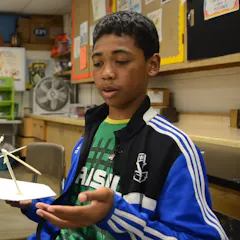
Creative makerspaces in Ontario schools weave passion with digital technologies to teach 21st century skills.

Robots have the potential to help support a growing population that wants to age in their own homes. But those helpful machines won’t be the humanoid butlers of science fiction.
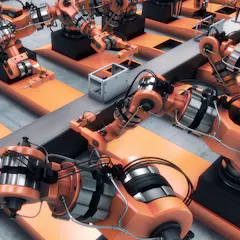
Smart machines are about to usher in the age of Industry 4.0.
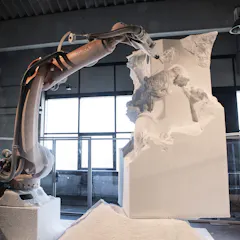
Artists invented the word ‘robot’, but now robots are becoming artists, or at least assistants, themselves. As robots get smarter, artists will find more and more uses for them, particularly in sculpture.
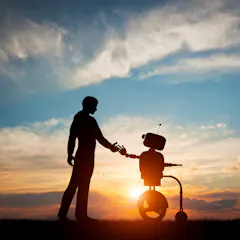
Not everyone agrees on how artificial intelligence will change the way we live. But it’s not all doom and gloom either.
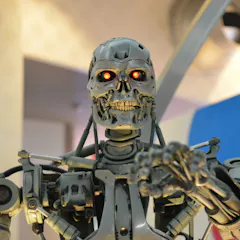
Robots should be empowered to pick the action that most helps humans.

Surgeons say minor unintentional damage can happen during surgery, and much of that goes unreported. They say they would be prepared to use robotic tools if they could be shown to help.

Several methods can teach an algorithm to learn. With more or less important datasets, which are or are not previously labeled and categorized.
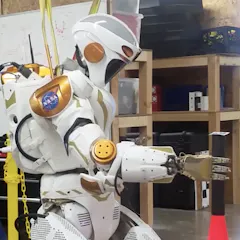
For robots to be most useful when working alongside humans, we’ll have to figure out how to make robots that can literally lend us a hand when our own two are not enough.
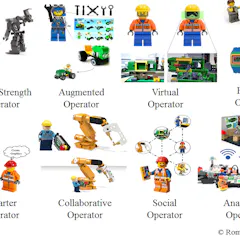
People will still be needed on factory floors, even as robots become more common. Future operators will have technical support and be super-strong, super-smart and constantly connected.
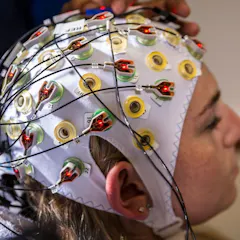
Brain-computer interfacing is a hot topic in the tech world, with Elon Musk’s announcement of his new Neuralink startup. Here, researchers separate what’s science from what’s currently still fiction.
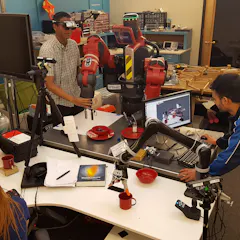
Today, the U.S. is leading the robotics revolution. But without timely investment, China will overtake us, and could permanently put Americans out of work.
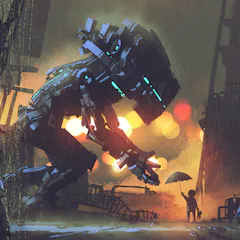
Humans need greater autonomy than Isaac Asimov’s neat science fiction idea permits.

Today’s robots and artificial intelligence look very different from the androids conceived by Isaac Asimov.
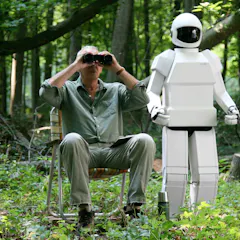
How can you prepare for the coming AI revolution? Here’s a handy survival guide.
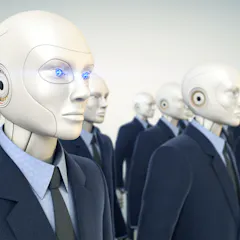
We have long believed ourselves to be the only intelligent beings on Earth – that may soon change and the consequences will be dramatic for law, politics and society in general.
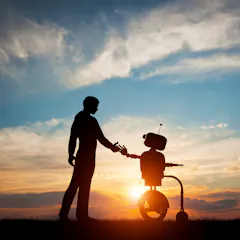
Robots may match humans in recognising different types of emotions in the next few decades.
Top contributors
-

Professor in Robotics, Queensland University of Technology
-
Professor of AI, Research Group Leader, UNSW
-
PhD in machine ethics, University of Canterbury
-
Professor, Director of the Centre for Robotics, Queensland University of Technology
-
The University of Melbourne
-
Professor Emeritus, Swinburne University of Technology
-
Reader in Autonomous Intelligent Robotics, University of Birmingham
-
Senior Lecturer, Department of Engineering, Nottingham Trent University
-
Senior University Teacher in Robotics, University of Sheffield
-
Researcher in Artificial Intelligence Regulation, Australian National University
-
Honorary Associate Professor, UNSW
-
Professor, School of Systems and Computing, UNSW
-
Lecturer in Robotic Systems, University of Manchester
-
Professor of Management, Co-Director of the MIT Sloan Institute for Work and Employment Research, MIT Sloan School of Management
-
Professor of the Practice of International Development, Harvard Kennedy School