

People must learn more about the history and legacies of residential schools and day schools and understand their relationship to Canada’s colonial project.
Articles on Residential schools
Displaying 21 - 40 of 59 articles

Indigenous stories of survival in fictional post-apocalyptic landscapes draw from actual events and experiences. These stories preserve histories and the possibility of hope.

A better understanding of what most genocide scholars believe can help people understand how Canada’s Indian Residential School system fits with the definition of genocide.
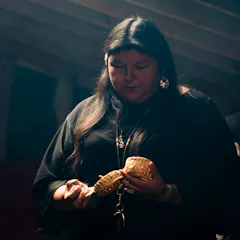
Was participating in ceremony despite pandemic restrictions an act of Indigenous resistance and resurgence and did it reflect reassertion of nationhood and self-determination?
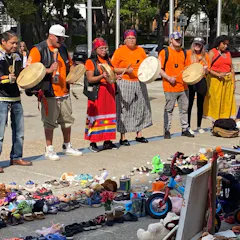
Here’s what the education system needs to do to help teachers address, repair and heal education towards and beyond reconciliation.

Indigenous people and communities are not monolithic. How they react to and deal with tragedy will be different. Acknowledging that will help us all heal.
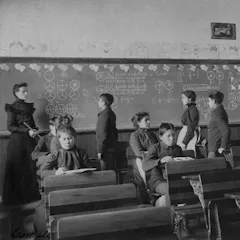
Ernest Knocks Off was 18 when he arrived at the Carlisle boarding school in 1879. He was one of many young Native people who fought – in his case, to the death – to retain their language and culture.

How can settler-Canadians cheer for their country at the Tokyo Olympics after the recent discoveries of hundreds of unmarked graves of children who attended Indian Residential Schools?

Secret burials are the stuff of gothic fiction, but these gothic events actually happened to Indigenous children.
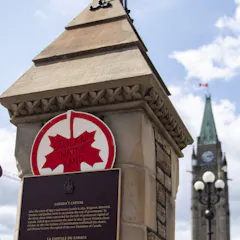
Considering our relationships to stories about the past and looking at learning as a process of encounter can help Canadians to become better treaty partners.
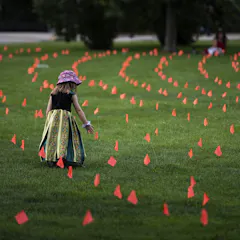
Canadians who wish to pay tribute to the children who died at Indian Residential Schools should demand the government stop fighting First Nations children in court.

People often decry words and call for action after tragic events. But words are action and they’re fundamental to Canadian democracy.

Acts of genocide were strategically implemented by church and the Canadian government to remove Indigenous people from their land and, in turn, their culture.
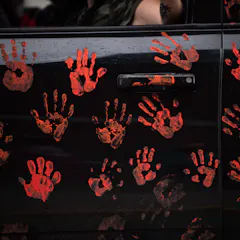
Ending the Canadian genocide of Indigenous peoples is a legal obligation, requiring honest, active decolonization. The lawyer who wrote the MMIWG’s inquiry’s legal analysis of genocide explains.
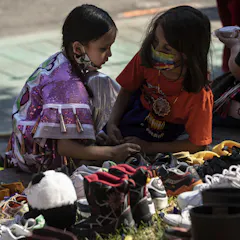
An Indigenous lawyer makes the case that what happened to Indigenous children who went to residential schools is genocide and the case should be tried by the International Criminal Court.

A commitment to eliminating racism must be reflected in accountability mechanisms that focus on the impacts of coordinated and consistent anti-racist action.

Canadians need to understand the basic harms and violences that continue to be experienced by Indigenous people across the land we call Canada.

Ground-penetrating radar located the remains of 215 First Nations children in a mass unmarked grave, revealing a macabre part of Canada’s hidden history.
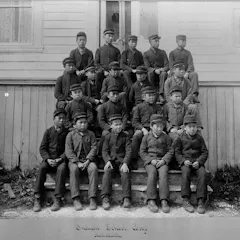
The destruction of IAP residential school records and media reports that continually emphasize compensation will ensure that if remembered, the process will be remembered through a colonial gaze.
Canada’s new governor general will have to fuse the British, French, American and Indigenous elements of Canada that together are the core of the country.
Top contributors
-

Assistant Professor, Teaching Stream; June Callwood Professor of Social Justice; Special Advisor on Indigenous Initiatives, Victoria University, University of Toronto
-
Professor, Faculty of Education, University of Manitoba
-
Associate Professor, Departments of History and Indigenous Studies, University of Manitoba
-
Assistant Professor, Sociology Department, University of Lethbridge
-
Distinguished Professor, Department of Curriculum, Teaching and Learning, Ontario Institute for Studies in Education, University of Toronto
-
Adjunct Professor, Stout Research Centre, Victoria University of Wellington and Auckland University of Technology, Professor of Political Science, Charles Sturt University
-
Associate Professor, Sociology, Athabasca University
-
Associate professor, Faculty of Law, L’Université d’Ottawa/University of Ottawa
-
PhD Candidate in Education, University of New Brunswick
-
Professor, History of Education, Queen's University, Ontario
-
Director, Centre for Human Rights Research and Distinguished Professor, History and Women's and Gender Studies, University of Manitoba
-
Elder in Residence, Queen's University, Ontario
-
Assistant Professor/Associate Director, Waakebiness-Bryce Institute for Indigenous Health, University of Toronto
-
Instructor in communication studies at Carleton University and the University of Ottawa, Carleton University
-
Cherokee Nation citizen, Professor of Critical Indigenous Studies and English, University of British Columbia