
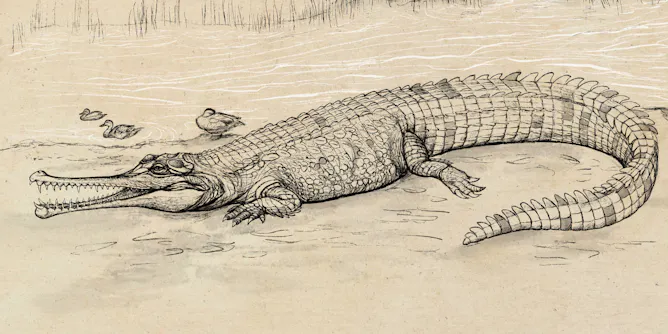
Gunggamarandu maunala is the first Australian croc discovered from a group called the tomistomines. And its prehistoric presence in modern-day Queensland means there could be more discoveries to come.
Articles on Reptiles
Displaying 61 - 80 of 124 articles

There are too many little-understood species for scientists to study them all. A new approach helps decide which ones to tackle first.

The recent discovery of fragments of a jaw fossil show that at one point, herbivorous reptiles evolved highly complex and efficient teeth.
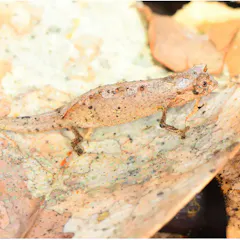
Madagascar stands out as an exceptionally interesting place in which to study the evolution of “mini” creatures. And we are only just starting to scratch the surface of this.
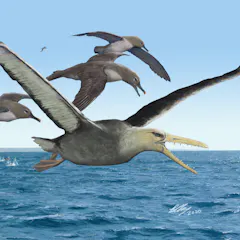
Paleontologists have discovered fossil remains belonging to an enormous ‘toothed’ bird that lived for a period of about 60 million years after dinosaurs.
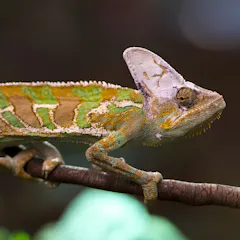
Reptiles are consistently overlooked by regulators of the trade in wildlife, but many face extinction in the wild.

The weather is warming up, and snakes are coming out to bask in the sun. But we don’t need to tell tall tales to appreciate snakes – the truth is far more fascinating.
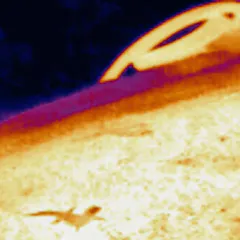
Some skinks have been known to kill their babies – but one remarkable species goes to any lengths to save them.
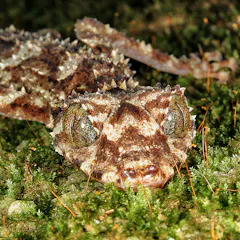
With targeted conservation action, we might just save many of these species before it’s too late.
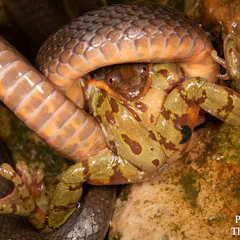
CC BY-NC-ND7.04 MB (download)
Facebook groups exist to share information about most classes of animals and plants, and these communities have unprecedented observational power.
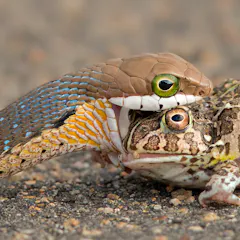
Social media has proved to be a helpful source of observations of snakes feeding. Knowing more about their diet is useful because it’s linked to their venom biochemistry.

The Kaputar rock skink is thought to have have one of the smallest ranges of any reptile in New South Wales – at the summit of a single extinct volcano, Mount Kaputar.

All chameleons are able to change colour at least a little bit, but some species can do it much more than others.
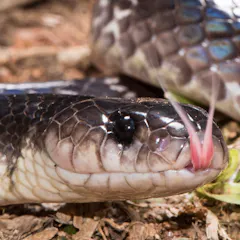
Relax, snakes aren’t out to get you.
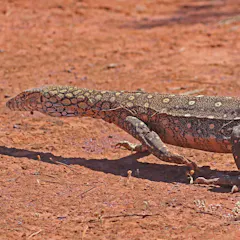
There are 60,000 abandoned mines in Australia. How do we restore them so that animals return? A researcher’s epic fieldwork project in WA’s Mid West could help provide the answers.
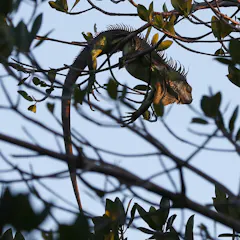
Green iguanas are an invasive species that seem to be spreading and proliferating in Florida. Used to warmer temps, they switch into torpor mode when the mercury drops.
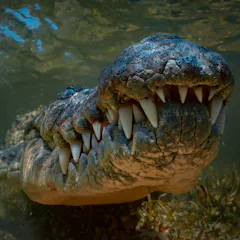
Paleontologists created an evolutionary map of how croc body size changed over the last 200 million years – with some interesting implications for today’s species.
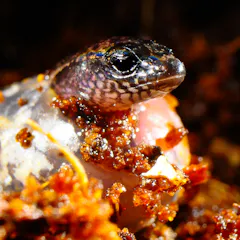
The evolution of live birth from egg-laying is no mean feat. Now new research reports on the first known example where both eggs and a live birth come from the same lizard pregnancy.
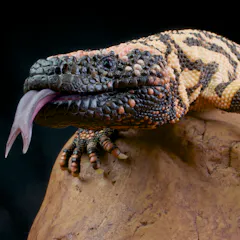
The Gila monster gave humans a treatment for diabetes. What other medical miracles are we losing by failing to protect wildlife and ecosystems?
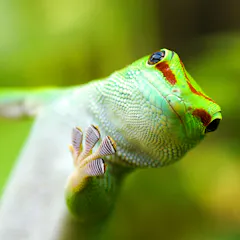
Understanding geckos’ movements could lead to better robots.
Top contributors
-

PhD student studying human-saltwater crocodile conflict, Charles Darwin University
-
Professor of Conservation Biology, Charles Darwin University
-
Distinguished Professor of Ecology, Fenner School of Environment and Society, Australian National University
-
Research Officer Herpetology, Museums Victoria Research Institute
-
Associate Professor of Behavioural Ecology, Curtin University
-
Director of the Wildlife Crime Research Hub, Australian Research Council Industry Laureate Fellow, Adelaide University
-
Curator of Herpetology, Associate Professor of Vertebrate Zoology, University of Copenhagen
-
Endeavour Research Fellow, Post-doctoral scholar, UNSW
-
Post-doctoral fellow, Australian Landscape Trust, Calperum Station, James Cook University
-
Professor in Terrestrial Ecology, Deakin University
-
Honorary Research Fellow, University of Sydney
-
Associate Researcher, The University of Queensland
-
John Evans Memorial Fellow, Australian Museum
-
Senior Lecturer, Biodiversity and Conservation Biology, University of the Western Cape
-
Professor Emeritus in Terrestrial Ecology, University of Sydney