
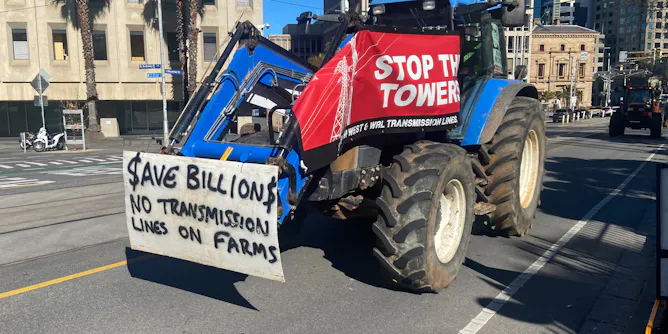
The scale of the challenge of hitting Australia’s renewable energy target points to the need for a more standardised and inclusive approach to sharing the benefits than we have seen so far.
Articles on Renewable Energy Target
Displaying 1 - 20 of 109 articles
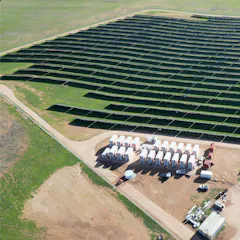
The Australian Labor government’s expanded Capacity Investment Scheme gives us a better chance of hitting high renewable energy targets. It’s not without risk but well worth the rewards.
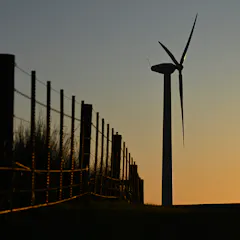
Of all Australia’s climate policies, the Renewable Energy Target has been the most effective. Why have Australian governments moved away from it, and how can they revive it?
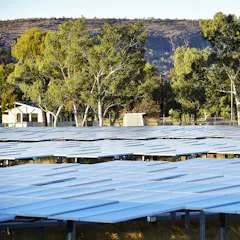
To achieve a target of 82% renewable energy generation by 2030 requires a huge number of new sites for solar and wind farms.
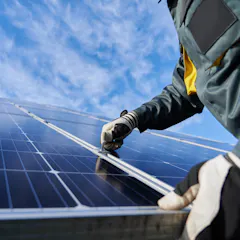
After a decade of climate wars, Australia is suddenly united – with state, territory and federal goverments aiming for net zero by 2050 for the first time
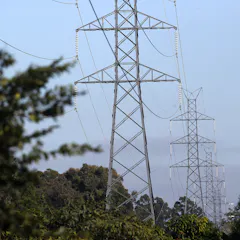
We arrived at this moment thanks to a series of policy decisions under previous governments – state and federal - that left Australia’s energy system unable to cope with the demands placed on it.
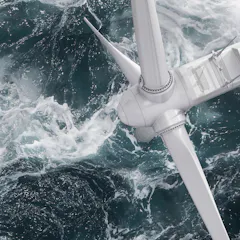
Australia has finally opened the regulatory doors to offshore wind farms. What do we need to do to make the roll out fast and build supply chains?
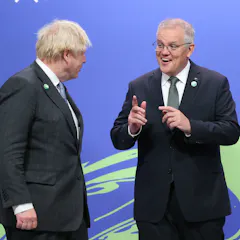
We already have most technologies Australia needs to make the clean energy transition. What’s missing is a plan to deploy them at huge scale.
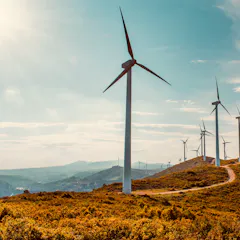
Some Australian states have committed to 100% renewable energy targets, or even 200% renewable energy targets. But this doesn’t mean their electricity is, or will be, emissions free.
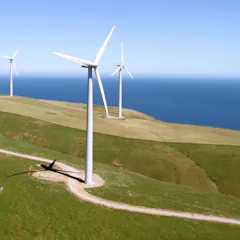
Last year, renewables provided a whopping 60% of South Australia’s electricity supplies. The remarkable progress came as national climate policy was gripped by paralysis – so how did it happen?

Australia is installing renewable energy at more than ten times the global average. This is excellent news, but raises serious questions about integrating this electricity into our grids.
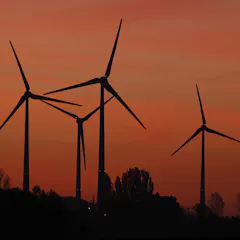
The federal government this week heralded Australia’s renewable energy performance. But the outlook leaves little cause for celebration.
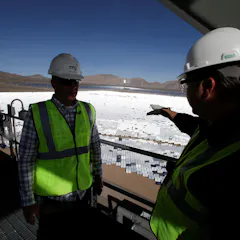
But many new governors and members of Congress intend to take action on climate change.
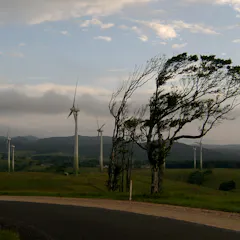
There are calls from the backbench and elsewhere for the federal government to safeguard the future of coal. But do those calls make economic sense? A look at Queensland’s energy landscape suggests not.

Scott Morrison’s budget speech held no surprises on energy, after months of debate over the National Energy Guarantee. The real news comes in July with the release of a crucial ACCC report on power prices.

On Q&A, Minister for Urban Infrastructure and Cities Paul Fletcher said South Australia’s high electricity prices were “the consequence” of Jay Weatherill’s renewable energy policies. Is that right?
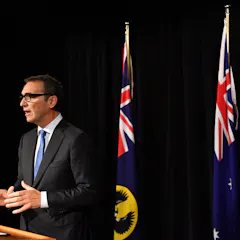
The end of Jay Weatherill’s government has removed a significant obstacle to progress on the federal National Energy Guarantee – even though we don’t yet know what the full policy will look like.
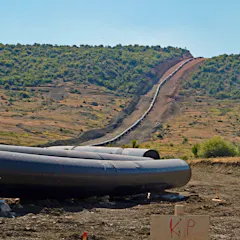
The European Investment Bank’s funding of the Trans Adriatic Pipeline will harm the climate and makes little financial sense.
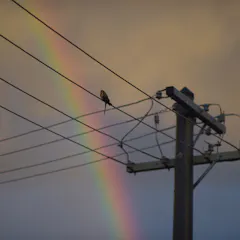
As federal and state energy ministers gather to discuss the Turnbull government’s proposed National Energy Guarantee, many of the finer details of the modelling are not yet available.
As the Clean Energy Target fades away, perhaps a Dispatchable Reliable Energy Target will be innocuous enough to pass the Liberal party room and the Senate.
Top contributors
-

Senior Research Associate, Renewable Energy & Energy Systems Analyst, UNSW
-
Senior Fellow in Energy and Climate Change, Grattan Institute
-
Professorial Fellow, University of Canberra
-
Senior Industry Fellow, Environment and Planning, RMIT University
-
Professor of Engineering, Australian National University
-
Joint director, Collaboration on Energy and Environmental Markets, and Professor, School of Electrical Engineering and Telecommunications, UNSW
-
Honorary Associate Professor, Centre for Climate Economics and Policy, Australian National University
-
University of Southern Queensland
-
Energy Fellow, Grattan Institute
-
Climateworks Centre CEO, Monash University
-
Associate Professor, RMIT University
-
Assoc Prof. Renewable Energy, Monash University
-
Emeritus professor, Australian National University
-
Professor of Law, Deakin University
-
Redmond Barry Distinguished Professor Emeritus, The University of Melbourne