

Hydrogen makes it possible to store renewable energy for longer – but has its limitations.
Articles on Solar energy
Displaying 1 - 20 of 158 articles

Climate change, biodiversity loss and water conservation are often framed as problems in need of national policies. However, there is an often more important level of governance: the neighborhood.

Both major parties want to boost household solar. But new research suggests wider uptake also depends on policy certainty, design and long-term returns.

As food and living costs rise, rooftop solar and rainwater harvesting could help low income South African households save money and buy more food.
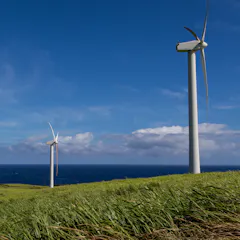
Many steps that are good for clean energy also dovetail with federal priorities, from affordable housing to data centers and rural development.
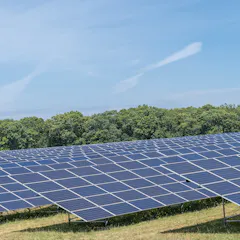
Generating solar power requires a lot of land – but which land should it be? And what else can be done on that land?

William Adams was convinced that solar energy could change the world. The problem was, he needed more sun to demonstrate it.

Wealthy nations will need to help fund clean energy, green industrial growth and mineral processing.

Sodium-ion batteries use more abundant raw materials but don’t currently perform as well as those made with lithium.

The answer has to do with the air we breathe and that bright white snowpack, as an atmospheric scientist in Colorado explains.
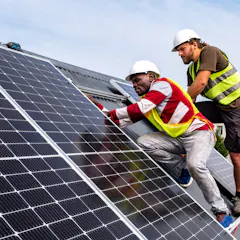
South Africa needs a renewable energy industrial strategy, not just requirements for green power projects to buy a percentage of solar parts from local companies.
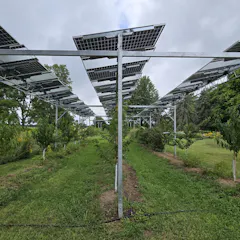
A new study finds farmers can enjoy increased crop yeilds under partial shade of solar panels long after they stop working decades from now.
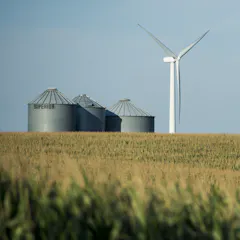
Rural counties also benefit in jobs, manufacturing and tax revenue that will be hard to replace as the US government slashes support for the industries.

The new federal law favors energy technologies that are already profitable and increase global warming over cleaner approaches that could use the investment support.

AI-powered systems can help manage energy grids, building temperatures and predict weather to store and use energy more efficiently.

Chemical manufacturing is an energy-intensive industry. A team of chemists is designing a technique that could power the necessary reactions with sunlight or LEDs.

Some technologies could rapidly cut emissions, while others do little to fight climate change. The House bill favors the latter while nixing support for the former.

Supercritical geothermal is worth exploring and drilling might soon be technically feasible. But its value will be limited if wind and solar energy costs continue to fall.
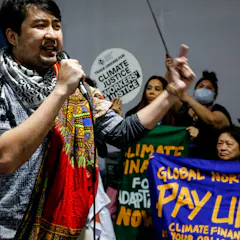
Reducing emissions, removing greenhouse gases, repairing ecosystems and building resilience are the four R’s that can save the planet.
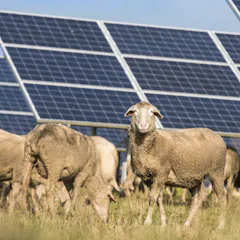
Agrivoltaics — a portmanteau for agriculture and photovoltaics — has enormous potential to solve our climate and energy problems simultaneously.
Top contributors
-

Professor of Engineering, Australian National University
-
John M. Thompson Chair in Information Technology and Innovation and Professor, Western University
-
Professor of Civil and Environmental Engineering, Rice University
-
Professor Emeritus, Macquarie Business School, Macquarie University
-
Professor
-
Research Fellow, Stephenson Institute for Renewable Energy, University of Liverpool
-
Chief economist, CSIRO energy, CSIRO
-
Associate Professor of Economics, Georgia State University
-
Emeritus professor, Australian National University
-
DVC Research and Innovation, Strathmore University
-
Research Director, Institute for Sustainable Futures, University of Technology Sydney
-
Senior Fellow in Energy and Climate Change, Grattan Institute
-
Senior Research Associate, Renewable Energy & Energy Systems Analyst, UNSW
-
Affiliate, Electricity Markets & Policy Group, Lawrence Berkeley National Laboratory
-
Assoc Prof. Renewable Energy, Monash University