
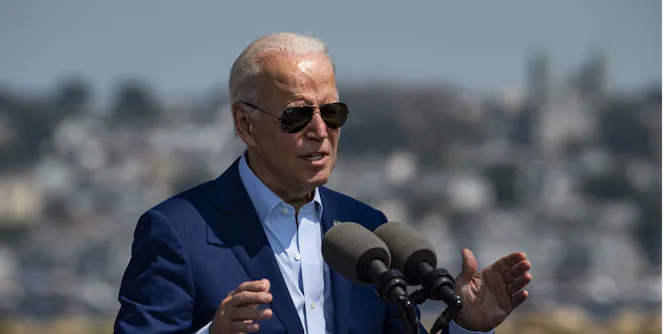
President Joe Biden has pledged sweeping action on climate change but struggled to deliver it. A legal scholar explains why a national emergency declaration should be a last resort.
Articles on Regulation
Displaying 161 - 180 of 504 articles

Cowpea is an important crop in Ghana. What will a genetically modified version mean for the country’s farmers?
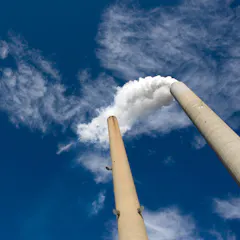
In a 6-3 ruling, the Supreme Court held that an Obama administration plan to regulate carbon emissions from power plants exceeded the power that Congress gave to the Environmental Protection Agency.

Climate change has a clear link to rising foodborne illnesses. Blackouts during heat waves and wildfires are a growing part of the problem.
The EU’s proposed regulations don’t align with existing technology. They’re likely to fail – or to break the internet as we know it.
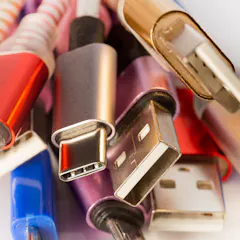
EU rules often have significant effects beyond its borders. The new USB-C charging standard is a great example.
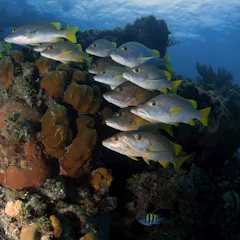
As nations pledge to preserve swaths of ocean within their territorial waters, a marine scientist explains why some marine protected areas shelter ocean life more effectively than others.
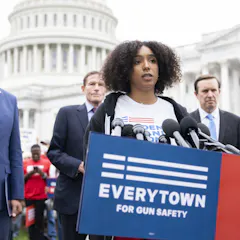
Congress tends to be most likely to act after an assassination or assassination attempt of historic proportions or mass shootings. But sometimes lawmakers do nothing beyond debate new measures.
Elon Musk’s purchase of Twitter is seen as a threat to the digital public square. International regulation is required to protect internet users’ access to democratic public spaces.
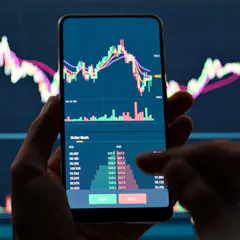
The use of “gamification” in stock trading and other apps raises new legal challenges. Existing legal tools should be adapted to meet these challenges.
The age of the free speech free-for-all is over – but public online spaces are possible.
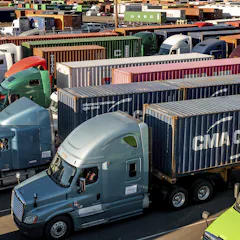
The SEC’s proposal would require companies to disclose their greenhouse gas emissions and other climate risks, but it’s not a done deal yet.
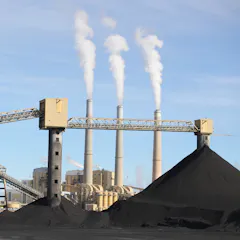
West Virginia v. EPA could be the opportunity that conservative justices have been seeking to curb federal power.

A regulatory approach will place an unnecessary burden on bio-innovators. This will discourage local investment for in-house R&D, as well as projects in the public sector.
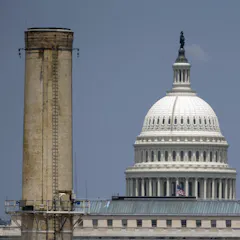
The social cost helps regulators factor in harm from climate change when they consider new rules and purchases, like buying electric- vs. gas-powered trucks for the Postal Service.

You have a finely honed sense of privacy in the physical world. But the sights and sounds you encounter online don’t help you detect risks and can even lull you into a false sense of security.
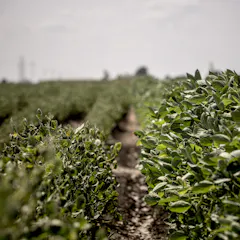
Farmers are stuck in a chemical war against weeds, which have developed resistance to many widely used herbicides. Seed companies’ answer – using more varied herbicides – is causing new problems.
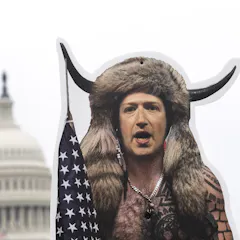
Misinformation will continue to strain society in 2022 as the lines between misinformation and political speech blur, cynicism grows and the lack of regulation allows misinformation to flourish.

Burning leaded gasoline releases toxic lead into the environment, and for 100 years people around the world have been dealing with the health effects. How did a century of toxic fuel come to be?
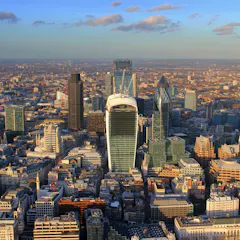
Research suggests that corporate leaders can be encouraged to lobby for climate action by personally experiencing the effects of climate change.
Top contributors
-

Professor of Law, University of Pittsburgh
-
Director of Energy Studies, University of Florida
-
Professor of Information Systems, Michigan State University
-
Professor of Accounting, The Ohio State University
-
Professor of Law Emeritus, Vermont Law & Graduate School
-
Professor of Law, University of Kansas
-
Professor of Economics, Monash University
-
Professor of Law, Villanova University
-
Distinguished Professor of Practice, Trachtenberg School of Public Policy & Public Administration, and Director of the Regulatory Studies Center, George Washington University
-
Senior Lecturer in Economics, Lancaster University Management School, Lancaster University
-
-
Professor of Law, University of East London
-
Professor of Law, University of California, Davis
-
Professor of Environmental Engineering, North Carolina State University
-
Vice Chancellor's Fellow at Victoria University and Adjunct Professor of Economics, Victoria University