
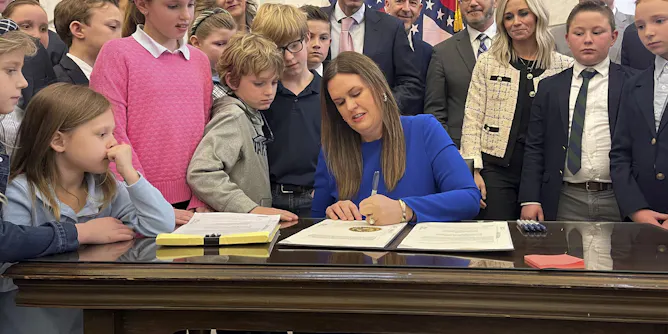
Some of the biggest changes to child labor laws are in Iowa and Arkansas.
Articles on Regulation
Displaying 121 - 140 of 504 articles

Do environmental reviews improve projects or delay them and drive up costs? Two legal scholars explain how the law works and how it could influence the ongoing transition to renewable energy.

Rishi Sunak is pitching the UK as a hub for AI regulation, but some experts doubt its appeal.
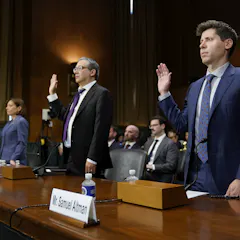
Figuring out how to regulate AI is a difficult challenge, and that’s even before tackling the problem of the small number of big companies that control the technology.
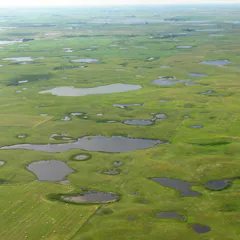
In Sackett v. EPA, a suit filed by two homeowners who filled in wetlands on their property, the Supreme Court has drastically narrowed the definition of which wetlands qualify for federal protection.

Companies that want to avoid the harms of AI, such as bias or privacy violations, lack clear-cut guidelines on how to act responsibly. That makes internal management and decision-making critical.

Without more transparency about AI use, it will be difficult for people to challenge biased decisions against them.
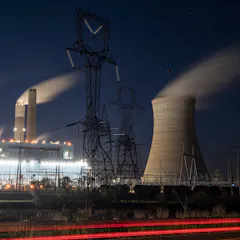
After the Supreme Court overturned the Obama administration’s strategy for reducing power plant carbon emissions in 2022, the Biden administration is taking a narrower but still ambitious approach.

As a society, everyone is motivated to regulate AI development. For individual companies, though, the opposite is true.

Dubbed the ‘godfather of AI’, Hinton’s early work helped pioneer many of the methods underlying the AI systems we see today.
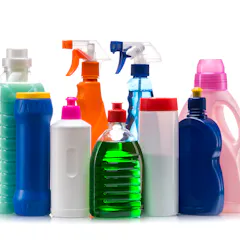
Manufacturers don’t usually have to disclose what’s in products like shampoo and household cleaners, but a new study finds that these products can contain hazardous ingredients.
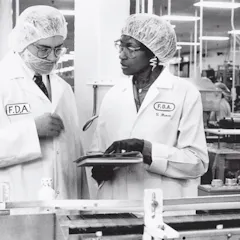
As the government’s oldest consumer protection agency, the FDA has long butted up against drugmakers, activists and politicians. But undermining its work could be harmful to patient health and safety.
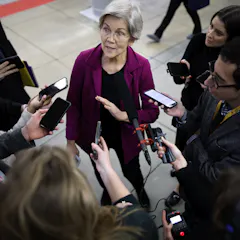
Financial crises are inevitably followed by legislation to restructure the banking system, and the ongoing problems with bank stability are likely to be no exception.

Powerful new AI systems could amplify fraud and misinformation, leading to widespread calls for government regulation. But doing so is easier said than done and could have unintended consequences.
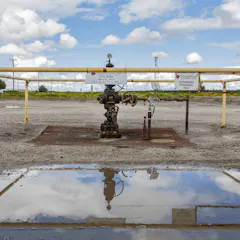
Fracking for oil and gas uses millions of pounds of chemicals, some of which are toxic or carcinogenic. Two researchers summarize what companies have disclosed and call for more transparency.

The Biden administration fears that further consolidation in the aviation industry will lead to worse outcomes for consumers – but do mergers necessarily push up prices?
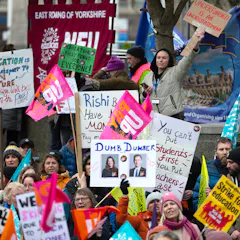
The UK parliament’s Joint Committee on Human Rights has suggested changes to the strikes bill but even those may not go far enough.
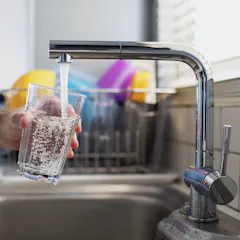
The Biden administration is finalizing the first federal limits on two compounds, PFOA and PFOS, in drinking water. These so-called ‘forever chemicals’ have been linked to numerous health effects.

The recent rail accident in Ohio is raising questions about who should be responsible for the aftermath of derailments. Residents impacted by a 10-year-old rail tragedy in Canada still want answers.

Kate Chaney & Michelle Grattan 16.02.2022
This week, Politics with Michelle Grattan features independent MP Kate Chaney. They discuss climate change, integrity, the economy, challenges of the job and more
Top contributors
-

Professor of Law, University of Pittsburgh
-
Director of Energy Studies, University of Florida
-
Professor of Information Systems, Michigan State University
-
Professor of Accounting, The Ohio State University
-
Professor of Law Emeritus, Vermont Law & Graduate School
-
Professor of Law, University of Kansas
-
Professor of Economics, Monash University
-
Professor of Law, Villanova University
-
Distinguished Professor of Practice, Trachtenberg School of Public Policy & Public Administration, and Director of the Regulatory Studies Center, George Washington University
-
Senior Lecturer in Economics, Lancaster University Management School, Lancaster University
-
-
Professor of Law, University of East London
-
Professor of Law, University of California, Davis
-
Professor of Environmental Engineering, North Carolina State University
-
Vice Chancellor's Fellow at Victoria University and Adjunct Professor of Economics, Victoria University