

In the wake of the coronavirus pandemic, regional Australia needs local government to emulate the example of the local councils that brought prosperity to North Queensland after the second world war.
Articles on Reconstruction
Displaying 41 - 53 of 53 articles
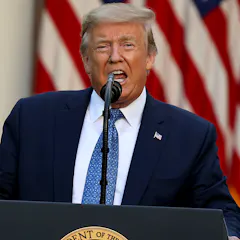
President Trump has warned that he will send the military into states to curb protests. Is Trump’s warning bluster? Or does the president have the authority to send the military into American cities?
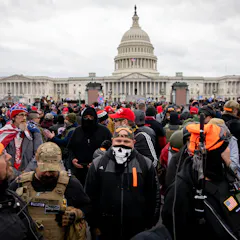
White supremacists’ protests against COVID-19 lockdowns reflect the US history of political leaders encouraging white supremacist groups to challenge or overthrow democratic governments.
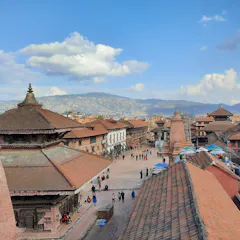
Bhaktapur suffered 300 deaths, 2,000 wounded and over 30,000 houses damaged in the 2015 earthquake. Heritage restoration has become crucial to community recovery.
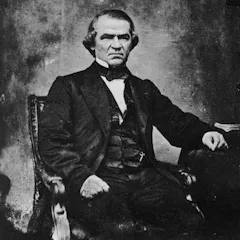
Falsehoods about Andrew Johnson have become a staple of Republican arguments opposing the impeachment of Trump.
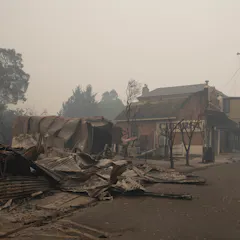
Australia can learn from how India used community hubs to bridge the gap between government and local communities in the challenging years of reconstruction.
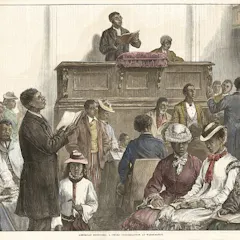
Many historians and other scholars say what Americans have traditionally learned about the complex period that followed the Civil War falls short of what we should know.
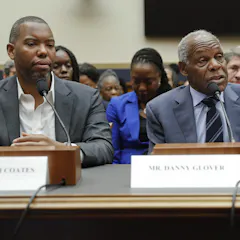
Reparation opponents who oppose truth and reconciliation by insisting that America’s “original sin” of slavery is in the distant past should heed the lessons of Canada and South Africa.
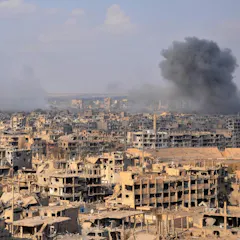
Wars play a central role in increasing numbers of refugees worldwide. Is it time to think about a “destruction tax”?

Nepal’s capital city was devastated by the 2015 earthquake, but rebuilding heritage sites has been fraught with difficulties.
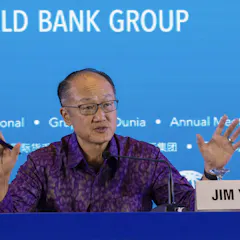
The power dynamics in the World Bank have changed dramatically.
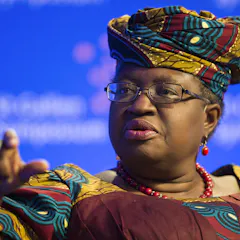
The World Bank needs to change as part of rethinking the current world order, and giving rising powers and developing countries a meaningful voice.
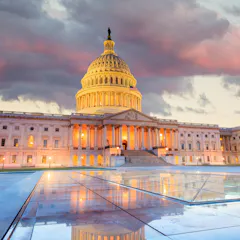
The new Congress is divided into a GOP Senate and Democratic House. History provides a glimpse of what this could mean: Democrats hold the power to investigate, if not to legislate.
Top contributors
-

Professor of Literature and Director of Irish and Irish American Studies, College of Charleston
-
Professor of Law, University of Notre Dame
-
Associate Professor of History, College of Saint Benedict & Saint John's University
-
PhD Candidate & Researcher, School of Architecture, Université de Montréal
-
University System of Maryland Regents Professor of Law, University of Maryland
-
Professor of History, Toronto Metropolitan University
-
Lecturer in History, James Cook University
-
Foundation Professor of History, Arizona State University
-
Professor of Higher Education and Director, Museum of Education, University of South Carolina
-
Associate Professor, HEC Paris Business School
-
PhD Candidate at Institute for Culture and Society, Western Sydney University
-
Chair in the Economics of Disasters and Climate Change, Te Herenga Waka — Victoria University of Wellington
-
Senior Lecturer in Spatial Planning, Queen's University Belfast
-
Assistant Professor of Secondary Social Studies, West Virginia University
-
Professor of Critical Race and Ethnic Studies, Miami University