
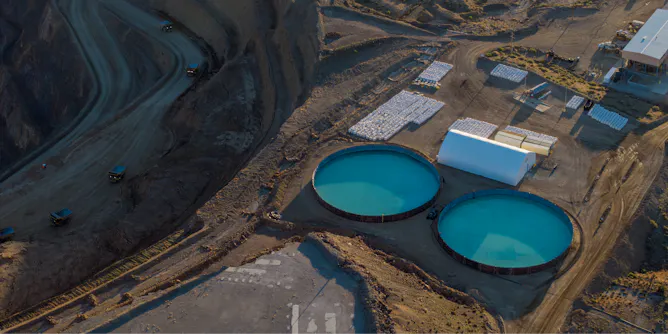
Today, China controls the vast majority of rare earths processing. That gives it enormous political leverage, and its trade truce with the US involving those minerals expires Nov. 10, 2026.
Articles on Rare earths
Displaying 1 - 20 of 43 articles
Australia has to ensure it can build and run these expensive projects without Chinese investors’ participation.

This week’s summit has revived a 20-year-old idea of the ‘Group of Two’ superpowers working together with global benefits. But we’re now living in a different world.
America was once the global leader in rare earth element production, but as processing moved to China, the US lost capacity and expertise. It can get them back.
Critical minerals are found in several forms in the ocean, from potato-size nodules to brine pools. They are also in some of the least understood parts of our planet.
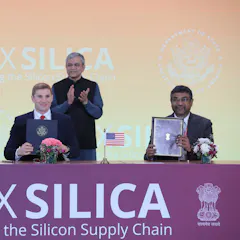
The new agreement gives Australia and India a chance to become much needed AI chip material suppliers – and an alternative to China.

Native American lands contain 30% of the nation’s coal, 50% of its uranium and 20% of its natural gas, as well as copper, lithium and rare earth elements.

Listen to Paul Bierman, an expert on Greenland’s ice, talk to The Conversation Weekly podcast about the history of the island’s ice sheet.

Coal mines are notorious sources of acid mine drainage, but the orange sludge that threatens water supplies and wildlife also contains valuable rare earth elements.

A 1951 defense agreement between the United States and Denmark allows the US to build military installations on Greenland to protect the region.

The new strategic reserve may provide the West with greater access to key minerals. But China still dominates the processing of many of them.
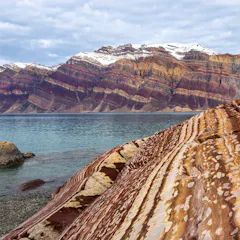
Greenland’s rare earth element deposits may be among the world’s largest by volume.

From content moderation to hardware supply chains, exploitation looms large.

New technologies could transform the way we mine – and recycle – critical minerals.

Europe needs these minerals for manufacturing, and China controls the vast majority of supply.

Will Trump’s meeting with Xi lower the temperature between China and the US?
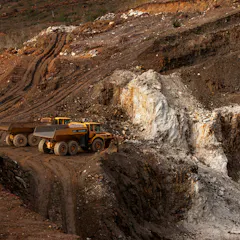
Global energy giants are turning their focus to critical minerals. With such deep-pocketed players, Australia must invest heavily if it wants to stay in the race.
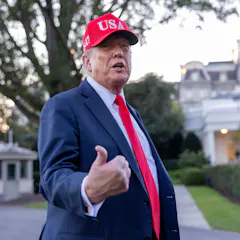
We’ve entered a period where control of a few key resources and trade routes gives countries enormous leverage.

Myanmar’s generals are planning an election the opposition has slammed as a sham. They could see Trump’s interest in the country as a way of legitimising the polls.
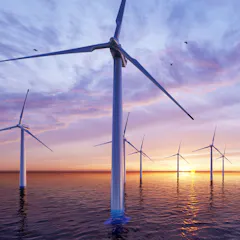
Ørsted’s cancellation of Hornsea 4 bodes ill for the UK’s 2030 clean power target.
Top contributors
-

Associate Professor, Technology and Innovation, University of Technology Sydney
-
Professor of Natural Resource Economics, West Virginia University
-
Assistant Clinical Professor of Critical Resources & Sustainability Analytics, University of Maryland
-
Professor of Geophysics, University of Oxford
-
Principal Research Fellow - Materials, Sheffield Hallam University
-
Professor in Sustainable Mining, University of Exeter
-
Assistant professor, University of Nottingham
-
Sêr Cymru Chair of Low Carbon Energy and Environment, Swansea University
-
Professor of Environmental Engineering, School of Engineering, Griffith University
-
Graduate Research Assistant in Sustainability, Rochester Institute of Technology
-
Reader in Environmental Science, University of Hull
-
Postdoctoral Research Fellow, The University of Queensland
-
Associate Professor, Monash University
-
Professor in Digital Media, Western Sydney University
-
Professor of Sustainability, Rochester Institute of Technology