
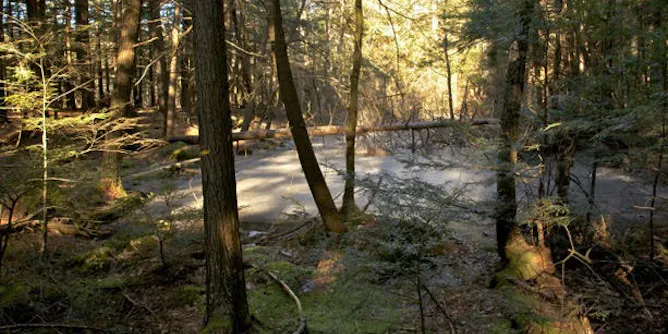
Evidence shows Native Americans in New England lived lightly on the land for thousands of years. It wasn’t until Europeans arrived that the landscape experienced major human impacts.
Articles on Radiocarbon dating
Displaying 21 - 29 of 29 articles
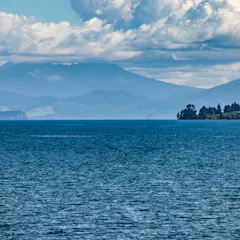
New research shows that carbon dioxide in groundwater can affect the aging of volcanic eruptions. The findings could help predict future eruptions.
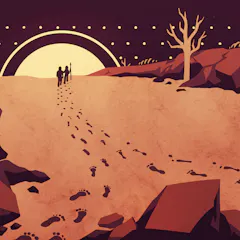
When did Australia’s human history begin?
The Conversation, CC BY16.6 MB (download)
Today's episode of Essays On Air, the audio version of our Friday essay series, seeks to move beyond the view of ancient Australia as a timeless and traditional foundation story.
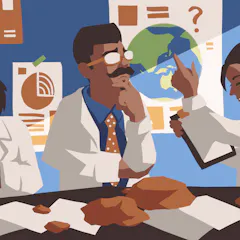
The world is made of tiny building blocks called ‘elements’. Scientists have worked out how fast some elements change into other elements. That gives us a very big clue about how old the Earth is.

How do scientists figure out when evolutionary events – like species splitting away from a common ancestor – happened? It turns out our DNA is a kind of molecular clock, keeping time via genetic changes.

Hotly-contested debates about the early or late canonisation of the Qur'an may be resolved by a recent discovery.
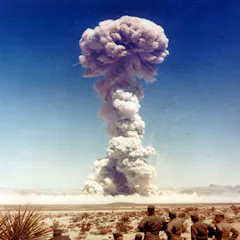
The identification of fakes and forgeries is a basic issue that has always raised controversy. This is unsurprising, of course – the enormous sums garnered by top paintings would turn to dust as soon as…
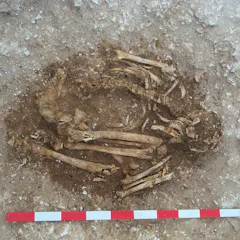
Radiocarbon dating has transformed our understanding of the past 50,000 years. Professor Willard Libby produced the first radiocarbon dates in 1949 and was later awarded the Nobel Prize for his efforts…
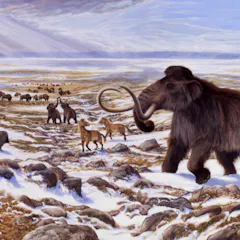
When we think of the last 50,000 years of prehistory, particularly the “Ice Age”, extinct species such as the woolly mammoth and woolly rhinoceros often spring to mind. Did humans bring about the extinction…
Top contributors
-

Professor of Environmental and Geographical Sciences, Bournemouth University; University of Reading
-
Associate Professor in Hominin Palaeoecology, Bournemouth University
-
Associate Professor of Islamic History, University of Leeds
-
Lecturer, Deakin University
-
Director of the Cornell Tree Ring Laboratory and Professor of Classical Archaeology, Cornell University
-
Professor of Geology, Adelaide University
-
Sir John Monash Distinguished Professor, Monash University. Deputy Director ARC Centre of Excellence for Indigenous and Environmental Histories and Futures, Monash University
-
Researcher, Italian Institute for Nuclear Physics
-
Lecturer, California State University, Long Beach
-
Professor of Molecular Evolution, School of Life and Environmental Sciences, University of Sydney
-
Adjunct Professor, University of Canterbury
-
Research Officer, Radiocarbon Facility, Australian National University
-
Postdoctoral Research Fellow in Biological Sciences, Columbia University
-
CSIRO
-
Honorary Fellow in Structural Geology and Tectonics, The University of Melbourne