
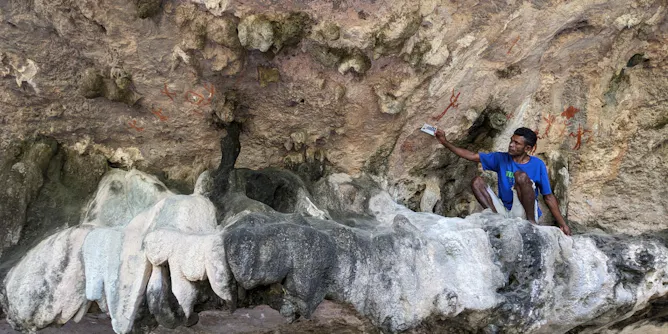
The age of the rock art at Wetar means it could be one of the earliest places outside of Taiwan to document the Austronesian migration.
Articles on Human migration
Displaying 1 - 20 of 47 articles
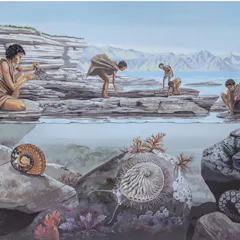
A coastal migration up and out of Africa was more likely to succeed than an overland journey.

A fossil face reveals that a prehistoric human species reached Western Europe much earlier than anybody thought.

New research provides direct evidence that seafarers travelled along the equator to reach islands off the coast of West Papua more than 50 millennia ago.
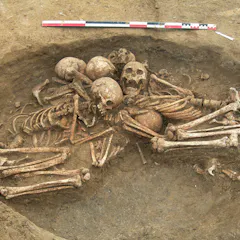
A new study reveals the final stage in the formation of the European genome, which is still present in many people today.
New evidence from Laili rockshelter on Timor hints at a rapid, large-scale human arrival 44,000 years ago.
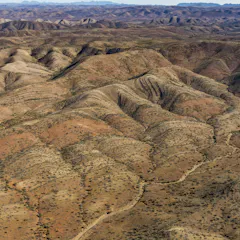
By detailing the landscape at the time of first humans’ migration into Australia, we can better understand how people travelled and where they settled.
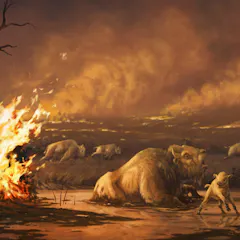
New findings from the La Brea Tar Pits in southern California suggest human-caused wildfires in the region, along with a warming climate, led to the loss of most of the area’s large mammals.
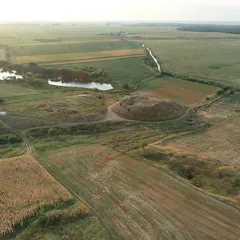
Ancient DNA from Ukraine uncovers the earliest evidence of the arrival of the ‘steppe ancestry’ – the last piece of the modern Western European genetic puzzle.
People with a common history – often due to significant geographic or social barriers – often share genetics and language. New research finds that even a dialect can act as a barrier within a group.

New evidence from contested Laos cave site shows humans reached Southeast Asia at least 68,000 years ago.

Genetic evidence reveals a long, previously unknown period of adaptation to cold climates in the history of ancient human migrations across the globe.
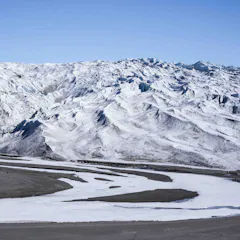
The Earth has had at least five major ice ages, and humans showed up in time for the most recent one. In fact, we’re still in it.
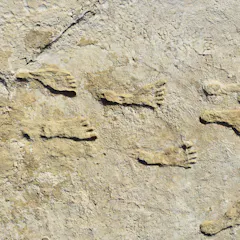
The New Mexico findings could rewrite the history of human migration to the Americas.
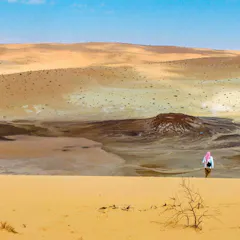
The new work presents the oldest dated evidence for hominins in Arabia, in the form of an ancient handaxe tool uncovered from the Nefud Desert.

Five centuries before Columbus arrived, migrants were spreading across North America, carrying their culture with them and mixing with those they encountered in new places.

Did people settle these islands by traveling north from South America, or in the other direction? Reanalyzing data from artifacts discovered decades ago provides a definitive answer.

Genetic studies show mingling between populations has been the norm throughout human history.
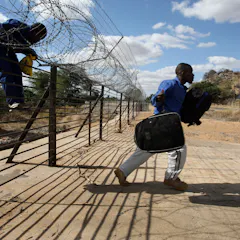
The militarisation of borders and securitisation of migration have always failed to stop irregular migration.

By studying the DNA of people who lived in East Asia thousands of years ago, scientists are starting to untangle how the region was populated.
Top contributors
-

Postdoctoral Researcher, College of Asia & the Pacific, Australian National University
-
Associate Professor of Archaeology, Griffith University
-
Distinguished Professor, School of Culture, History & Language, Australian National University
-
Research Fellow, School of Culture, History & Language, Australian National University; UCL
-
Director, Australian Research Centre for Human Evolution, Griffith University
-
Distinguished Professor, Charles Sturt University
-
Professor in Geochronology and Geochemistry, Southern Cross University
-
Professor, School of Natural Sciences, Macquarie University
-
Lecturer in Mediterranean Prehistory, University of Malta
-
Assistant Professor of Biological Sciences, Vanderbilt University
-
Associate Professor and Director, Flinders Microarchaeology Laboratory, Flinders University
-
Senior Research Associate, Australian National University
-
Postdoctoral Associate in Linguistics, University of the West Indies, Mona Campus
-
Professor of Archaeology, Griffith University
-
Professor of History, UMass Amherst