

Seashells are the skeletons of sea creatures – and they’re older than you might think.
Articles on Radiocarbon dating
Displaying 1 - 20 of 29 articles

A major mystery has surrounded the Hjortspring boat ever since its discovery: where did these invading warriors from the 4th century BC come from?

Baobabs have been a source of food, fibre and medicine in Africa for centuries.

There is growing evidence that termites have a substantial, but still poorly understood, role in the carbon cycle.
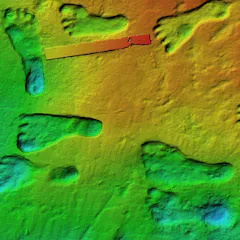
The early settlement of the Americas is hugely contested area of archaeology.
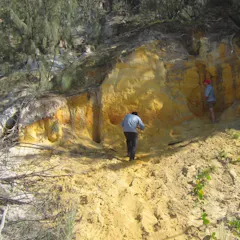
Until now, a limitation of records of past fires is that these have come from sediments laid down in lakes and bogs. Records for dryland regions have been lacking, but dune deposits can fill the gap.

Several studies have upended what we thought we knew about mummification using scientific dating techniques to reveal some fascinating – and surprising – insights.
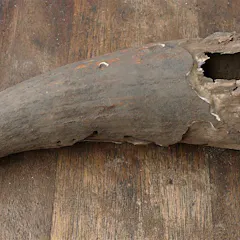
The medicine container was found in a painted rock shelter. A radio carbon date of the horn container places it at around AD 1461-1630.

It’s been 200 years since the discovery of one of the oldest human burial sites in western Europe on the Gower peninsula in south Wales.

A more precise timeline now shows Polynesian ancestors of Māori first settled in the North Island before expanding south and then retreating again when the climate changed.
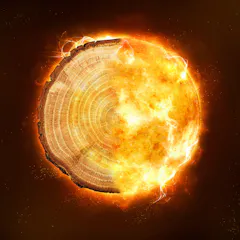
Half a dozen times in the past 10,000 years, enigmatic ‘Miyake events’ have showered Earth with cosmic rays.
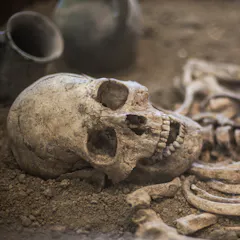
DNA dating could complement radiocarbon technology to help make archaeology more accurate.

Why did the chicken cross the globe? A new study has revealed how chickens were domesticated.
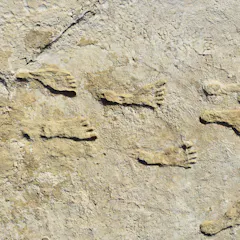
The New Mexico findings could rewrite the history of human migration to the Americas.

Determining the age of fish has been historically difficult, primarily involving lethal methods. A new DNA test solves this problem.

The mix-up might be explained by the rush to remove sacred remains to Rome some 1,700 years ago.

Did people settle these islands by traveling north from South America, or in the other direction? Reanalyzing data from artifacts discovered decades ago provides a definitive answer.
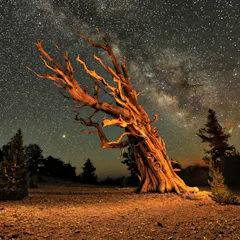
The updated methods are providing a clearer picture of how Earth and its inhabitants evolved over the past 60,000 years - and thus, providing new insight into its future.
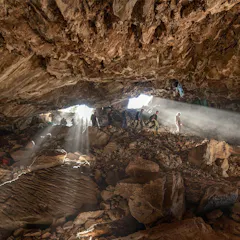
Stone tools found in a cave in Mexico have archaeologists rewriting the human history of the Americas.
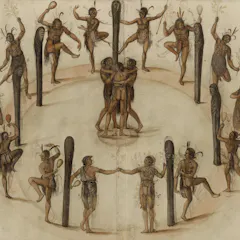
Modern dating techniques are providing new time frames for indigenous settlements in Northeast North America, free from the Eurocentric bias that previously led to incorrect assumptions.
Top contributors
-

Professor of Environmental and Geographical Sciences, Bournemouth University; University of Reading
-
Associate Professor in Hominin Palaeoecology, Bournemouth University
-
Associate Professor of Islamic History, University of Leeds
-
Lecturer, Deakin University
-
Director of the Cornell Tree Ring Laboratory and Professor of Classical Archaeology, Cornell University
-
Professor of Geology, Adelaide University
-
Sir John Monash Distinguished Professor, Monash University. Deputy Director ARC Centre of Excellence for Indigenous and Environmental Histories and Futures, Monash University
-
Researcher, Italian Institute for Nuclear Physics
-
Lecturer, California State University, Long Beach
-
Professor of Molecular Evolution, School of Life and Environmental Sciences, University of Sydney
-
Adjunct Professor, University of Canterbury
-
Research Officer, Radiocarbon Facility, Australian National University
-
Postdoctoral Research Fellow in Biological Sciences, Columbia University
-
CSIRO
-
Honorary Fellow in Structural Geology and Tectonics, The University of Melbourne