

Canada’s cybersecurity labour shortage cannot be solved simply by recruiting skilled immigrants, because systemic barriers — especially for racialized immigrant women — limit their integration, advancement and retention.
Articles on racialized women
Displaying all articles

Home care is essential to Ontario’s health- care system, but its failures are offloaded onto underpaid personal support workers — mostly racialized immigrant women —who often work in unsafe conditions.

A recent report looks at the ongoing disparities racialized immigrant women face in the Canadian labour market.

Advocacy often provokes strong reactions from those in power. This backlash deters others from speaking out and perpetuates a cycle of silence, gaslighting and compliance.

Research shows a classed and racialized divide among women caring for their children in Canada today. It’s a divide that is having a negative financial impact on immigrant women doing this work.

Recent research explores how women with non-native English accents — specifically Mandarin — fare in the Canadian job market.

The response to Sarah Jama’s comments on Gaza highlights the anti-Black and Islamophobic sentiments within Canadian politics.

Efforts to disrupt online misogyny need to focus on stopping online forums from becoming misogynistic echo-chambers.
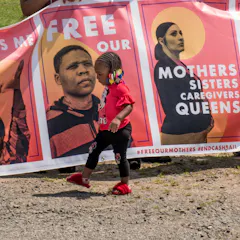
For Mother’s Day, we look at the fastest growing prison population in Canada — racialized women, many of whom are mothers. Experts connect the trend to rising poverty and the attempts to cope with it.

Long COVID impacts one in every five people who’ve had the virus. In the U.S., early research shows people of colour are most likely to develop long COVID. It has been called a mass-disabling event.

If the Canadian women’s movement doesn’t become transnational in scope, it risks continuing a colonial culture that sustains systemic barriers for women in Canada and around the world.

This Mother’s Day reflect on why mainstream media doesn’t recognize racialized women-led resistance movements as feminism. On the 12th anniversary of the Gardiner protest, let’s centre Tamil mothers.
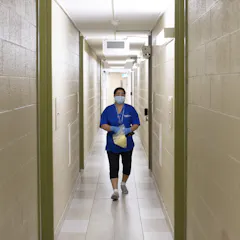
One of the factors that has made COVID-19 so catastrophic in long-term care homes was lack of paid sick leave for low-wage workers.
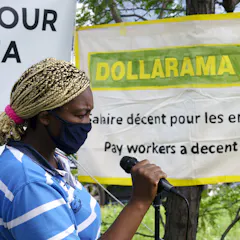
Urgent measures are necessary from various levels of government to develop support programs for immigrant women during the COVID-19 pandemic.

Urban gardening is a departure point for learning about land and relationships, as well as food, consumer culture and social activism.

As we celebrate moms this Mother’s Day, let’s remember that maternal health is a right that many do not enjoy.
Top contributors
-

Dr. Coen-Sanchez, L’Université d’Ottawa/University of Ottawa
-
Associate Professor of Sociology, Toronto Metropolitan University
-
Assistant Professor, DAN Department of Management & Organizational Studies, Western University
-
PhD student. The Graduate Center, City University of New York
-
Assistant Professor, Sociology, Trent University
-
Assistant Professor, Sociology, Toronto Metropolitan University
-
Professeure à temps partiel au département de communication / Part-time professor in the Communications Department, L’Université d’Ottawa/University of Ottawa
-
Assistant Professor of Sociology, Dalhousie University
-
Assistant Professor, Computer Science / Community Health & Epidemiology, Dalhousie University
-
Canada Research Chair of Creativity and STEM and Associate Professor, University of Calgary
-
Professor of Organisation Studies, University of Oxford; York University, Canada
-
Associate Professor of Organization Studies, York University, Canada
-
Assistant Professor, Teaching Stream, Black Health Lead, Dalla Lana School of Public Health, University of Toronto
-
Assistant Professor, The Pennsylvania State University, Penn State
-
Ontario Coordinator at Walls to Bridges Program