

As Canada continues to welcome newcomers, we should remember that behind every immigration policy are people whose knowledge, experiences and contributions deserve to be recognized.
Articles on Canadian immigration
Displaying 1 - 20 of 73 articles

The ‘Canadian Dream’ works for some immigrants and not others because of the hidden role of socioeconomic class.

Changes to Canada’s immigration system have dramatically reduced legal pathways towards permanent residency based on myths about the impact of immigrants on Canadian society.

A transactional approach to including international students risks Canadians never getting to know the people who come to study with their full and complex lives.
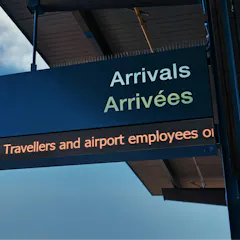
Efficient immigration procedures depend on strong procedural rights and access to counsel for migrants and adjudicators.

Internationally educated and experienced teachers are not a problem to be fixed — they are part of the solution to a system under strain.

Policymakers inside and outside of government can provide ideas on creating targeted policies and pathways to recruit talented workers to Canada in the wake of the U.S. H-1B visa fee hike.

A recent report looks at the ongoing disparities racialized immigrant women face in the Canadian labour market.

By making it easier to access accurate information, the government can help skilled migrants make informed decisions to come to Canada and help the country retain talent.

Blaming newcomers — particularly international students and their spouses — for job shortages overlooks deeper structural issues in the labour market.

Refugees at risk now face longer wait times to come to Canada, and for those already here, longer periods of separation from family members abroad who remain in danger.

Interviews with international university graduates reflect tensions between ambitions and barriers that often left them disillusioned, even after getting permanent residency.

Canada’s survival faces challenges not only from the U.S., but from within: fraying internal alliances and elite detachment from economic and demographic realities.
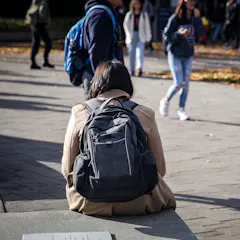
The Canadian government has said international students are abusing Canada’s asylum system. However, the data does not back the government’s claims.

While some western cultures identify the family unit as couples and their children, many other cultures see older parents as an integral part of the family.

The 2025 Immigration Plan aims to cut the numbers of temporary migrants in Canada from 6.5 per cent to five per cent of the population. Instead, it will boost the number of non-status people.
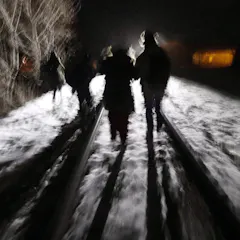
Focus on supposed ‘loopholes’ that allow migrants to claim asylum echoes Canada’s longstanding preoccupation with how people negotiate the border.

Trudeau’s explanation paints an incomplete picture and perpetuates misleading narratives about Canada’s immigrant selection, higher education and asylum systems.

Sharp increases and decreases in the number of immigrants are nothing new in Canada. Historically, immigration levels increase when the unemployment rate declines, and fall when unemployment rises.
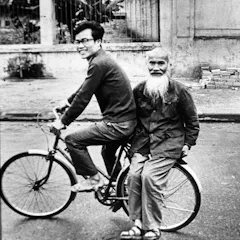
A study of parent-child pairs from Montréal’s Vietnamese diaspora found different paths to preserving language shaped by political and economic experiences.
Top contributors
-

Canada Excellence Research Chair in Migration and Integration, Toronto Metropolitan University
-
Visiting professor, Harvard University
-
Executive Director, Global College, University of Winnipeg
-
Professor, Public and International Affairs, L’Université d’Ottawa/University of Ottawa
-
Canada Research Chair and Associate Professor of Human Resource Management and Organizational Behaviour, Toronto Metropolitan University
-
Research Lead on Labour Migration at the CERC Migration and Integration Program, TMU, Toronto Metropolitan University
-
Professor, Geography and Environmental studies, Wilfrid Laurier University
-
Professor in the Faculty of Business & Communication Studies, Mount Royal University
-
PhD Candidate in Sociology, University of British Columbia
-
Associate Professor of Sociology, Toronto Metropolitan University
-
Professor, School of Gender, Sexuality and Women's Studies, York University, Canada
-
Research Associate, Centre for Migration Studies, University of British Columbia
-
Research Fellow, Bridging Divides, Toronto Metropolitan University
-
Professor of Language and Literacies Education, University of Regina
-
Masters student, Education, Thompson Rivers University