
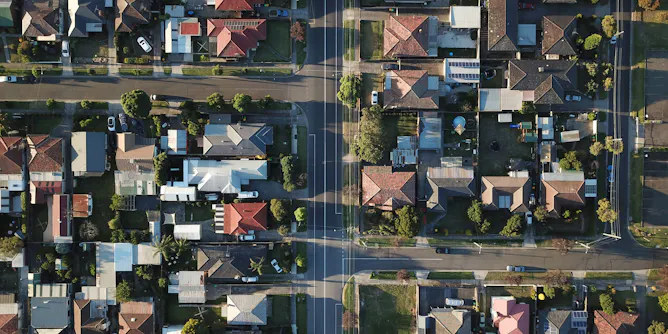
Canada’s National Housing Strategy claims to be grounded in a human rights framework, but the needs of Indigenous women and children are not being met.
Articles on Indigenous women
Displaying 1 - 20 of 34 articles
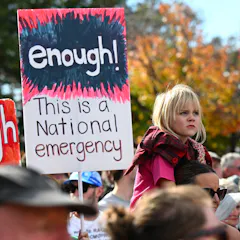
After an election campaign largely silent on women’s safety issues, the major parties have unveiled their policies. They fall well short of what is needed.
Distrust, systemic racism and fear all drive First Nations families away from using the court.
Two inquiries of recent times came with myriad recommendations to save Indigenous lives from domestic violence, but few have been acted upon.
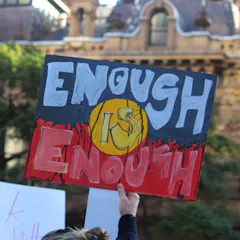
First Nations women are 32 times more likely to be hospitalised as a result of domestic violence than non-Indigenous women. We need to put Indigenous women at the centre of the discussion.
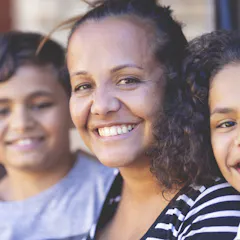
To First Nations women, ‘care’ is more broad and all-encompassing than traditional definitions. We need a new approach to capturing, and appreciating, their work, paid and unpaid.
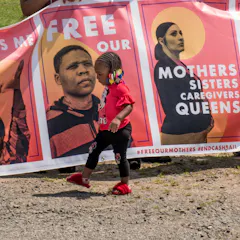
For Mother’s Day, we look at the fastest growing prison population in Canada — racialized women, many of whom are mothers. Experts connect the trend to rising poverty and the attempts to cope with it.
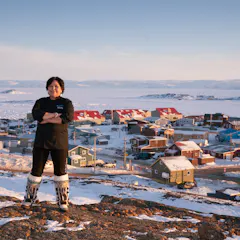
Indigenous women are using sustainable tourism to overcome generational challenges and as an entrepreneurial means of generating income.
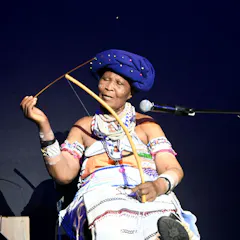
The queen of Xhosa music has passed away. She reinvigorated ancient Xhosa cultural traditions through performance and teaching.
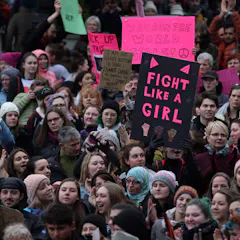
If the Canadian women’s movement doesn’t become transnational in scope, it risks continuing a colonial culture that sustains systemic barriers for women in Canada and around the world.
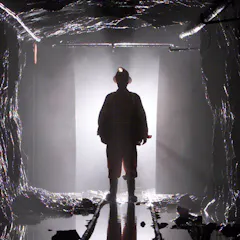
In today’s episode, we hear from two women who talk about how diamond mines in the Northwest Territories have negatively impacted women and girls and perpetuated gender violence.
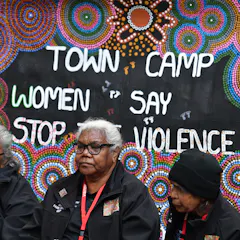
The recent Women’s Safety Summit highlighted Australia’s problem with gender-based violence. However, violence experienced by Aboriginal and Torres Strait Islander women is still not being addressed.
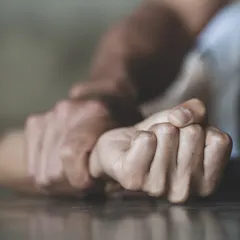
Prominent cases continue to draw attention to the wrongful imprisonment of First Nations women.
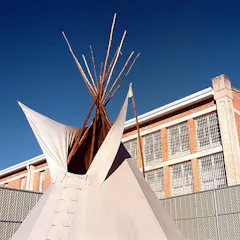
To release anyone, particularly Indigenous women, transgender and Two-Spirit individuals without a plan is irresponsible and dangerous and does not demonstrate a commitment to reconciliation.
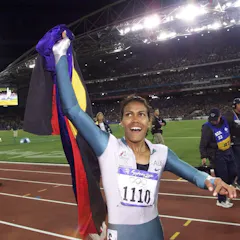
Two dramatic narratives arc through this documentary that marks 20 years since Cathy Freeman’s Olympic triumph: her reflections as an elite athlete, and our experience as a nation of spectators.

Reports of rape, domestic abuse and murdered women are way up in Brazil, Mexico, Peru and beyond since the coronavirus. But Latin America has long been one of the most dangerous places to be a woman.
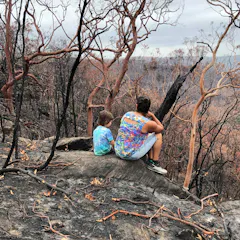
Indigenous kinship networks link each plant to the next and connect us to Country. Honouring this way of being and engaging in fair collaboration might give power to our heartbreak.

A grave stands in Bicheno, paid for by locals in the 1800s. It stands as a testament to the lifesaving ocean feats and tragic life of Indigenous woman Wauba Debar.

If the representations we see of black women in Australia only focus on disadvantage and deficit – not success and excellence – how do we expect power imbalances and stereotypes to change?

Indigenous children are admitted to out-of-home care at 11 times the rate for non-Indigenous children. The lack of safe housing for mothers fleeing family violence is a key factor.
Top contributors
-

Director of Monash Indigenous Studies Centre, Chief Investigator for the Australian Research Council Centre of Excellence for the Elimination of Violence against Women (CEVAW), School of Philosophical, Historical & International Studies, School of Social Sciences (SOSS), Monash University
-
Associate Professor, Indigenous Education & Research Centre, James Cook University
-
Managing Director, Her Story Consulting & Postdoctoral fellow, Australian National University
-
Associate Professor of Public Policy, Crawford School of Public Policy, Australian National University
-
Professor Emerita of Criminology, UNSW
-
Associate Professor of Linguistics, University of Calgary
-
Associate Professor of Public Health, William Paterson University
-
Professor, University of British Columbia
-
Lecturer/Research Fellow in Housing and Urban Studies, Swinburne University of Technology
-
Professor, University of Sydney Business School, University of Sydney
-
Professor of Indigenous Research, University of Newcastle
-
PhD Candidate in Social Work and Criminology, UNSW
-
Assistant Professor of Media and Information and Writing, Rhetoric and American Cultures, Michigan State University
-
Professor of Economics and Public Policy, ANU College of Arts and Social Sciences, Australian National University
-
Professor in Work and Organisation Studies, University of Essex