

Student success depends not only on children’s readiness to learn but also on schools’ readiness to welcome and affirm who they are.
Articles on racialized students
Displaying all articles
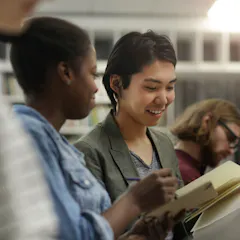
Research is increasingly documenting how pervasive racial microaggressions are in the daily lives of racialized young people.
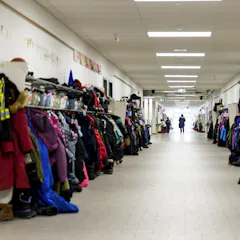
All students and families will be impacted by cuts and provincial reforms being imposed on Ontario schools, and those who are already disadvantaged will bear the brunt.

Daily moments like the fluency and accuracy with which educators pronounce children’s names are essential in shaping classroom and school belonging.
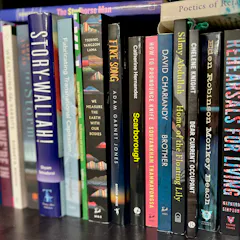
When teachers are self-aware of how their identities impact their values, beliefs and experiences, they are better prepared to help students build bridges between their lives and literature.

Research about how New Brunswick education has envisioned inclusion since the 1980s offers lessons in rethinking how to realize schools that celebrate all students’ strengths.
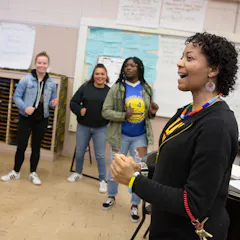
A study finds that graduates who attended publicly funded schools were more likely to have open intercultural orientations than those who attended private schools.

In today’s episode of Don’t Call Me Resilient, we speak with two Canadian educators who explain how using critical race theory in their classrooms helps both students and teachers.
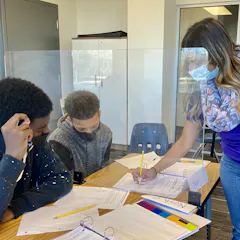
Revamping standardized testing needs to be accompanied with tangible actions to mitigate students’ opportunity gaps at the community level, particularly for racialized students.

Diversity in STEM fields means higher quality research and innovation. To ensure that Canada can compete globally, marginalized students must be supported through STEM education and careers.
Top contributors
-

Associate Head, Early Childhood Studies, University of Guelph-Humber
-
PhD student in Education, York University, Canada
-
Assistant Professor, Faculty of Education, University of New Brunswick
-
Canada Research Chair of Creativity and STEM and Associate Professor, University of Calgary
-
PhD Candidate, Department of English Language and Literatures, Queen's University, Ontario
-
Educator and Researcher, Queen's University, Ontario
-
EdD graduate, OISE, University of Toronto
-
Adjunct assistant professor, Werklund School of Education, University of Calgary
-
Associate professor, University of New Brunswick
-
Assistant Professor of Educational Leadership, Policy and Program Evaluation, Faculty of Education, L’Université d’Ottawa/University of Ottawa
-
Associate Professor, Department of Leadership, Higher & Adult Education, Ontario Institute, University of Toronto
-
Assistant Professor, Educational Policy and Equity, University of Toronto
-
Professor of Psychology, University of Nebraska Omaha
-
Associate Professor, Developmental Psychology, L’Université d’Ottawa/University of Ottawa
-
Associate Professor, Faculty of Education, Wilfrid Laurier University