
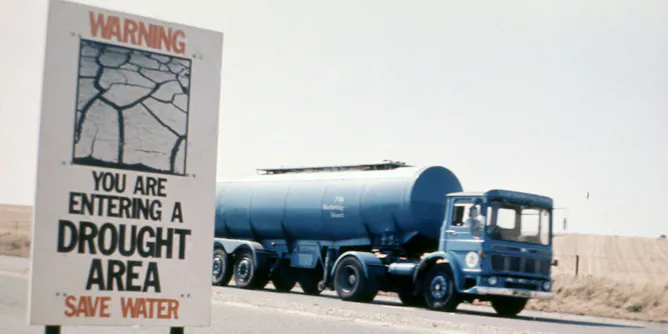
Public trust in UK water companies is low, and this could be a challenge when the country faces another serious drought.
Articles on Public trust
Displaying 1 - 20 of 73 articles

Both legally and practically speaking, getting to the water’s edge isn’t as straightforward as it might seem – or as many people might like.
Policies that look chaotic actually reflect a deeper shift in how governments exercise power. The consequences can be dire.

Donald Trump’s penchant for sowing fear is in danger as ICE Out protests remain peaceful and public anger is directed not at demonstrators, but at violent federal ICE officers.
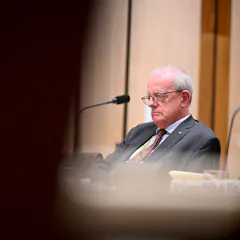
Paul Brereton’s ongoing conflict of interest woes threaten public trust in the National Anti-Corruption Commission. He urgently needs to change tack.
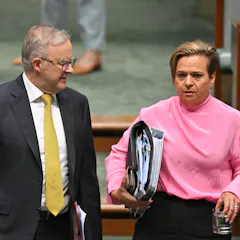
The Albanese government’s proposed FOI reforms attempt to update decades-old laws. Some of it is needed, but other parts severely threaten government transparency.

Research suggests falling trust in news is not directly related to falling trust in other public institutions. We need to address the news problem on its own terms.

An information systems expert explains why fairness and transparency are key to introducing new AI-driven enforcement technologies to the public.

Approaches vary in terms of who is filing the lawsuit, against whom and whether it is based on protecting human rights or the rights of the environment itself.

A study found that viewing news of a cyberattack lowered voter trust in election integrity – even when the voter’s candidate won and even if the attack wasn’t on voting systems.

Brands don’t always deliver what they promise. Regulation needs to focus on preventing harm rather than managing fallout.
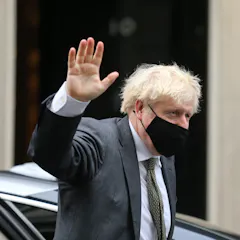
While Britons are less trusting of those with political authority, they appear to be more trusting in each other.

To ensure the civil service is staffed by qualified people, human resource management in the public sector must be professional.
Major social media platforms have decided to leave the job of fact checking to their platforms’ users. Research suggests they may not be up to the challenge.
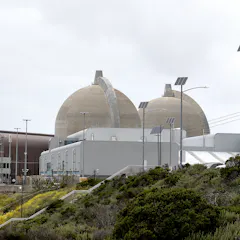
Public sentiment related to nuclear power remains highly contentious. As nuclear energy regains momentum, its path forward will require rebuilding public trust.

A major takeout from the inquiry into the national response to COVID is that a lack of trust would likely mean a less cooperative public during a future pandemic.
By failing to investigate Robodebt, the National Anti-Corruption Commission forgot its purpose. Now it’s reconsidering its decision.

The commission’s inspector found NACC Commissioner Paul Brereton had not adequately excused himself from the decision not to investigate the six Robodebt referrals.
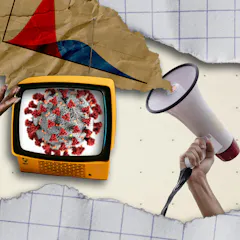
Our research found clarity and consistency of information were key features of effective public health communication throughout the COVID pandemic.

Typical news readers prefer news headlines with simple language over more complex wording.
Top contributors
-

Professorial Fellow, University of Canberra
-
Adjunct professor, Charles Sturt University
-
Professor and Chair, Department of Journalism, Stellenbosch University
-
Adjunct Professor, National Centre for Australian Studies, Monash University
-
Associate Professor of Public Law, The University of Melbourne
-
Associate Professor, Faculty of Law, Monash University
-
Professor of Law and Director, Health Law Program, University of Nevada, Las Vegas
-
Post Graduate Research Fellow, University of Oregon
-
Professor and Director, Research Center for Nuclear Weapons Abolition, Nagasaki University
-
Member of the Initiative For Cryptocurrencies and Contracts (IC3); Visiting researcher at Cornell-Tech; Graduate student in Electrical Engineering, Technion - Israel Institute of Technology
-
Professor of Ecological Economics, UCL
-
Vice Chancellor's Fellow at Victoria University and Adjunct Professor of Economics, Victoria University
-
Associate Director, Initiative For Cryptocurrencies and Contracts (IC3); Assistant Prof. of Electrical Engineering, Technion - Israel Institute of Technology
-
Ph.D. Student in History and Sociology of Science, University of Pennsylvania
-
Professor of Computer Science, Jacobs Technion-Cornell Institute, Cornell Tech, and Co-Director, Initiative for CryptoCurrencies and Contracts (IC3), Cornell University