

The ghost of the illegal robodebt scheme presents a major challenge.
Articles on Public trust
Displaying 21 - 40 of 73 articles
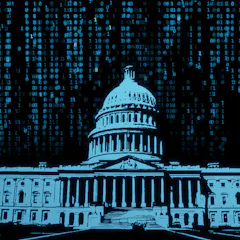
2 scholars analyzed more than 1 million official Tweets from members of Congress − and found a lot of antidemocratic language that damages the very institution the politicians belong to.

Generative AI can be a useful tool, but it can also create inaccurate information. Here’s how to safeguard Australian courts against fake cases, like we’ve already seen overseas.
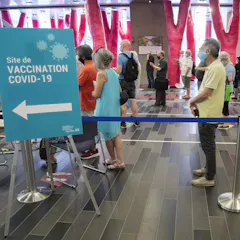
During the pandemic, it was common for politicians to explain their COVID-19 policies by saying they were ‘just following the science.’ Such claims can be misleading about both science and government.

Now is the time to learn from the COVID-19 response through an action-oriented independent inquiry focused on accountability. Reforms to data generation, access and use are essential.
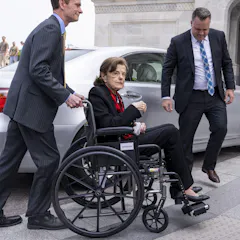
Physical ailments and deteriorated health may be the one area in which politicians can escape scrutiny.

Upcoming changes to how complaints against Ontario police officers are processed will make it even harder to monitor human rights violations by police.

Climate protesters are destabilizing the idea that public galleries are safe spaces for works of art, held in public trust.

A new environment calls for new approaches to policy-making that can more effectively navigate the complexities of today’s world.

Perceptions that South African police treat people disrespectfully, lack impartiality or transparency, and are prone to brutality
undermine public confidence in them.

The vacuum created by a drop in public trust in mainstream platforms has given rise to new media players who don’t always play by the rules.
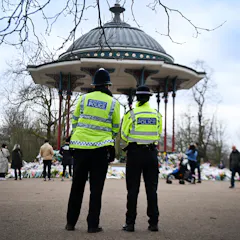
The police must challenge and change the damaging culture that for so long has allowed unacceptable behaviour by police officers to go unpunished.
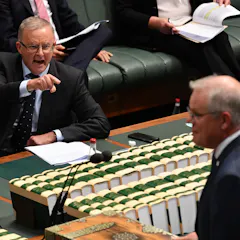
The Coalition has made promises on whistleblower protection and must soon reveal its plan for a federal integrity commission. Now is the time for both parties to prove they can take real action.

Academics are among the most trusted sources for news about climate change.
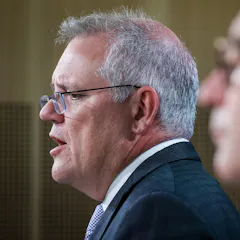
At this stage of the pandemic, when behavioural change is so key to vaccine take-up, the government ignores the views of the public at its peril.

The strong disapproval of the South African government’s handling of the pandemic is a warning that crafting persuasive pro-vaccine messages is not enough.

South Africa’s constitutional values of good public governance and transparency in public procurement have been sacrificed in the process of buying COVID-19 vaccines.

To rebuild lost trust in the media will require more commitment and effort than just papering over ethical cracks.
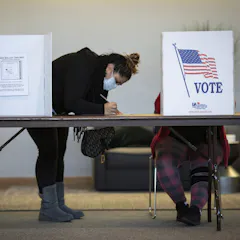
When the scientific establishment gets involved in partisan politics, surveys suggest, there are unintended consequences – especially for conservatives.

On paper, WE Charity could have been the best partner to implement the federal government’s student grant program. But the failure to be transparent eroded the public’s trust and led to its demise.
Top contributors
-

Professorial Fellow, University of Canberra
-
Adjunct professor, Charles Sturt University
-
Professor and Chair, Department of Journalism, Stellenbosch University
-
Adjunct Professor, National Centre for Australian Studies, Monash University
-
Associate Professor of Public Law, The University of Melbourne
-
Associate Professor, Faculty of Law, Monash University
-
Professor of Law and Director, Health Law Program, University of Nevada, Las Vegas
-
Post Graduate Research Fellow, University of Oregon
-
Professor and Director, Research Center for Nuclear Weapons Abolition, Nagasaki University
-
Member of the Initiative For Cryptocurrencies and Contracts (IC3); Visiting researcher at Cornell-Tech; Graduate student in Electrical Engineering, Technion - Israel Institute of Technology
-
Professor of Ecological Economics, UCL
-
Vice Chancellor's Fellow at Victoria University and Adjunct Professor of Economics, Victoria University
-
Associate Director, Initiative For Cryptocurrencies and Contracts (IC3); Assistant Prof. of Electrical Engineering, Technion - Israel Institute of Technology
-
Ph.D. Student in History and Sociology of Science, University of Pennsylvania
-
Professor of Computer Science, Jacobs Technion-Cornell Institute, Cornell Tech, and Co-Director, Initiative for CryptoCurrencies and Contracts (IC3), Cornell University