

It’s time to tackle the shortage of public housing head-on, rather than skirt around the problem. Public housing is the single most cost-effective way to turn around the rise in homelessness.
Articles on Public housing
Displaying 61 - 80 of 128 articles
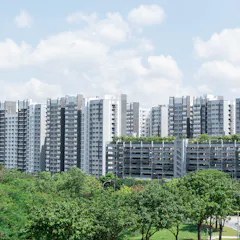
A coordinated mix of policies does more to keep housing affordable for a significant proportion of a city’s residents than the unbalanced approach we see in Sydney.

The cost of land and, in turn, housing forces people to buy into the rules of market capitalism, making it very hard to ‘downshift’ from consumer lifestyles. But what if we rethink public housing?
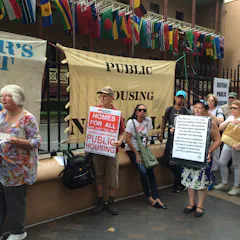
The need to manage long waiting lists for social housing, rather than serving the best interests of tenants and prospective tenants, is a major driver of policymakers’ approach.

The approach to housing in the UK hasn’t worked for years. What could we learn from how it’s done in other countries?
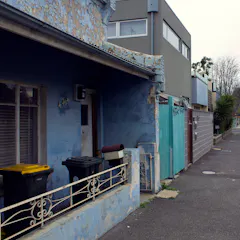
Having quality housing matters. What’s standing in the way of ensuring every Australian has housing that meets basic comfort and health standards? And how can we overcome these problems?

The policy focus remains on home ownership, but a new survey shows slight improvements in affordability do little to help people on low incomes. Their plight calls for better social housing policy.
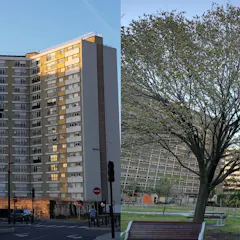
Whether in Melbourne or in Paris, African immigrants face social and cultural challenges, which public housing can either add to or help overcome.
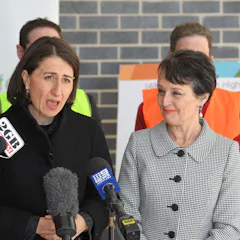
For the first time a state government housing agency has effectively contracted out all its operations in some regions, but will this improve and add to the total social housing stock?
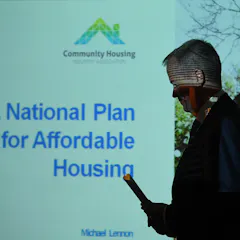
Labor has made a substantial commitment to tackling inequality in Australia, but has taken a second-best approach to overcoming the huge shortfall of social housing.
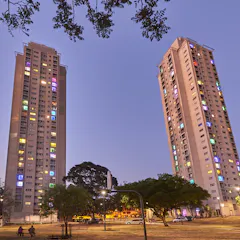
Working-class residents of Waterloo have a history of resisting threats to their community. Many tenants see the redevelopment of public housing as state-led gentrification to squeeze them out.

A tenfold increase in building is needed to overcome the current social housing shortfall and cover projected growth in need. But it can be done, and direct public investment is the cheapest way.

Shared equity models have a dual benefit of making home ownership affordable for people on modest incomes and freeing up scarce social housing for other households in need.
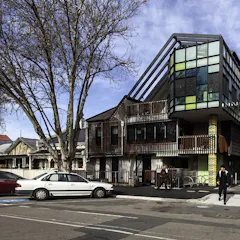
As Melbourne’s population hits 5 million, it’s a reminder that growing cities must make much better use of vacant and underused land to meet the urgent need for affordable housing.

Survival sex can be a viable option for women managing homelessness. It ranged from staying with men for a night or a woman remaining in a sexual relationship to avoid becoming homeless again.
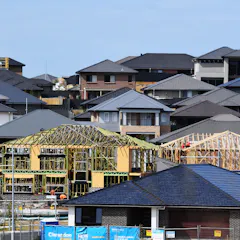
Migrants have similar home ownership rates to the overall population and rely less on public housing. But housing supply shortfalls and higher prices have reduced ownership among recent migrants.

A first glimpse of the low-income housing scheme, designed in collaboration with West, raises red flags.
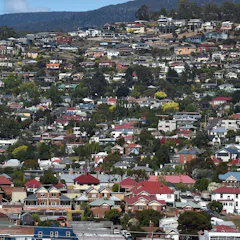
Tasmania has an estimated rental housing shortfall of 29,200 households across the state. Especially in disadvantaged rural areas, local councils have had to step in to help house residents locally.
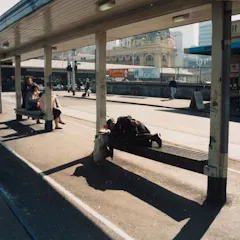
When the city centre was revitalised in the 1990s, homeless people were pushed out. With homelessness rising today, it’s important to recognise the links between urban development and displacement.

The problem with most public housing ‘renewal’ programs is that the residents have the least say in what happens to the places they call home. The evidence of housing research is also being ignored.
Top contributors
-

Emeritus Professor of Housing, UNSW
-
Research associate, The University of Melbourne
-
Alan Morris is a Friend of The Conversation.
Professor, Institute for Public Policy and Governance, University of Technology Sydney
-
Senior Research Fellow, City Futures Research Centre, UNSW
-
Vice Chancellor's Postdoctoral Fellow, RMIT University
-
Research Fellow, School of Communication, Society & Culture, Macquarie University
-
Adjunct Professor, Centre for Urban Research, RMIT University
-
Head of Urbanism and Associate Professor of Urban Studies, School of Architecture, Design and Planning, University of Sydney
-
Honorary Senior Fellow in Urban Geography and Planning, The University of Melbourne
-
Professor of Housing Research, Adelaide University
-
Housing Policy Researcher, Expert Advisor, Housing Assessment Resource Tools and Adjunct Professor, L’Université d’Ottawa/University of Ottawa
-
John Curtin Distinguished Professor, Curtin Business School, Curtin University
-
Professor of Urban Planning, Centre for Urban Research, RMIT University
-
Associate professor in urbanism, University of Sydney
-
PhD Candidate, School of Social Sciences, University of Tasmania, and Senior Research Consultant, Institute for Sustainable Futures, University of Technology Sydney