

Prepping for a job interview or giving a speech at your best mate’s wedding? Here’s why your tummy’s a-flutter.
Articles on Psychology
Displaying 161 - 180 of 2365 articles

New research shows that parents who read to their 6- to 8-year-olds nightly boost their children’s creativity and empathy.

What psychology says about whether these questions could make you fall in love.

Certain kinds of exercise were more effective at reducing symptoms. And some people benefited more.

Speaking a second language doesn’t impact moral decisions as much as previously thought.
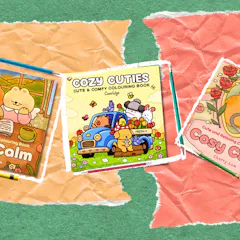
The new wave of adult colouring book bestsellers are ‘cosy’ and simple. In our uncertain cultural moment, they emphasise comfort, relaxation and rest.

Out study found that dogs and cats are not the same in this regard.

Burnout isn’t a personal failure. It’s a design flaw. But there is another way.

Meaning rarely comes from dramatic resolutions. Psychology shows it grows from small repeated actions – and you can start with just a few minutes a day.

Social inequalities emerge in every human society. New research into how these hierarchies form suggests ‘prestige psychology’ – the tendency to defer to expertise – is at the root.

Why the safest response to volatility is to stop trying to predict what comes next.

Mindfulness is usually taught through stillness and silence. But for some, full presence is easier to achieve in movement, and even in risk.

Memory is at the very heart of who we are, but it’s surprisingly complex too.

Forgiveness is key to relationships – but it’s not as simple as deciding you’d like to forget and move on. A counselor breaks down misconceptions.
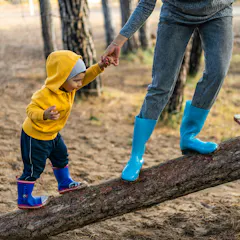
Our reaction can teach a child how to read their body signals and whether feelings are safe to feel.
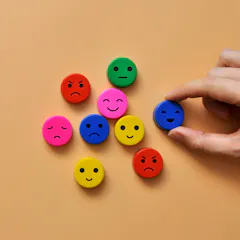
In one of England’s most deprived cities with one of the most ambitious climate targets, research shows the huge influence that emotion has on sustainability goals.

Philosophers from Aristotle to Nietzsche have debated whether being virtuous only helps others, or if it benefits the virtuous person, too.

A bit of understanding – plus effort to regulate yourself and give compassionate feedback – can shift a stuck relationship into something more bearable, perhaps even meaningful.

The ‘saddest day of the year’ is made up, and ignores the importance of feeling and expressing our emotions.

Research reveals the brain processes that make some people much less prone to sudden food-related mood swings.
Top contributors
-

Professor of Psychology, The University of Melbourne
-
Senior Lecturer in Psychology, Leeds Beckett University
-
Professor of Psychology, Edge Hill University
-
Associate Professor in Clinical Psychology and Neuropsychology, Trinity College Dublin
-
Professor of Psychology, Monmouth University
-
Cornelia H. Dudley Professor of Psychology, Knox College
-
Professor of Cognitive Psychology and Director of the Institute for Climate Risk and Response, UNSW
-
Associate Professor, School of Psychology, UNSW
-
Professor of the Psychology of Time, Liverpool John Moores University
-
Associate Professor, Centre for Positive Health Sciences, RCSI University of Medicine and Health Sciences
-
Professor of Consumer Psychology, Anglia Ruskin University
-
Chair of Cognitive Psychology, University of Bristol
-
Professor of Social Psychology, Anglia Ruskin University
-
Professor, Melbourne School of Psychological Sciences, The University of Melbourne
-
Senior Lecturer in the School of Psychology, University of Lincoln