

Patience is a virtue that researchers have linked to many parts of well-being. But it’s also something that needs a bit of practice and training – and can be undermined by instant, easy gratification.
Articles on Psychology
Displaying 81 - 100 of 2365 articles
Western PTSD treatments typically focus on talking to a therapist about your feelings and emotions. But this doesn’t actually help everyone.

Lived experience of a mental health issue is often devalued in psychological research – embracing it can create more impact for minoritised communities.
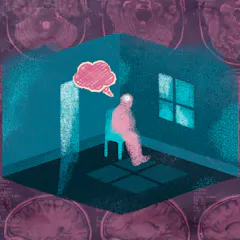
Therapies aimed at reframing negative thoughts may not work for some people with PTSD. New research shows it may be because their brains work differently after trauma.

The human mind is always searching for meaning in ambiguity. Could misinterpretations of the external world create the experience of the supernatural?

Could psychopathy be something we’ve just imagined because it’s convenient? Some experts believe so.

Trauma is everywhere in mainstream vocabulary and online, but its meaning has never been hazier. Has the concept been de-stigmatised or diluted? And does it matter?

When people harness the logic of natural selection, they can often find efficient and effective ways to solve complex problems.

Teachers’ past experiences of bullying shape how they might understand or respond to learner behaviour.

News fatigue is not a personal failing, but a result of an evolutionary brain being asked to process a large volume of bad news from around the world.

When someone offends us, mood has a much stronger influence than personality over how we react.

In 1979, Wood Sherif wrote my favourite psychological paper of all time.

Sneaking out of a party without saying goodbye might look rude, but for some people, it’s the difference between connection and burnout.

Our engagement with AI is at a crossroads: Will we treat it as an all-knowing oracle or as a tool to expand our own way of seeing the world?

The MV Hondius outbreak shows why quarantine is not only a medical measure, but a profound test of trust, routine and resilience.

When you’re upset, finding a new way to think about a negative situation can help you feel better. But researchers find the process takes some effort to really work.

Habit helps take the mental load off figuring out how to get somewhere. But relying on the familiar can make it harder to adapt to changes to your route and to find better ones.

Often presented as a way to deal with narcissistic, abusive or toxic behaviour, the technique is straightforward: make yourself as uninteresting as a grey rock.

Climate science is the anti-myth. Researchers have long noted that the human brain struggles with psychologically distant threats.

Finding the right psychologist isn’t just about who’s available. Here’s what to ask, what to look for, and how to make sure the approach fits your needs.
Top contributors
-

Professor of Psychology, The University of Melbourne
-
Senior Lecturer in Psychology, Leeds Beckett University
-
Professor of Psychology, Edge Hill University
-
Cornelia H. Dudley Professor of Psychology, Knox College
-
Professor of Psychology, Monmouth University
-
Associate Professor in Clinical Psychology and Neuropsychology, Trinity College Dublin
-
Professor of Cognitive Psychology and Director of the Institute for Climate Risk and Response, UNSW
-
Associate Professor, School of Psychology, UNSW
-
Professor of the Psychology of Time, Liverpool John Moores University
-
Associate Professor, Centre for Positive Health Sciences, RCSI University of Medicine and Health Sciences
-
Chair of Cognitive Psychology, University of Bristol
-
Professor of Consumer Psychology, Anglia Ruskin University
-
Professor of Social Psychology, Anglia Ruskin University
-
Senior Lecturer in the School of Psychology, University of Lincoln
-
Professor, Melbourne School of Psychological Sciences, The University of Melbourne