

Our research suggests that psychology plays a role in causing this common and extremely painful condition.
Articles on Psychology
Displaying 341 - 360 of 2364 articles

Young people are waiting more than three months for mental health care, and are struggling to cope while they wait.

The cap on Medicare subsidised psychology sessions rose to 20 during COVID. But there are better ways to achieve the program’s aims.

Author Margaret Hefferman argues that applying an artist’s mindset of curiosity and flexibility is essential to flourish in general.

It’s not just about having money problems − it’s how you feel about those problems that matters most for your mental health.
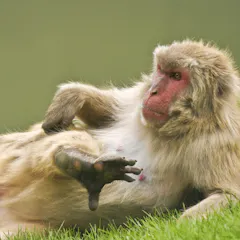
And a recent study found subtle but fascinating differences in the behaviour-emotion connection in humans and monkeys.

Rewriting the map can influence the public psyche in ways subtle and not so subtle.

Lewd customers, backstabbing co-workers and managers making unrealistic demands can take a toll.

Our brains find it easier to process a familiar accent, meaning irony often gets lost in interpretation.

Psychopaths seem to break a sweat without feeling the pain.

Sigmund Freud originally developed the idea of repression and actually revised his definition later in life.

From HIV treatments to school desegregation, research into topics now considered DEIA have benefited Americans throughout history.

Animals can learn from each other, maintaining their cultures for long periods of time. What sets people apart may be the uniquely open-ended ways we invent new ideas and share and build on them.

Critical thinking involves specific skills for assessing evidence, but background knowledge about the subject is also essential.
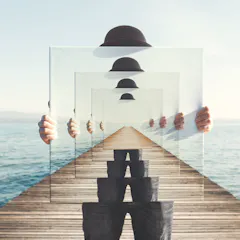
New research overturns long-held belief about optical illusions.

Two social psychologists explain the ways unconscious biases influence how people think and can fuel discrimination against transgender people and other minority groups.

Policies enacted from a sense of spite may backfire in the long-term.

Friendships are often the first relationships we form outside of family. But how can we deal with conflict in these relationships in a grown-up way?

Narcissism may be more than a misguided belief about how important you are - it could distort your perception in other ways.

By thinking of the flow of anger, you can unpack its key dimensions: its path and intensity. Is the stream pointed effectively? Is its strength appropriate?
Top contributors
-

Professor of Psychology, The University of Melbourne
-
Senior Lecturer in Psychology, Leeds Beckett University
-
Professor of Psychology, Edge Hill University
-
Associate Professor in Clinical Psychology and Neuropsychology, Trinity College Dublin
-
Professor of Psychology, Monmouth University
-
Cornelia H. Dudley Professor of Psychology, Knox College
-
Professor of Cognitive Psychology and Director of the Institute for Climate Risk and Response, UNSW
-
Associate Professor, School of Psychology, UNSW
-
Professor of the Psychology of Time, Liverpool John Moores University
-
Associate Professor, Centre for Positive Health Sciences, RCSI University of Medicine and Health Sciences
-
Professor of Consumer Psychology, Anglia Ruskin University
-
Chair of Cognitive Psychology, University of Bristol
-
Professor of Social Psychology, Anglia Ruskin University
-
Professor, Melbourne School of Psychological Sciences, The University of Melbourne
-
Senior Lecturer in the School of Psychology, University of Lincoln