
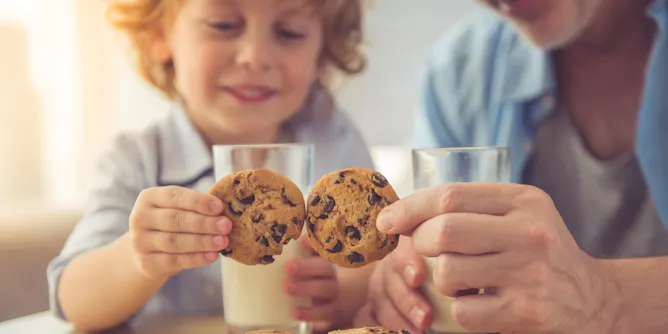
Sharing is about giving up personal resources to benefit others. It requires considering the thoughts, desires and needs of others, which can be challenging for young children.
Articles on Prosocial behaviors
Displaying all articles

Because smartphones can make people focus more on their personal needs, it can be harder to persuade their users to donate on them than it is when someone sees an appeal on their PC.
In a study with people as young as 4 years old, participants underestimated how much others would appreciate their good deeds.

Kids need to learn when little lies are the right choice. But research suggests parents may not be clear in the messages they send about how they value the truth.
People penalized for violating a group’s shared rules could go on to disrupt its functioning, out of revenge. Two scholars suggest a way of imposing rules.

The benefits of sport for young people include not only health and enjoyment, but also an appreciation of many of the civic values and ethics that make our democracy work.
The findings suggest adults feel more prosocial with children around – even if they don’t have any themselves.

New research suggests that the seeds of future romantic partnering patterns are planted in childhood and are visible even before adolescence.

The pandemic has exposed some truths about human psychology and behaviour.

Good mental health is the ability to adapt to changes and stress. Whatever school looks like, parents can help keep kids’ social-emotional development on track in these four areas.

Rather than a vaccine to beef up your immune system, a psychoactive substance could boost your cooperative, pro-social behavior – curtailing the selfish actions that spur on coronavirus’s spread.

Because most people want to be perceived as generous, sometimes monetary incentives for doing a good deed are counterproductive.
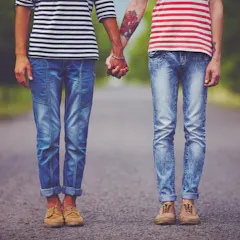
Scientists don’t ask how some people evolved to be tall. In the same way, asking how homosexuality evolved is the wrong question. We need to ask how human sexuality evolved in all its forms.
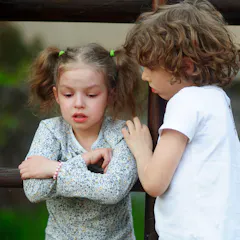
Students hear about bullying, but how about kindness? An education researcher developed a model for encouraging intentional kindness is the classroom.

Psychology researchers found that daily acts of kindness were linked to increases in positive mood – especially for teens who felt depressed.
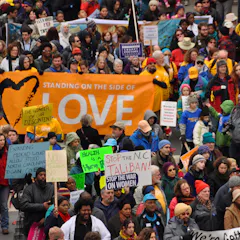
Asking people about morality and empathy may not yield sincere answers. Moral sentiments, can, indeed, be measured.
Top contributors
-

Assistant Professor of Psychology, Wayne State University
-
Associate Professor of Psychology and Senior Research Associate in the Rock Ethics Institute, Penn State
-
Assistant Professor of Consumer Science, University of Wisconsin-Madison
-
Professor of Medical Ethics, Humanities, and Law, Western Michigan University
-
Lecturer in Social Psychology, University of Bath
-
Assistant Professor of Marketing, University of Notre Dame
-
Associate Professor, Psychosocial Difficulties, University of Oslo
-
Associate Professor of Educational Psychology, Wayne State University
-
Associate Professor of Organizational Behavior, McGill University
-
Senior Lecturer in Health and Physical Education, University of Tasmania
-
Associate Professor of Strategic Management, University of Toronto
-
Professor of Psychology, University of Bath
-
Professor, Faculty of Education, University of British Columbia
-
Professor, School of Natural Sciences, Macquarie University
-
Professor of Psychiatry, Monash University