
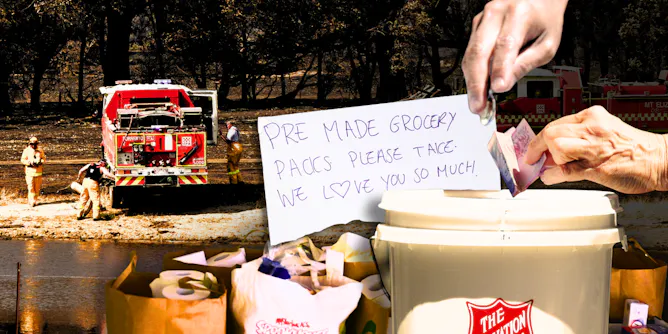
After a disaster, getting help from people who are distant and unaffected is crucial. This is how charities can encourage generosity through connection.
Articles on Altruism
Displaying 1 - 20 of 49 articles
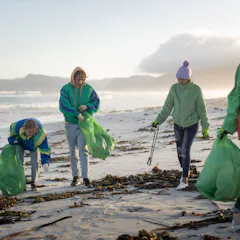
Those driven by both heart and mind help the most people, even far beyond their own circle.

Research in psychology has found a link between wealth and selfishness

Most people feel connected to each other, which makes compassion instinctive.

If you’re not a zoomer, MrBeast may be the most famous person you’ve never heard of. The famous YouTuber is now in Australia, spurring awe and delight with his major prize giveaways.
Attitudes towards climate policies partly depend on a consideration of future, as yet unborn, descendants. Women tended to show more ability to think about how future generations could benefit.

Surrogacy can exploit women, but others may choose to be involved for altruistic reasons. A scholar points out that surrogacy’s ethical value is dependent upon the people and systems who use it.

The early Nelson comes across as a man consumed by insecurity and ambition, plagued by inner strife and anger.
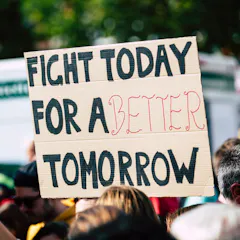
Your great grandchildren are powerless in today’s society, but the things we do now influence them, for better or worse. What happens when we consider them while we make decisions today?

Nursing has long been seen as a vocation, not a skill. This impacts nursing staff and patients both.
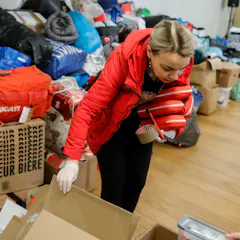
Many well-intentioned people are supporting counterproductive efforts to help Ukraine. Behavioural science can explain why.

There’s a global trend towards ‘third age entrepreneurship’, but the motivations behind these senior start-ups might surprise.
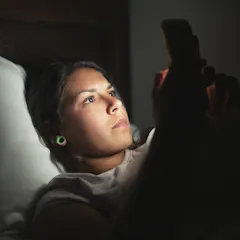
As uncertainty abounds and anxiety skyrockets, you’ve probably heard advice to be patient, stay calm and keep the faith. Here are 10 concrete tips to help you actually manage the stress.

Rather than a vaccine to beef up your immune system, a psychoactive substance could boost your cooperative, pro-social behavior – curtailing the selfish actions that spur on coronavirus’s spread.

Brain science suggests that seniors care more about the welfare of others than younger folks do.
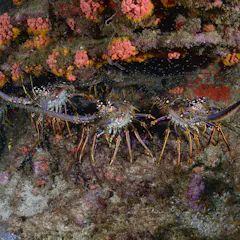
Using distance to avoid getting sick has deep evolutionary roots for humans and many other species.
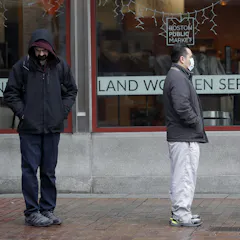
Using a survey taken from March 10 – March 16, social scientists tried to untangle the complicated connection between feelings of vulnerability and behavior change in response to the coronavirus.
We might recover our sense of being part of society.

Disasters and times of crisis bring out the best in most of us. Despite the media focus on initial panic at the COVID-19 pandemic, we are are starting to see a more heartening community response.

Some argue humans lack the altruism and long-term thinking that is needed to deal with the climate crisis. So how can you stay motivated?
Top contributors
-

Senior Lecturer in Psychology, Leeds Beckett University
-
Postdoctoral research fellow, University of Birmingham
-
Professor of Behavioural Ecology and ARC Future Fellow, University of Sydney
-
Professor of Bioethics in the Center for Human Values, Princeton University
-
Senior Lecturer, Newcastle University
-
Emeritus Professor in Animal Behaviour, University of New England
-
Reader in Law, Univeristy of Manchester, University of Manchester
-
Professor Evolution & Ecology, UNSW
-
Professor of Practical Ethics, Duke University; Institute for Humane Studies
-
Senior Lecturer in Social Psychology, Nottingham Trent University
-
Associate Teaching Professor, Arizona State University
-
-
Professor in Behavioural Genetics, University of Sydney
-
Senior Lecturer in Psychology, University of Sussex
-
Senior Lecturer in Personality or Individual Differences, Western Sydney University