

Buying and selling stocks – with real or play money – is a way to harness the wisdom of the crowd about questions like who is going to win a competition.
Articles on Probability
Displaying 21 - 40 of 65 articles

People want a simple answer. Is this action safe? But despite Anthony Fauci bouncing responsibility for COVID-19 risk assessment to individuals, your risk can’t be boiled down to one probability.

People tend to dislike uncertainty and risk – two things that are hard to avoid completely during a pandemic. That’s part of why it can feel especially draining to make even small decisions these days.
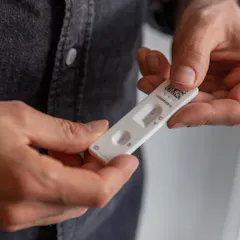
Rapid Antigen Tests are being rolled out by the millions for Australians to check their COVID status. But a result should be interpreted in context.

Why haven’t people gotten upset about how our social distancing signs are fostering innumeracy?

Flood plain statistics can be confusing. There are better ways to think about the risk of severe weather than 100-year storm or flood.
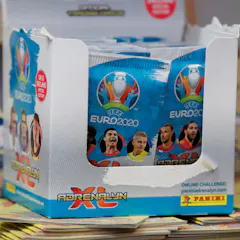
We used probability to find out what collecting all 678 stickers might cost you.

With the Australian Open about to start this year’s grand slam series, a crunch of the data from past performances gives a hint at who is the current best male player, possibly.

Philosopher Nick Bostrom’s theory suggests there’s a one-in-three probability we live in a simulation.

The danger of treating COVID-19 as an astronomically rare and improbable event is that we will treat it as such and fail to prepare for the next pandemic. And there will be another pandemic.

Tim Hortons changed Roll up the Rim to include a digital element. A statistician correctly predicted that playing on the last day of the contest would dramatically increase the odds of winning.
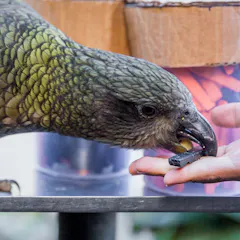
Kea were able to correctly guess the most probable scenarios, by evaluating various physical and social cues. Previously, only great apes and humans were known to be able to understand probability.
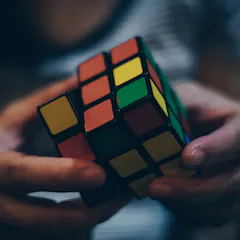
Scrambling it is much easier than solving it. But it still involves some fascinating questions, such as the number of random moves needed to consider the cube truly messed up.

Watching the chances of victory change injects life into sports, both real and fantasy.
Wages, starlight and polls can all be interpreted using statistics. While probabilities, medians and noise can be challenging, a simple dice can provide insights into statistics.

Clinical trials are used to establish that medicines work. But these don’t take into account the genetic differences between us that can mean very different outcomes for different patients.

It’s cheaper to prevent biological invasions than to react after they happen. But it’s hard to detect invaders while there are still just a few of them. Knowing when and where to look can help.

Whether it’s a toss of the coin or a flip of the bat, can any method to decide who plays first in cricket be unbiased?

The study of innovation in large companies and start-ups would benefit from being inspired by physics, which mobilizes different sets of laws for large masses and particles.
McDonald’s Canada has brought back its popular Monopoly game. A statistician explains the odds of winning the top prizes and how that compares to the odds we confront in everyday life.
Top contributors
-

Associate Professor and Principal Fellow in Urban Risk and Resilience, The University of Melbourne
-
Associate Professor, Department of Statistics and Actuarial Science, University of Waterloo
-
Associate Professor of Mathematical Sciences, University of Technology Sydney
-
Professor of Cognitive Psychology and Director of the Institute for Climate Risk and Response, UNSW
-
Emeritus Professor, University of Nottingham, (currently Vice-Chancellor at MILA University, Malaysia), University of Nottingham
-
PhD Candidate, Australian National University
-
Senior NCAS Research Fellow, University of Oxford
-
Professor of Philosophy, Durham University
-
Senior Research Scientist, South Australian Museum; Flinders University
-
Professor of Strategy and Entrepreneurship, ESSCA School of Management
-
Associate Professor, Social Innovation, CQUniversity Australia
-
Technical Officer, Deakin University
-
Assistant Professor of Economics, Universidad de Alicante
-
Associate professor, UNSW
-
Prize fellow and EPSRC research fellow in probability, University of Bath