

We always want to find patterns in sequences of events – but often they aren’t really there.
Articles on Statistics probability and risk
Displaying all articles

The new game, which is ranking highly on Steam, involves repeatedly clicking a banana in the hope of maybe – eventually – getting a rare ‘skin’ to trade for real money. And that’s it.
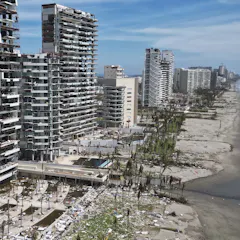
The best science is not always the best engineering when it comes to building codes. It’s also a problem across the US, as an engineer who works on disaster resilience explains.
It’s not entirely accurate to say that you’re more likely to die in a car accident than in a plane crash. Chances are, you’re not the average person.

People want a simple answer. Is this action safe? But despite Anthony Fauci bouncing responsibility for COVID-19 risk assessment to individuals, your risk can’t be boiled down to one probability.

The danger of treating COVID-19 as an astronomically rare and improbable event is that we will treat it as such and fail to prepare for the next pandemic. And there will be another pandemic.

Sometimes statistics and probability can produce unexpected or counter-intuitive results. If we’re hoping to use numbers to make good decisions, we should be wary of the traps.
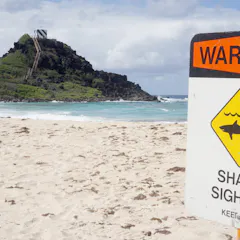
We naturally overestimate the risk of rare events, like shark attacks or terrorism. But there are things you can do to think more rationally about the real risk.

Here are some all-too-common errors when it comes to interpreting statistics, and how to avoid them.

Things tend to revert back to their typical state over time, so we should be careful not to mistake that for some other trend.
Top contributors
-

Professor of Statistics, Queensland University of Technology
-
Associate Professor, The University of Queensland
-
Associate Professor of Cognitive Science, UNSW
-
Associate Professor of Mathematical Sciences, University of Technology Sydney
-
Associate professor, UNSW
-
Professor of Social Psychology, The University of Queensland
-
Professor of Cognitive Psychology and Director of the Institute for Climate Risk and Response, UNSW
-
Associate Professor of Mathematics, Gonzaga University
-
David Trimble Chair, Professor, Queen's University Belfast
-
Professor of Engineering, University at Buffalo
-
Managing Director, Institute for Catastrophic Loss Reduction, Western University
-
Scientist in Health Geography, University of Wisconsin-Madison
-
Associate Professor and Principal Fellow in Urban Risk and Resilience, The University of Melbourne