
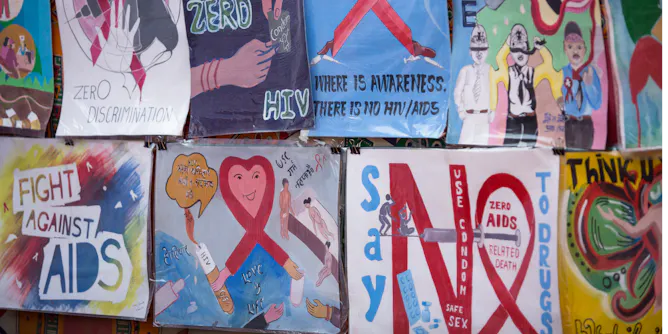
Dec. 1 marks World AIDS Day. Canada has the tools and means to end the epidemic. The question remains, are we up to the task?
Articles on PrEP
Displaying 21 - 40 of 63 articles
Experts across the board have identified inequality as a major challenge to efforts to end AIDS.

The benefit of an injectable product is that it avoids the adherence issues related to taking a pill daily.

Some countries, like Kenya, Uganda, South Africa, Zambia, and Nigeria, have been more proactive than others, but it is still hard for many to get PrEP.
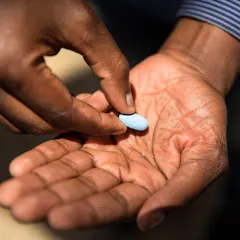
Judge Reed O'Connor ruled in a case that coverage for HIV prevention medicine PrEP violated the religious freedom of the plaintiffs. It is unclear whether the order will extend nationwide.

PrEP enables adolescent girls and young women to protect themselves from HIV without having to convince a partner to use a condom at the time of sex.

Adolescents and young people should get involved early in the design, planning and scale up of interventions.

This finding suggests public health efforts will have to address the treatment barriers these men face – like poverty or homophobia – to meet the nation’s goal of ending the HIV epidemic by 2030.

World AIDS Day on Dec. 1 this year comes at a time when a key step to removing financial barriers to PrEP access in the U.S. faces legal challenges.
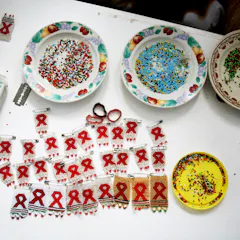
Stigma and criminalisation of same-sex relationships makes it difficult for transgender women and men who have sex with men to seek preventive services. This compounds their risk for HIV infection.

It is urgent and overdue to implement PrEP in pregnancy and during breastfeeding. Failure to do so allows ongoing avoidable HIV infection among women in South Africa and their infants.

Current HIV criminal laws increase HIV stigma and discrimination against marginalized people – and negatively affect public health.

The Affordable Care Act has allowed many preventive health services, including cancer screenings and vaccines, to be free of charge. But legal challenges may lead to costly repercussions for patients.
Microaggressions are more subtle than outright discrimination. But they can directly affect HIV treatment outcomes.

Not achieving the targets for children and adolescents in sub-Saharan Africa means that new infections will continue to increase and HIV related mortality will be a reality for decades to come.
The key actions needed to end AIDS are relatively clear. The question is whether every government, funder, and implementing organisations will apply them.

Our findings suggest that cabotegravir is much more effective than Truvada in preventing HIV infection in women.

App users recognise dating apps have some risks but they’ve developed a range of strategies to help them feel safer and to better negotiate consent and safe sex.
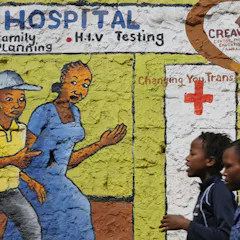
The government needs to revise national guidelines to better target PrEP at those that would most benefit from it.

Eradicating a virus from the community requires everyone to have access to prevention, as is the case with tuberculosis. So why not HIV?
Top contributors
-

Professor of medicine and deputy director of the Desmond Tutu HIV Centre at the Institute of Infectious Disease and Molecular Medicine, University of Cape Town
-
Associate Professor of Health Law, Policy and Management, Boston University
-
Associate Professor, Public Health Ethics, School of Population Health, UNSW
-
Assistant Professor of Social, Behavioral and Population Sciences, Tulane University
-
Assistant Professor of Public Health, University of Iowa
-
Post-doctoral researcher, KEMRI-Wellcome Trust Research Program, Kenya Medical Research Institute
-
Lecturer in Public Health and Primary Care, Bangor University
-
Professor, School of Health Sciences, University of Northern British Columbia; University of Victoria
-
Associate professor in Health Psychology, University of Copenhagen
-
Associate Professor and Director: Research at the Wits Reproductive Health and HIV Institute I, University of the Witwatersrand
-
Research Director at Donald Gordon Medical Centre, University of the Witwatersrand
-
Assistant Lecturer, University of Warwick
-
Momentum Postdoctoral Fellow, BC Centre for Excellence in HIV/AIDS, University of British Columbia
-
Professor of Infectious Diseases, Monash University
-
PhD candidate, Ghent University