
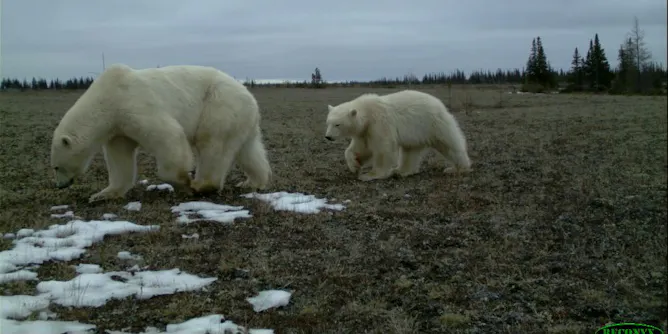
Researchers found that the more time bears were off the ice, the more likely they were to approach human sites.
Articles on Polar bears
Displaying 1 - 20 of 36 articles
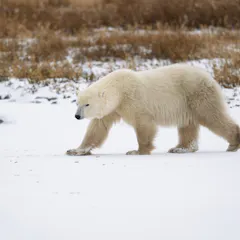
Polar bears are expected to become extinct but there are some signs their DNA is changing and they are adapting to new temperatures.
An ecologist at the IPCC for over 25 years, Camille Parmesan, who is also a refugee scientist, explains how to preserve biodiversity on a warming planet.
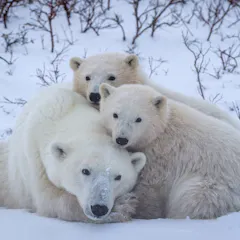
Advances in monitoring polar bear mothers and cubs gives insights into denning behaviour and vulnerabilities.
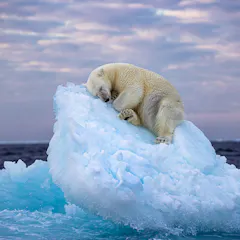
Image of the majestic creatures remain powerful communicators of humanity’s connection with nature.
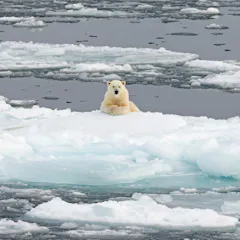
Avian influenza has killed a polar bear and may have infected other bears.

Researchers have made a fascinating observation: a polar bear used a diving hunting technique, never before reported, to capture large moulting snow geese.

Not all animals retreat to their shelters in cold weather.

We need to understand how bears are affected by climate change, and how those stresses might create new risks for humans.
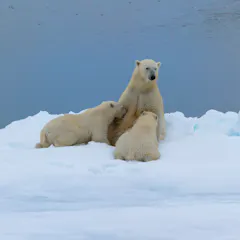
Climate change has affected food availability for polar bears, which can impact polar bear mothers’ ability to lactate.
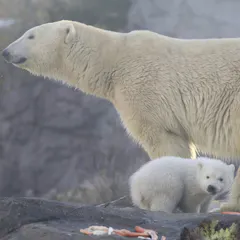
Comparison of modern and archaeological polar bears indicates that four millennia of food web stability has been disrupted by modern climate change.
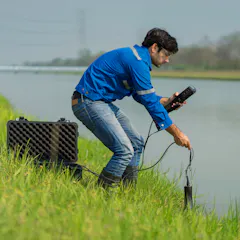
Toxic synthetic chemicals, called PFAS, are a serious threat to humans and wildlife – but many people are unaware of them.
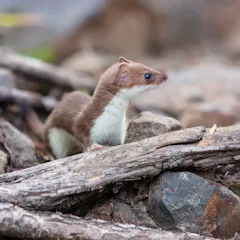
Polar bears and wolves may get the glory, but small predators like weasels, foxes and their cousins play outsized ecological roles. And many of these species are declining fast.

Polar bears are increasingly seeking sustenance in human trash because of melting sea ice and a loss of hunting opportunities. The result is a rise in human-bear conflict – and dead bears.

International proposals to ban the trade of polar bear parts undercut Inuit rights, knowledge and decision-making.
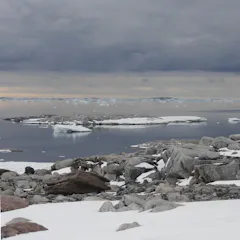
This seemingly one-off heatwave may be a harbinger for the future under climate change.
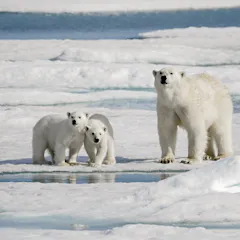
Polar bears are being forced to adapt their feeding habits due to climate change – so reports of summer scavenging, foraging and terrestrial hunting are unsurprising.
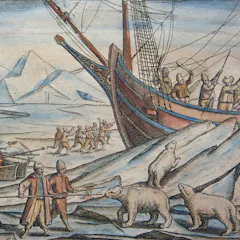
Do you see a fearsome predator? A fragile icon of impending extinction? What these arctic giants have stood for in art has continually evolved.
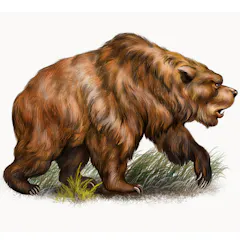
This is the oldest genome recovered from a non-permafrost environment.
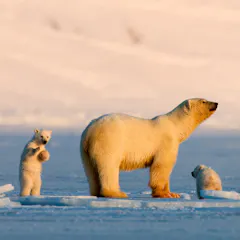
This is the story of ‘Misha’, as I have come to know her. Both I and my research have been deeply affected by a polar bear I have never met face to face.
Top contributors
-

Associate Professor in Human Dimensions of Environment & Sustainability, University of Saskatchewan
-
Postdoctoral Fellow, Biological Sciences, University of Toronto
-
Postdoctoral Fellow in Geography, University of Cambridge
-
Professor in Environmental Chemistry, Lancaster University
-
Assistant Professor of Biological Sciences, Old Dominion University
-
Professor of Wildlife Conservation, University of Salford
-
Co-Director of the Bowdoin College Museum of Art, Bowdoin College
-
Research assistant professor, University of Alaska Fairbanks
-
Associate Professor of Aquatic and Fishery Sciences, University of Washington
-
Adjunct Professor, University of Wyoming in Laramie, University of Wyoming
-
Honorary Research Fellow, Human Geographer, University of Exeter
-
PhD Candidate, University of California, Santa Cruz
-
Principal Mathematician, Polar Science Center, University of Washington
-
Professor in Sustainable Development, University of Aberdeen
-
Professor and Canada Research Chair, University of Manitoba