
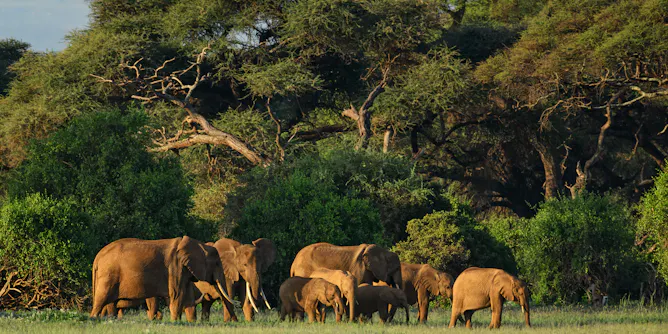
South Sudan is a country where conflict is rife. This has had a knock-on effect on the country’s rich and varied fauna, and put conservation programmes in severe crisis.
Articles on Poaching
Displaying 81 - 100 of 101 articles
There are very violent confrontations in southern Africa’s peace parks. This is partly due to a violent history dating back to the apartheid era that has never been adequately addressed.

Older matriarchs lead elephant society. But they’re also the primary targets of ivory poachers. When these socially critical individuals are killed, what happens to the rest of the group?
Conservationists are increasingly looking to translocating rhinos. This not only ensures their safety but also enables improvements to their genetic health.
Conservationists claim the combination of GPS tracker, heart-beat monitor and spy camera will be a game changer.
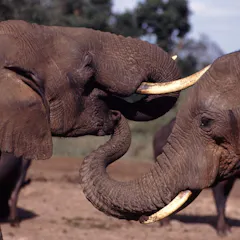
People arguing that a ban on mammoth ivory would help save elephants from extinction are wrong. Here’s why.
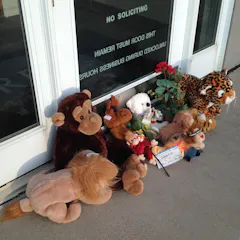
The fact that people are still travelling thousands of miles to kill exotic animals and bring back trophies shows deeply rooted cultural problems in Western societies.
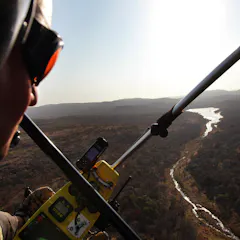
Dropping fences can help the fight against poaching by inviting the people living in surrounding areas to take care of the animals.
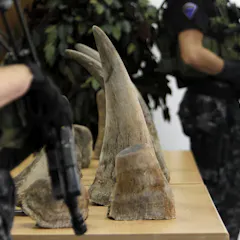
A company plans to flood the market with synthetic rhinoceros horn in an effort to slow poaching but these types of commercially driven conservation efforts are fraught with problems.
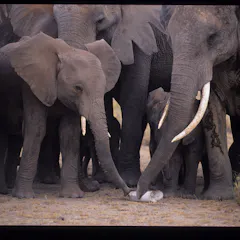
Using DNA testing, researchers find that most elephant poaching is happening in two spots – crucial information to stopping the flow of ivory out of Africa.
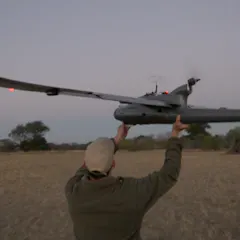
In 2014, 1,215 rhinos were killed in South Africa for their horns, which end up in Asia as supposed cures for a variety of ailments. An estimated 30,000 African elephants were slaughtered last year for…
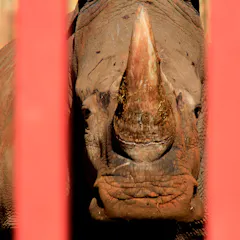
As the electric saw cuts into the base of the horn of the live rhino lying at my feet, I feel an uncomfortable guilt. The rhino shakes and judders and there is an unpleasant smell reminiscent of burning…
Banning the ivory trade and destroying ivory stockpiles is the only effective way to save elephants from extinction, according…
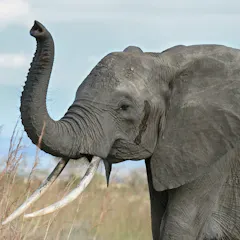
The shocking news that Satao, the much-loved African Elephant who lived in Kenya’s Tsavo East National Park, has been killed and butchered for his tusks highlights once again the terrible and unsustainable…
The protection of endangered plants and animals could be improved by using a new mathematical model designed by environmental…

William, Duke of Cambridge, second in line to the British throne, likes to go deer stalking. It must be a class thing. Until the 19th century, deer stalking – what in the US is called “hunting” – was largely…
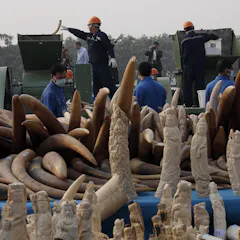
China is the most recent nation to destroy its ivory stockpile. It is the world’s largest market for illegal ivory, and the move is welcome news for threatened elephant populations. Ivory represents a…

Confiscated ivory taken from smugglers, traders and tourists by US authorities was crushed to chippings last week, The stockpile of more than six tonnes, amassed since the 1989 international embargo on…
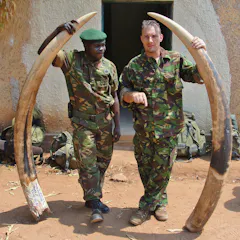
Elephant and rhino poaching in Africa have been rising; the Western black rhino has just been declared extinct. Demand in Asia, particularly China, for these animals’ tusks and horns has been identified…
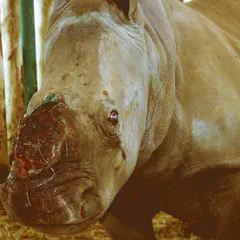
Rhinos, elephants and the big cats like lions and tigers are all at risk of extinction as a result of a resurgence in the illegal trade of their body parts. Newspapers in recent days have been filled with…
Top contributors
-

Lecturer in the School of Applied Sciences, Edinburgh Napier University
-
Research Associate, Department of International Relations, University of the Witwatersrand; Chief Research Officer, Good Governance Africa; Managing Director, Harvey Economics Pty Ltd.
-
Visiting Professor, University of Kent
-
Professor of Conservation and Applied Resource Economics, University of Kent
-
Professor of International Politics, University of Sheffield
-
Professor and Chair, Southwestern Environmental Science and Policy, Northern Arizona University
-
Professor, Forest Resources Management, University of Ilorin
-
Postdoctoral Researcher in Conservation Biology, University of Reading
-
Postdoctoral research fellow, Northumbria University, Newcastle
-
Environmental Social Scientist, Newcastle University
-
Postdoctoral Research Fellow, University of Cape Town
-
Vétérinaire, expert CITES, Muséum national d’histoire naturelle (MNHN)
-
Director, Environment Institute, Adelaide University
-
Lecturer, Course Convenor and Postdoctoral Researcher, University of Cape Town
-
Professor of human resource development, University of Auckland, Waipapa Taumata Rau