
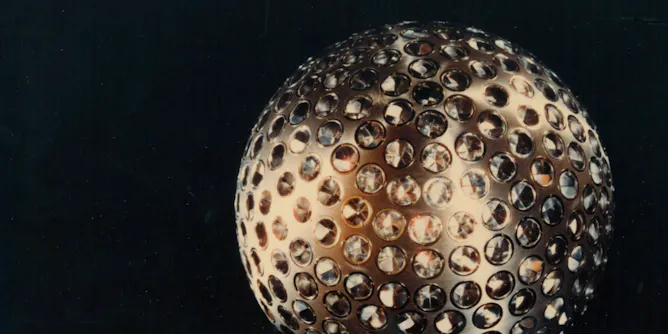
We know much about the true shape of our planet is thanks to two satellites that act as targets for lasers fired from Earth.
Articles on Plate tectonics
Displaying 61 - 80 of 87 articles
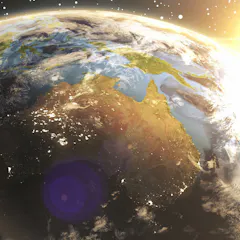
Australia is always on the move thanks to continental drift which means the mapped coordinates of any place can get out of line with any GPS locating system. So what’s the plan to fix it?
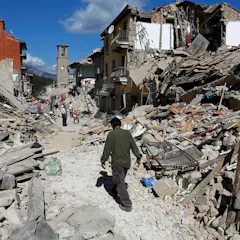
Central Italy has been hit by a magnitude 6.2 earthquake, only seven years after a similar devastating quake in the region.
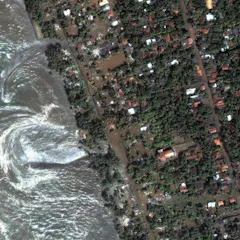
Australia is surrounded by ocean, so is not immune to the effects of tsunamis. But how significant is the risk?
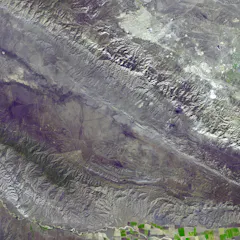
Fifty years on from a groundbreaking paper, geophysicists have progressed from believing continents never moved to thinking that every movement may leave a lasting memory on our planet.
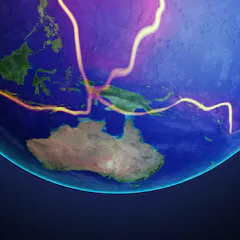
Earth is the only planet in our solar system with both plate tectonics and life. Is there a connection?
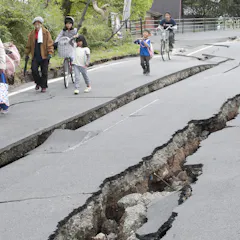
When two major earthquakes occur within days of each other thousands of kilometres apart, it can look like they’re connected. But are they? Here’s what the science says.
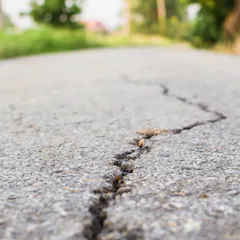
The earth around you might seem static but it’s constantly in motion. We need to track this motion in fine detail if we’re to keep our GPS networks up to date.
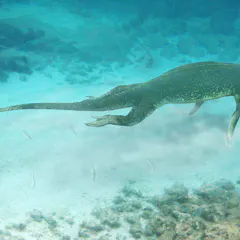
A fall in vital trace elements in our oceans could be one of the driving forces behind a number of mass extinction events during Earth’s history.
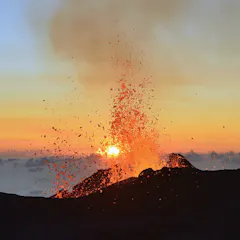
What happens beneath the surface before a volcano erupts? Can we predict when one will blow? And how can typhoons and melting glaciers contribute to big eruptions?

The rise and fall of the essential elements for life could have influenced the way life evolved over many millions of years.
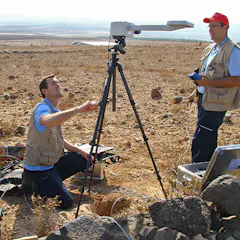
For seismologists, there’s much to be learned after a major earthquake, as aftershocks help them map out the fault with high precision. More data now can prepare a region for its next big one.
How is it that Earth developed an atmosphere that made the development of life possible? A study published in the journal Nature Geoscience links the origins of Earth’s nitrogen-rich atmosphere to the…
From the 1950s until recently, we thought we had a clear idea of how continents form. Most people will have heard of plate tectonics: moving pieces on the surface of the planet that collide, pull away…
Plate tectonics – the large-scale movement of Earth’s lithosphere or outer layers – started around three billion years ago, but how those movements started was a bit of a mystery – until today…
New research into early plate tectonics suggests the conditions for life on Earth may have existed up to a billion years…
A global map of subduction zones has been developed, which will allow researchers to more accurately pinpoint areas capable…
New evidence is shedding light on the processes that formed Earth’s oldest rock and mineral record – processes that influenced the early evolution of life. Over the past 30 years our knowledge of the earliest…
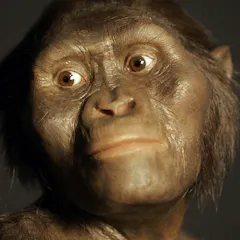
It should not be a surprise that East Africa was a hotbed of evolution, because over the last five million years everything about the landscape has changed. The extraordinary forces of plate tectonics…
Scientists have discovered the elixir to the world’s most renown mountains’ exceedingly long health: landslides and erosion…
Top contributors
-

Professor of Earthquake Science, The University of Melbourne
-
Earthquake Scientist, Monash University
-
Professor of Geology, West Virginia University
-
ARC DECRA Fellow, School of Geosciences, University of Sydney
-
Emeritus Strategic Professor in Palaeontology, Flinders University
-
Professor of Geology, Adelaide University
-
Associate Professor of Earth, Environmental, and Planetary Sciences, Washington University in St. Louis
-
Associate Professor in Geophysics, Te Herenga Waka — Victoria University of Wellington
-
Harold T. Stearns Professor of Earth Science, Wesleyan University
-
Associate professor, University of Tasmania
-
Honorary Fellow in Structural Geology and Tectonics, The University of Melbourne
-
Honorary researcher, The University of Melbourne
-
Professor of Geophysics, University of Sydney
-
Lecturer in Geoscience, Queensland University of Technology
-
Associate Professor of Earth and Planetary Sciences, University of Tennessee