
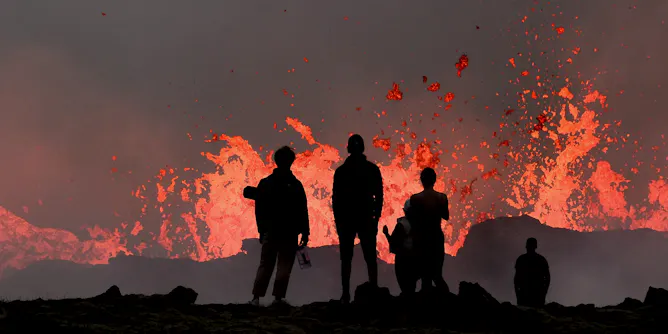
Iceland’s volcanic activity is generally tame compared with explosive eruptions along the Pacific’s Ring of Fire. This time, it’s shaking up a town.
Articles on Plate tectonics
Displaying 21 - 40 of 87 articles
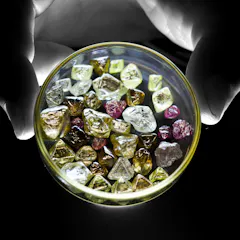
More than 90% of the world’s pink diamonds came from a single mine that closed in 2020. Geologists are only now beginning to understand the forces that create the rare, highly prized gems.

A deadly earthquake in Afghanistan, following one in Morocco, highlights the risks in the region.
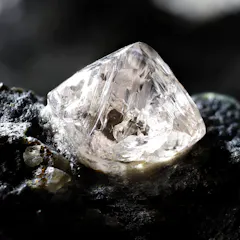
Scientists were not previously certain how the precious stones arrived at the Earth’s surface.

The Earth isn’t permanent, but it was here for four billion years before humans arrived and should be here for several billion more.
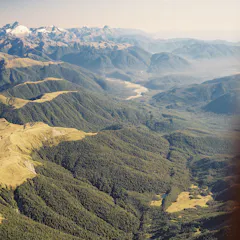
We may never know exactly when the next big quake will hit – but we can have a pretty good idea of the odds.
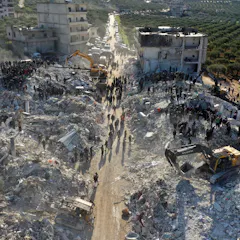
In a domino effect, earthquakes can cause others to strike: replicas, but also more distant ones.
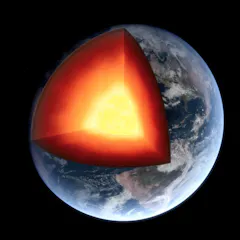
Starting at the surface, you would have to dig nearly 2,000 miles before reaching the Earth’s core. No one could survive that trip – and the 10,000-degree F heat once there would vaporize you anyway.
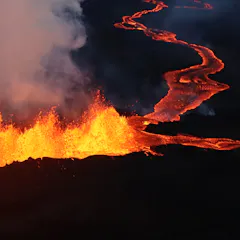
A scientist who led one of the first projects to map the Hawaiian Islands’ deep volcanic plumbing explains what’s going on under the surface as Mauna Loa erupts.
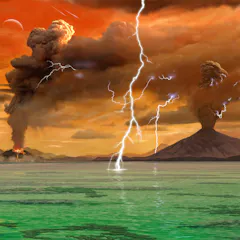
Could tectonic processes in the early Earth have contributed to the rise of oxygen?
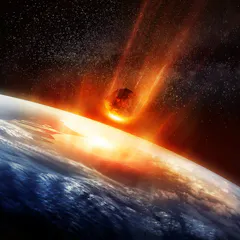
Giant meteorite impacts may have created the land we live on
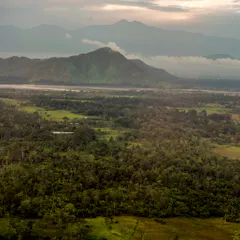
Oral histories talk about a major tectonic event 250 years ago, which changed the course of a river flowing through Lae today.
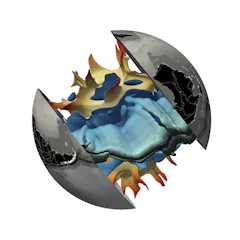
Ancient blobs deep inside the Earth gather together and break apart like continents, according to new research.
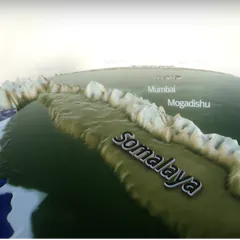
Why we are predicting the mountains of the far future, and what it can tell us about the world today.
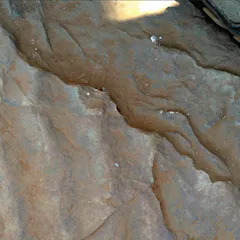
Dating of rocks that once formed some of the world’s first beaches suggests the first large continents grew large enough to rise above sea level roughly 3 billion or so years ago.
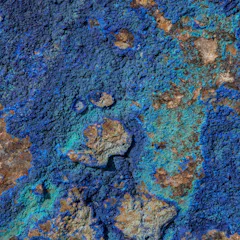
Using geology and AI, a virtual model of how the Earth’s tectonic plates have evolved can help reveal deposits of copper.
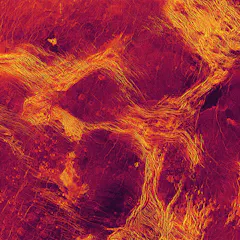
Researchers used decades-old radar data and found that some low-lying areas of Venus’ crust are moving and jostling. This evidence is some of the strongest yet of tectonic activity on Venus.
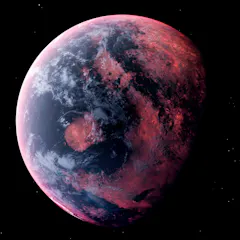
The rocks provide rare evidence of a time when Earth’s surface was a deep sea of incandescent magma.
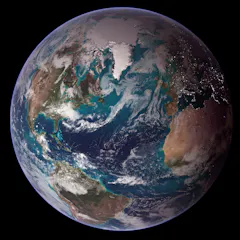
The presence of water on the Earth’s surface is the result of a subtle balance between different mechanisms in the atmosphere and below the surface.
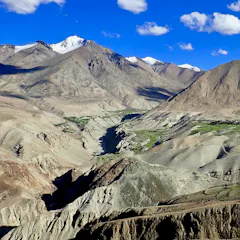
Earth’s magnetic field locks information into lava as it cools into rock. Millions of years later, scientists can decipher this magnetic data to build geologic timelines and maps.
Top contributors
-

Professor of Earthquake Science, The University of Melbourne
-
Earthquake Scientist, Monash University
-
Professor of Geology, West Virginia University
-
ARC DECRA Fellow, School of Geosciences, University of Sydney
-
Emeritus Strategic Professor in Palaeontology, Flinders University
-
Professor of Geology, Adelaide University
-
Associate Professor of Earth, Environmental, and Planetary Sciences, Washington University in St. Louis
-
Associate Professor in Geophysics, Te Herenga Waka — Victoria University of Wellington
-
Harold T. Stearns Professor of Earth Science, Wesleyan University
-
Associate professor, University of Tasmania
-
Honorary Fellow in Structural Geology and Tectonics, The University of Melbourne
-
Honorary researcher, The University of Melbourne
-
Professor of Geophysics, University of Sydney
-
Lecturer in Geoscience, Queensland University of Technology
-
Associate Professor of Earth and Planetary Sciences, University of Tennessee