

Canada’s Council of Ministers of Education has yet to articulate a vision for overcoming two school years of disrupted education.
Articles on PISA
Displaying 21 - 40 of 114 articles
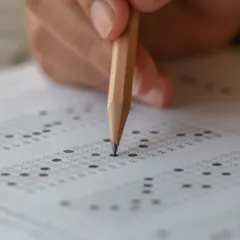
An analysis of data from the Programme for International Student Assessment (PISA) has found the gender gap in maths tests increased where papers contained more multiple choice questions.

Improving initial teacher education is a long-term strategy. It won’t achieve the education minister’s goal of getting Australia to the top-performing nations in maths and literacy by 2030.
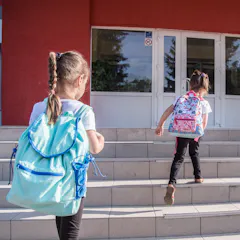
The NSW curriculum review recommends students be assigned tasks based on their ability, rather than their age. This approach recognises the progress individuals make over the course of a year.
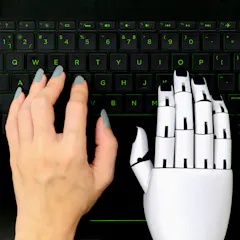
Our children should no longer be taught formulaic writing. Writing education should encompass skills that go beyond the capacities of artificial intelligence.
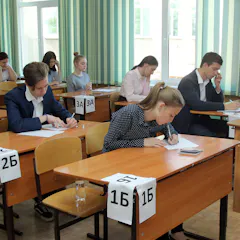
Standardised tests or exams have been in place in a number of educational systems for nearly two centuries. They are rooted in reformers’ desire to regulate schooling and hold educators accountable.

Data are about to be released on how well countries teach Year 4 and 8 maths and science Results from the last cycle of testing in 2015 showed Australia’s students achievement had flatlined.
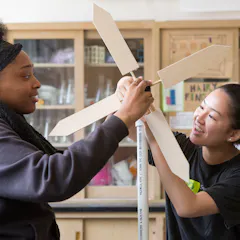
Teachers could better support young people’s scientific inquiry into urgent planetary and social issues if school testing valued practical science.

Today’s urgent inequality and environmental crises mean that more, not fewer, students should be studying history.
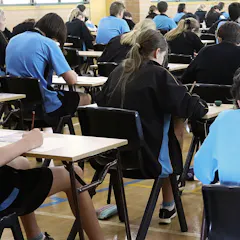
Many reports over the 12 years of NAPLAN’s existence have highlighted a plethora of issues with the test that need to be urgently addressed. And the most recent review is not exception.

After years of neoliberal policies eroding the tax base to pay for high schools, mandatory online learning curriculum from classrooms could be the next international money-maker.

Closing the reading achievement gap continues to be a pressing global challenge.
After 20 years of education strife in Ontario, it’s time to look overseas for inspiration to rethink what education is about.
Education minister Nadiem Makarim announced he would abolish Indonesia’s national exams in favour of a PISA-style student assessments. We asked two experts how this policy should best be rolled out.

PISA tests only three subjects that aren’t representative of an entire education system. Meanwhile, the test conditions are different across countries and comparisons are fraught.

Australia spends virtually the same on schools as the Estonian government, once wage differences are taken into account.

The skills children learn at school have dramatic implications for their own future and the nation’s productivity, living standards and income inequality.

High performing systems focus on the same things Australian governments do, but they work much more intensively on making these things happen.

Australian education is still going backwards from where we started in 2000 – new PISA results show.

Every three years, the OECD releases its Programme for International Student Assessment results. Last time, Australia’s education system was doing much worse than some other countries. Has it changed?
Top contributors
-

Distinguished Professor, Faculty of Education, Brock University
-
Deputy CEO (Research), Australian Council for Educational Research
-
Professor of Education, Sheffield Hallam University
-
Lecturer in Economics and Social Statistics, UCL
-
Professor, School of Education, University of Southern Queensland
-
Deputy Vice-Chancellor, Education, Murdoch University; Professor of Measurement, Assessment and Evaluation, Murdoch University
-
Senior Lecturer in Education, Canterbury Christ Church University
-
Professor of Education, The University of Melbourne
-
Senior Research Fellow, Australian Council for Educational Research
-
Research Fellow, Oxford University Centre for Educational Assessment, University of Oxford
-
Associate Professor, Beijing Normal University
-
Research group leader, principal investigator, and ATTRACT-fellow, University of Luxembourg
-
School Education Program Director, Grattan Institute
-
Professor, Deakin University
-
Director of Research and Deputy Head of Southampton Education School, University of Southampton