
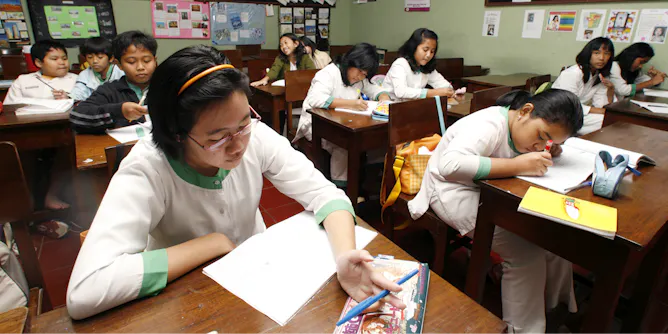
The latest PISA report shows Indonesian girls outperforming boys in all subjects. But, overall, Indonesian students are low performers among students of PISA-participating countries.
Articles on PISA
Displaying 61 - 80 of 114 articles
Various forms of testing that reduce students’ knowledge, capacities and skills to a single number cannot of themselves help inform improvement.
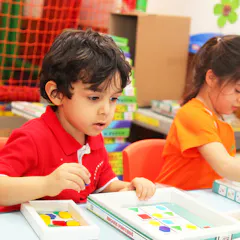
Policy continuity is what is needed to improve Australian students’ maths capability.

The role of private tuition plays a part in the overall success of students in Singapore, with around 80% of primary-school children having at least three hours of private tuition a week.
If we want excellence in our schools, we have to provide a system with the incentives, enablers and rewards for improvement built in.

Politicians need to stop meddling with education policy and invest in teachers if Australia’s science, mathematics and reading standards are to improve.
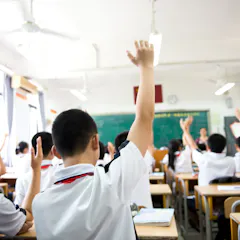
East Asian pupils continue to outpace their counterparts in Western schools.

Rather than leaping to conclusions about a failing education system, we need to look at what the data tells us about student performance at a state level to help us make more informed decisions.
The furore over Australia’s international ranking in science, maths and English obscures what we should really be focusing on.
On the occasion of World Teacher’s Day, on Oct. 5, a scholar explains why borrowing teacher quality models from high-scoring countries such as Finland, South Korea or Singapore is not effective.
The Productivity Commission has said that education spending has substantially increased over the last decade but student achievement has shown little or no improvement. Is that true?
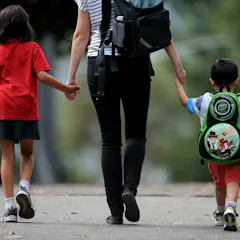
Evidence suggests early intervention to improve educational opportunities for low-income kids yields impressive long term results – but we need to use better evaluation methods to know what works.
International education tests reveal Australia has either stagnated or declined in many subject areas, including maths and science, while other countries have made big improvements. Why is this?
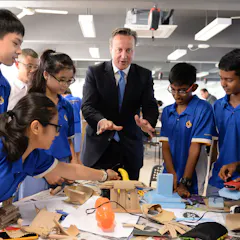
Teenagers in Shanghai, Singapore and Hong Kong outperformed those in London, Madrid and Dubai.
Some countries experienced big changes when the global test of 15-year-olds moved from paper to online.
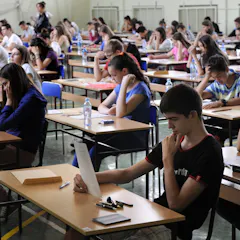
A new OECD report has put the spotlight on countries where teenagers struggle in maths, reading and science.
A third of adults in the OECD now have a university degree.
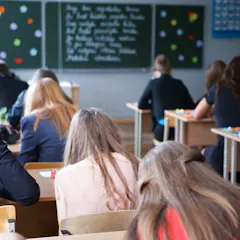
An alternative way to look at who comes where in PISA tests – and the results are surprising.

Students in the same grade in the same school receive a very different education based on the socioeconomic status of their parents.
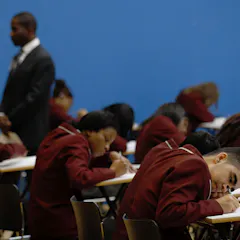
To prepare teachers for the 21st century, we need to reform the way we assess children.
Top contributors
-

Distinguished Professor, Faculty of Education, Brock University
-
Deputy CEO (Research), Australian Council for Educational Research
-
Professor of Education, Sheffield Hallam University
-
Lecturer in Economics and Social Statistics, UCL
-
Professor, School of Education, University of Southern Queensland
-
Deputy Vice-Chancellor, Education, Murdoch University; Professor of Measurement, Assessment and Evaluation, Murdoch University
-
Senior Lecturer in Education, Canterbury Christ Church University
-
Professor of Education, The University of Melbourne
-
Senior Research Fellow, Australian Council for Educational Research
-
Research Fellow, Oxford University Centre for Educational Assessment, University of Oxford
-
Associate Professor, Beijing Normal University
-
Research group leader, principal investigator, and ATTRACT-fellow, University of Luxembourg
-
School Education Program Director, Grattan Institute
-
Professor, Deakin University
-
Director of Research and Deputy Head of Southampton Education School, University of Southampton