
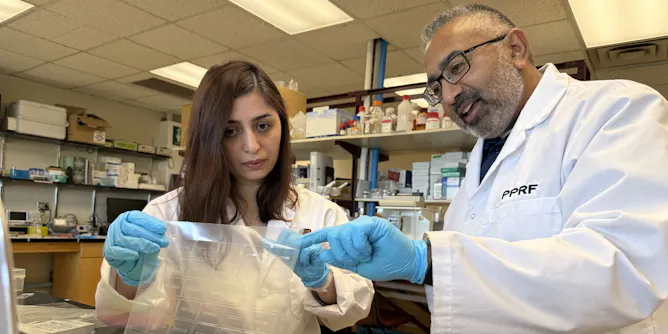
The devices make tumour-on-a-chip technology easier and cheaper to build, with the hope they can be moved into clinical use for personalized cancer treatment.
Articles on Personalized medicine
Displaying all articles

Precise and flexible 3D manufacturing techniques make it possible to individually tailor everything from prosthetics to drugs.
By understanding a patient’s unique genetic profile, biomarker readings and lifestyle information, doctors could tailor the most effective and safest treatments for that individual.

Your physical environment, social life and lifestyle have as much an influence on your biology − and hence, how you process drugs − as your genes.
Doctors have an overwhelming amount of individual patient data and medical research at their disposal to make diagnoses and treatment plans.

A narrower, more personalized ‘normal range’ could help doctors better diagnose and treat disease in individual patients.
Personalized medicine is a promising treatment for recurrent cancer and superbugs, but it is labour-intensive and expensive, and pathways for its regulatory approval and reimbursement are complicated.
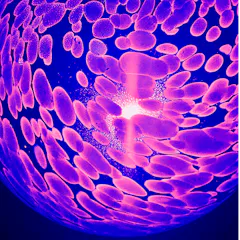
Functional precision medicine works to take the guesswork out of deciding which drug to try next for patients with cancers that don’t respond to standard treatments.

From COVID-19 vaccines to cancer treatments and beyond, the flexibility of mRNA-based therapies gives them the potential to prevent and treat many types of diseases.
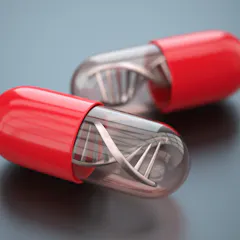
Genetic testing can help take the guesswork out of finding the right treatment. For certain diseases. To an extent.
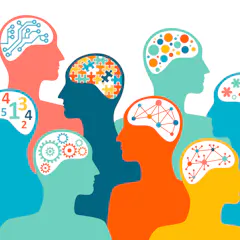
Existing brain connections may influence the effectiveness of neurostimulation. Tailoring treatments to each individual brain could expand the number of conditions brain stimulation can treat.

Every cancer is different. Grouping cancer mutations by their structure and function could help make treatments more personalized.
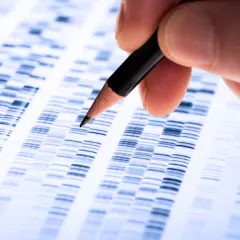
Medical education has not kept up with genetic discoveries — primary care physicians require more genetics and genomics training.

Our bodies have a set of defenses that are finely tuned for killing invading microbes. With rising cases of drug-resistant bacteria, maybe boosting our natural defenses is the best medicine.
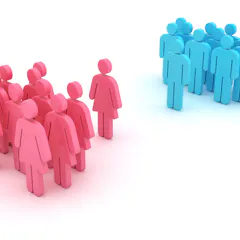
Male and female tumors are different. Researchers are now hoping to exploit these sex-specific differences to treat brain cancer. This might improve survival for everyone.
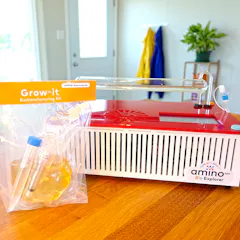
Small-batch brewers are starting to tinker with biologic drugs to meet their own medical needs. A side effect of their success would be a disruption to how big pharma makes and distributes drugs.

African-Americans are severely underrepresented in genetics and neuroscience research. That could leave the treatments of the future out of their reach.
The rapid growth of genetic testing and data-gathering could revolutionize health and medicine if governments work to protect people against privacy and societal risks.
A field called epigenomics looks at chemical modifications that do not change our DNA sequence but can affect gene activity. What are the limitations, and can biomedicine use this to our advantage?
Top contributors
-

Postdoctoral Researcher in Chemical and Biological Engineering, Colorado State University
-
Professor, Abell Chair in Synthetic Biology, Colorado State University
-
Postdoctoral Fellow, University of Pennsylvania
-
Professor, Pediatrics and Neuroscience, Washington University in St. Louis
-
Director of the Lieber Institute for Brain Development and Professor, Departments of Psychiatry, Neurology, Neuroscience and The Institute of Genetic Medicine, Johns Hopkins University
-
Assistant Professor of Systems Biology and Cancer Metabolism, University of California, Merced
-
PhD Candidate in Neural Engineering, University of Washington
-
Associate Professor of Pharmacy and Therapeutics, University of Pittsburgh
-
Associate Professor of Economics, Queen's University, Ontario
-
Visiting Researcher in Computational Neuroscience, University of Washington
-
Associate professor, Queen's University, Ontario
-
Associate Professor, Pharmacy and Therapeutics; Director, Pharmacogenomics Center of Excellence, University of Pittsburgh
-
Assistant Professor of Thoracic & Head and Neck Oncology, The University of Texas MD Anderson Cancer Center
-
Assistant Professor of Environmental Health Sciences, Florida International University
-
Fellow in Clinical Pharmacogenomics, University of Pittsburgh