

More than 85% of people with distressing menopause symptoms struggle to get appropriate care. These barriers can be compounded for LGBTQIA+ people and those living with disability.
Articles on Perimenopause
Displaying 21 - 37 of 37 articles

The number of patients prescribed hormonal therapy plummeted after 2002, due to findings experts have since questioned. With better understanding, more and more people are using these treatments.

Menopause can be a key factor in some women’s decision to retire early. But with the right interventions, workplaces can enable women to manage their symptoms and remain in the workforce.

Menopause is technically the single day 12 months after your last period. But perimenopause can last years. Here’s what to look for.
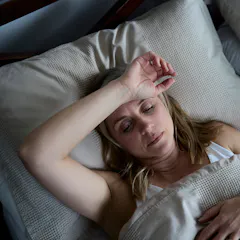
Sweating is the normal way the body cools itself off. But waking up every night with sweat-drenched sheets is not – especially if you have other symptoms too.

Many women choose alternative medicines over hormone therapy because they have a higher risk of breast cancer. Should they give black cohosh a try?

Around 7,000 women were on waiting lists for menopause treatment in England earlier this year, one report found.

Tracking the many physical and emotional symptoms of menopause with a website, app or diary can help women better monitor their health.

Women are increasingly seeking testosterone therapy to treat fatigue and brain fog. But there’s no evidence it improves symptoms of menopause.

For women ages 18 to 49, migraines are the leading cause of disability throughout the world.

The most popular supplements for hot flushes are phytoestrogens (or plant estrogens). This trend has been partly driven by companies that promote them as a safer alternative to hormone therapy.

Uncertainty about how long symptoms will last can be tough for women going through hormonal changes that come with menopause. Unfortunately, there isn’t a clear cut time frame.

It’s still unclear whether HRT can protect brain function and prevent dementia.

The symptoms of menopause, which can include sleep disturbance, depression, anxiety and ‘brain fog’ can span perimenopause and last for up to ten years.

Science shows that many perimenopausal miseries — such as hot flashes, night sweats and trouble sleeping — are caused by excess or variable estrogen, not by “estrogen deficiency.”

Women will experience symptoms in the time leading up to menopause. This period is known as perimenopause.

Research in mice shows that estrogen replacement therapy has the greatest chance of reducing cardiovascular disease risk if it is begun soon after menopause.
Top contributors
-

Chair of Women's Health, Monash University
-
Associate Professor and Clinical Neuropsychologist, Monash University
-
Nurse, Lecturer & Director of Post-graduate Studies in the School of Nursing and Midwifery, Edith Cowan University
-
Senior Lecturer, School of Business, Western Sydney University
-
Honorary Research Fellow, UCL
-
Addiction Psychiatrist, Associate Professor, Monash University
-
Monash University
-
PhD Candidate, NICM Health Research Institute, Western Sydney University
-
Assistant Professor of Medicine, Vanderbilt University
-
Professor of Law and Associate Dean for Faculty Development, Pace University
-
Obesity Medicine Fellow, Vanderbilt University
-
Professor of Biological Psychology, Loughborough University
-
Professor of Law, Pace University
-
Associate Professor at NICM Health Research Institute, Western Sydney University
-
Research fellow, Chronic Disease & Ageing, Monash University